
 Search Articles


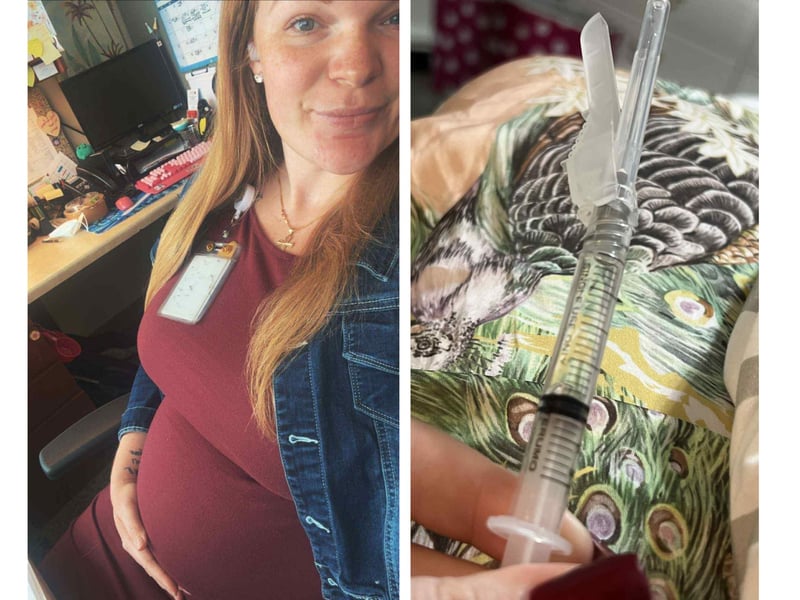
ATLANTA (CN) — The troubles for Hallie Weaver began last year, when she contracted with a surrogacy company to help a Los Angeles-area couple have a child.
By July, she was well into her third trimester.
It had been a rocky process: Weaver said the couple at first had rigid demands, then became oddly absent as her pregnancy progressed. Still, the 30-year-old from Georgia felt grateful for the opportunity to help the hopeful parents while also supplementing her income as a single mom.
On July 11, with her due date just weeks away, Weaver got a startling email from her surrogacy attorney.
The couple she was working with — Silvia Zhang and her husband Guojun Xuan — were not who she thought they were.
In May, police had conducted a welfare check on their home after a 2-month-old child was brought to a hospital with traumatic head injuries. They learned the couple had 21 kids, all but two born to surrogates.
The FBI opened an investigation. Xuan, it turned out, had been an official in the Chinese government. Weaver was shocked by the developments. “Their whole profile was a lie,” she said.
Surrogacy — the process by which someone capable of being pregnant carries a child for someone else, often in exchange for money — has been around since ancient times. But it’s become increasingly popular in recent years, amid medical advances and a growing acceptance of nontraditional families.
Under a procedure known as “embryo transfer,” it’s possible for a biological woman to take one of her eggs, fertilize it and implant it into someone else’s uterus. The person with the uterus then goes through the actual pregnancy, carrying the baby to term.
Between 2012 and 2019, the number of such transfers in the United States surged from 3,202 to 9,195, according to figures from the Centers for Disease Control and Prevention. Typical first-time surrogates can make up to $90,000 for carrying a child. The global surrogacy industry is now estimated to be worth around $14 billion.
All this growth has not come without controversy. As wealthy celebrities like Kim Kardashian have turned to other women to carry their children, critics have denounced the practice as exploitative.
For-profit surrogacy, they argue, has turned women’s uteruses into just another commodity to be bought and sold on the free market. A variety of countries including Canada and the United Kingdom apparently agree, banning the practice altogether.
In the United States, surrogacy is regulated at the state level. The country has relatively permissive rules, allowing for arrangements like Weaver’s.
With these lax regulations have come surrogacy scams, the FBI has warned over the years. And the scheme that Zhang and Xuan are accused of running may be among the biggest.
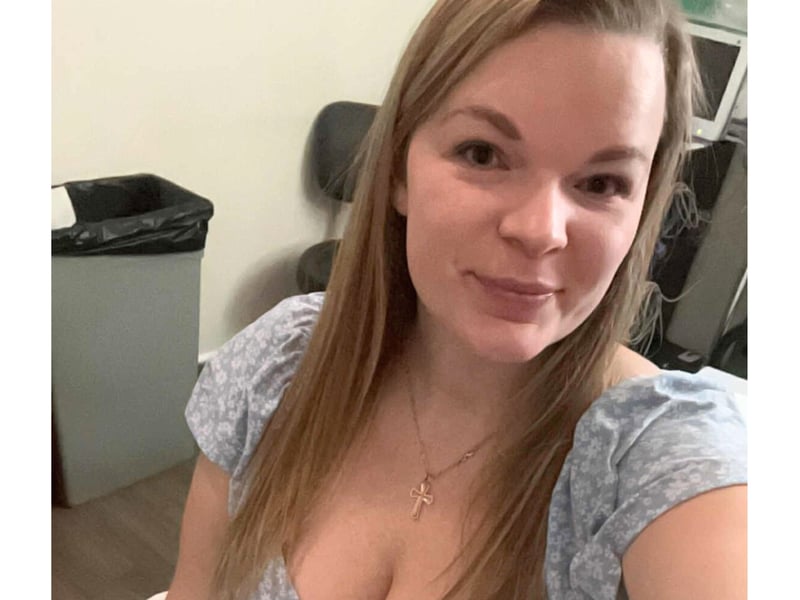
Looking back on a whirlwind chapter of her life, Weaver has mixed emotions. She wishes she’d paid more attention to red flags and trusted her gut. If things had played out just a bit differently, she figures there’s a good chance she would have broken the match and avoided this whole mess.
“At the same time,” Weaver said, “now there’s this beautiful little baby boy.” In August, Weaver gave birth to a son. She named him Gabriel. Originally intended for Xuan and Zhang, the FBI investigation into his intended parents has left his custody status unclear.
Weaver first became curious about surrogacy after the birth of her now 4-year-old daughter.
“I fell in love with everything baby-making,” Weaver said in a phone interview. “As soon as she came out, I was like, ‘I gotta do this again. This is just amazing.’” She wanted to use that passion to help other families.
Weaver got involved with online fertility groups. She began donating her eggs.
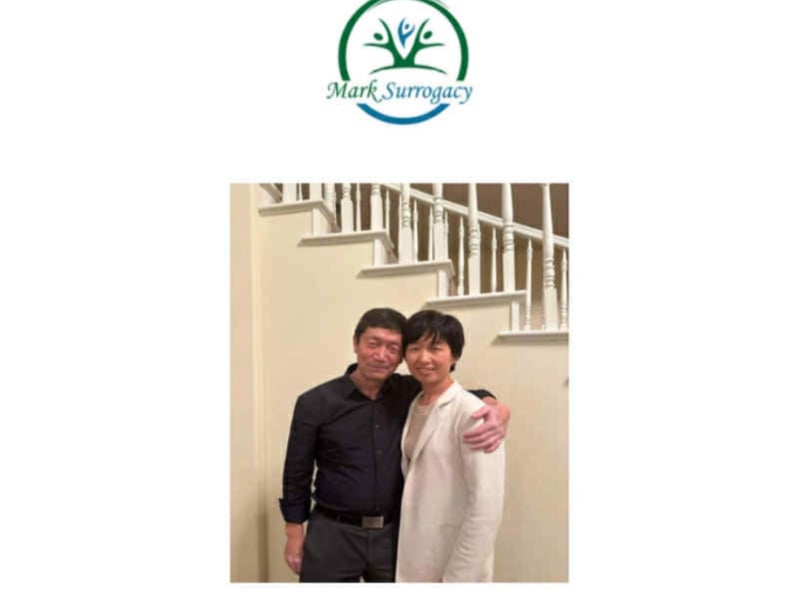
In February 2024, she was contacted by Mark Surrogacy, a now defunct business in the Los Angeles area.
The company sent her a profile of a couple who was interested in her services. According to the profile, Silvia Zhang, 38, lived in Los Angeles with her husband Guojun Xuan, 65. They had a toddler daughter, conceived through in-vitro fertilization.
Since that conception, the profile explained, Zhang had been through more than 10 failed IVF attempts.
“I was like, ‘Wow, that is a lot of tries,” Weaver said. “It really pulled on my heart strings.”
Zhang declined to comment for this story, citing the ongoing criminal investigation. Details come from interviews with Weaver and from police and court documents.
Weaver offered to help the infertile couple have a child.
From the beginning, there were tensions.
According to Weaver, Zhang and Xuan seemed to have rigid expectations for their baby. If a physician detected Down syndrome or a cleft lip, they wanted the pregnancy terminated.
The demands made Weaver uncomfortable. She didn’t want to get in legal trouble in Georgia, where most abortions are illegal past six weeks. When Weaver told Mark Surrogacy she was considering breaking her match, the couple finally settled and agreed to her terms. “I wanted very specific things and they worked with me, so that made me feel more comfortable,” she said.
Alas, when Weaver met Zhang for the first time in May, the experience did little to alleviate her concerns.
“She really didn’t strike me as a maternal type at all,” Weaver said. To Weaver’s surprise, Zhang said she planned on having a nanny watch the child instead of taking time off work. Weaver had expected an excited, doting mother. In their profile, the couple wrote they wanted “as much interaction throughout the journey as possible,” explaining that “our surrogate would be like our extended family.”
Then, Weaver says Zhang made a shocking revelation. She said she had another child, a 13-year-old daughter.
It was “the biggest reg flag,” Weaver recalled. She pushed down her doubts, feeling it was too late to turn back. She had already traveled across the country for the embryo transfer. Zhang had five embryos ready to go.
“At this point, I felt like I didn’t have any option to back out unless I wanted to pay them back all this money,” Weaver said. “So, I just tried to put it out of my head like maybe I read something wrong or misunderstood something. I kinda blamed it on myself.”
As the months passed and her baby grew, Weaver says Zhang and Xuan never once called her to follow up on doctors’ appointments or ask how the baby was doing.
In July — just weeks from her due date — she learned about the criminal investigations in an email from her surrogacy attorney, Greg Masler.
Even Mark Surrogacy seemed to be a front. The company, registered at Zhang and Xuan’s home, has since ceased operations.
“I freaked out,” Weaver said. “I just pushed my chair back and put my hands on my face and was like, ‘Holy shit.’ I just broke down and started crying.”

Although Weaver’s story is particularly eye-popping, she’s hardly the first American to see her surrogacy end up in the court system.
The first notable case dates back to 1985, when New Jersey woman Mary Beth Whitehead tried to keep a baby girl she delivered through surrogacy.
Unlike more recent examples, Whitehead’s pregnancy did not involve an embryo transfer — meaning she was genetically related to the surrogate child. Known as the Baby M case, the saga brought immense public attention to what was then still a rare practice.
Sometimes, surrogate births have led to unfit parents. In 1995, James Austin pleaded guilty to beating and shaking his then 5-week-old son to death. Working with the Infertility Center of America in Indianapolis, Austin had paid a woman $13,000 to carry the child using his sperm.
After the surrogate pursued a wrongful death suit, a Pennsylvania court ruled thatsurrogate businesses have a duty to protect conceived children. In practice, though, that’s not always the case: In August, a Pennsylvania district attorney called for tighter regulations after a man previously convicted of child sex offenses was able to become a parent through surrogacy.
Those are just the custody and parental rights disputes. Surrogacy scams can take a variety of forms, like when a group of patients recently accused a Bay Area fertility clinic of failing to pay them for their eggs.
In another incident out of California, a woman was handed an 18-month prison sentence after authorities caught her pilfering escrow accounts intended to pay surrogate mothers.
“It became like a Ponzi scheme,” one FBI special agent said in a news release at the time.
In yet another case from the Golden State, the agency accused a San Diego reproductive-rights lawyer of running what it called a “baby-selling ring.”
In that case, attorney Theresa Erickson set up procedures for surrogates in Ukraine, where oversight was lax — then falsely told them that the original adoptive parents had backed out. Erickson then sold the babies for up to $150,000 each. She was later caught and sentenced to five months in prison.

Masler, an attorney who represented Weaver through her surrogacy, could not be reached for comment by press time.
Georgia attorney Mark Johnson wasn’t involved in Weaver’s case. But he’s become one of the Peach State’s leading legal experts on the practice, helping draft the state’s first surrogacy contract in 1992.
Johnson said that if he’d handled Weaver’s surrogacy, he would have put Xuan and Zhang through a more rigorous vetting process. Although not mandated by law, Johnson requires his client to work with a psychologist.
“Mental health practitioners are essential to the surrogacy process,” he said.
Having a child is a big deal, and Johnson says simple safeguards like these can help ensure that nothing goes awry.
“A psychologist is supposed to review the whole scenario,” he said. “The psychologist can do a much deeper dive than the rest of us would.”
Xuan and Zhang’s 21 children ranged in age from 2 months to 13 years.
Authorities found 15 of them while conducting the welfare check at their mansion in Arcadia, an LA County suburb. Six others were found in the care of family members and friends. All of them are now in protective custody.
Zhang and Xuan are currently out on bond. According to Arcadia police, they have not yet been formally charged. Police Chief Roy Nakamura declined to comment to Courthouse News, citing the ongoing investigation and that fact that child abuse investigations in particular are exempt from public disclosure.
Authorities say Zhang and Xuan had multiple surveillance cameras inside their home. They say a search warrant uncovered videos of children with shaved heads sitting at rows of desks.

One screengrab from the videos shows an adult “hitting a child in the face,” detectives wrote. Another shows a child lying face down on a desk in front of other children as an adult spanks them. One of the family’s so-called nannies is seen holding the baby who later turned up at a hospital with head injuries. That nanny, Chunmei Li, is now also under investigation.
As the situation came to light, so did some surprising details about Xuan’s background.
From 1997 to 2012, he held senior positions in both the Urumqi Municipal People’s Congress and the Xinjiang Uyghur Autonomous Region People’s Congress.
These Chinese governmental bodies have played a key role in passing and enforcing repressive laws against Uyghurs, a Turkic Muslim minority group of roughly 11 million people living in Xinjiang Province in western China. Under the pretext of fighting terrorism, Uyghurs have been subjected to mass surveillance, forced labor, nonconsensual sterilizations and abortions and criminalization of their culture and religion. Some have even described the situation in Xinjiang as a genocide — though some of the worst allegations have come after Xuan apparently left his roles.
The nonprofit Justice For All, which runs a “Save Uyghur” campaign, sent a letter to the U.S. Department of State. The group demanded an investigation into how Xuan was able to obtain U.S. residency, despite sanctions targeting perpetrators of Uyghur persecution.
In a statement, Abdul Malik Mujahid, an imam and president of Justice For All, said the situation represented** “** a dangerous failure of our immigration and national security systems.”
“The United States must not become a safe haven for those who commit mass atrocities abroad and exploit vulnerable people here at home,” he said.

This is not the extent of the couple’s legal headaches.
In Los Angeles, they face a pending class action from six former employees of their real estate company, Yudao Investments. The ex-employees accuse them of unfair treatment, including failing to pay full wages and permit timely breaks.
In another lawsuit, from 2022, former employee Alejandro Diaz accused Xuan of wrongful termination, battery, assault and failure to pay overtime.
In his original complaint, Diaz claimed Xuan threw rocks at him following an argument, brandished an assault rifle at him and ultimately fired him without full pay. The parties announced a settlement in February.
As Weaver started learning these details in her third trimester, her top priority was keeping the baby she was carrying out of the hands of accused criminals.
She felt overcome by panic and uncertainty. “I just thought, ‘This is an absolute nightmare,’” she said. “I probably called 20 different lawyers, and nobody could help me.”
Amid the legal drama, Weaver gave birth to a son on August 14.
His biological sex turned out to be another twist. Though doctors had told her to expect a girl, the baby came out a boy.
A doctor placed the newborn in her arms. With his legal status still in limbo, Weaver started bonding with the child, naming him Gabriel. “Even before I got pregnant I really prepared myself that I’m not going to get attached because this is not my child,” she said. But the swelling FBI investigation had thrown an obvious wrench in those plans.
It remains to be seen what will happen with Gabriel. Zhang and Xuan have not formally renounced custody. Weaver is not the only surrogate wrapped up in the scandal: According to her, at least two other people are carrying surrogates for the couple and are due any day now.
Weaver had spent time volunteering with abused and neglected children, including as a court-appointed special advocate.
As she learned about Zhang and Xuan, she says her mothering instincts kicked in.
“I was like, ‘I have to protect this baby now,’” she said. “I started thinking: These people cannot have access to this baby.”
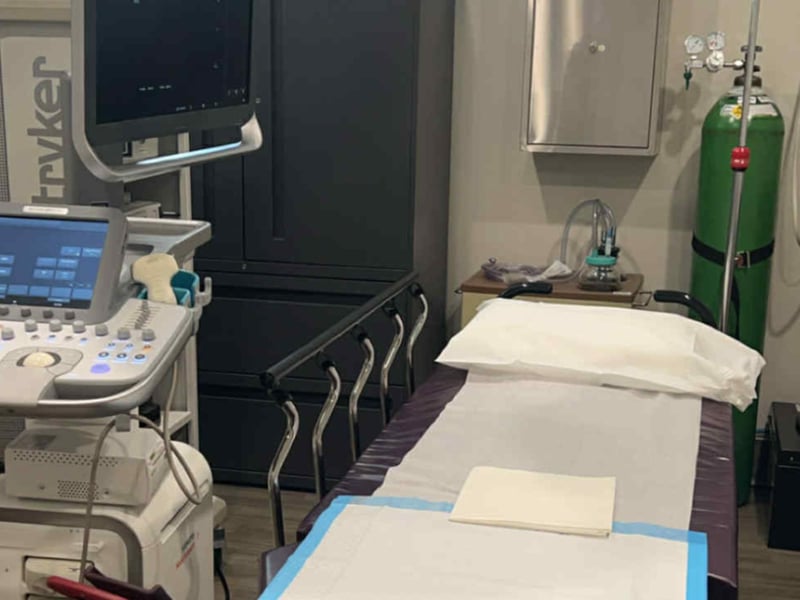
More than two months after Gabriel’s birth, it remains an open question who has legal custody of him.
The state claims custody, just as it did for the couple’s other children. Weaver is fighting in court to formally adopt him.
In a bit of good news, Weaver was able to get paid her promised surrogacy compensation. She’d insisted on an escrow account, allowing her to access the funds she was promised.
Even so, she faces a range of new legal headaches that she hadn’t initially planned for. She started a GoFundMe, hoping to raise funds to hire a good adoption attorney and bring a fraud suit against Zhang and Xuan.
“I am devastated, to say the least,” Weaver wrote on the fundraising website. “I do not know what will happen in the next few months or years.”
In an interview, Weaver said her biggest concern is making sure Gabriel can have a safe home in spite of the true-crime drama surrounding his birth.
“This is an innocent little baby that should have never been put in this position,” she told Courthouse News. “He needs love. He needs care and he deserves the best.”
Editor’s note: In the interest of full disclosure, it should be noted the author of this story went to middle school with Hallie Weaver, one of the subjects of the piece.
 Follow @Megwiththenews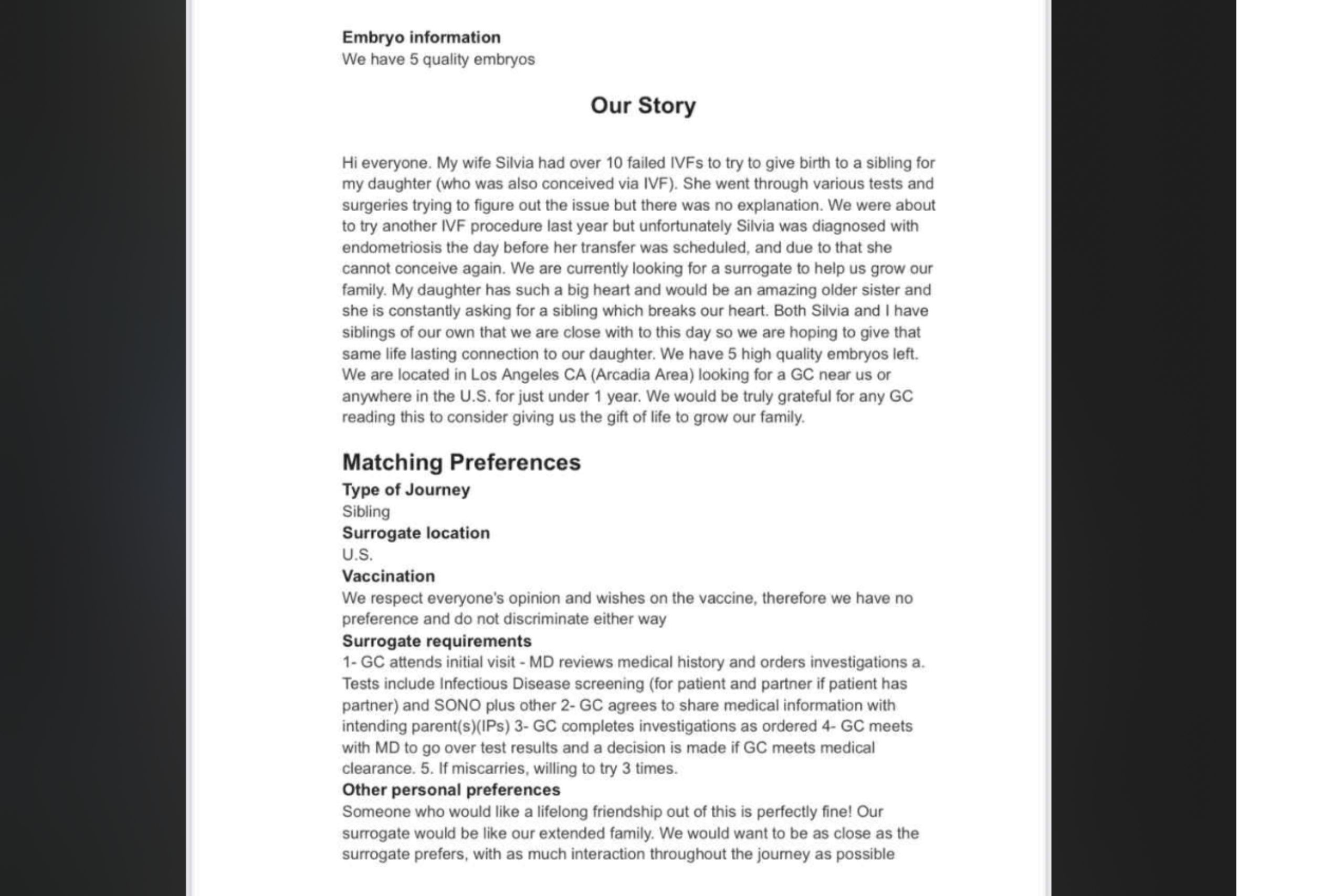
Subscribe to our free newsletters
Our weekly newsletter Closing Arguments offers the latest about ongoing trials, major litigation and rulings in courthouses around the U.S. and the world, while the monthly Under the Lights dishes the legal dirt from Hollywood, sports, Big Tech and the arts.