
 Search Articles


NÎMES, France (CN) — Ibtissam, a 28-year-old pregnant woman living in Pissevin, a neighborhood on the outskirts of the southern French city of Nîmes, was buying a bus ticket when she nodded and glanced slyly toward the road.
“There they are, patrolling” she told Courthouse News as a police van slowly turned the corner. It was the only car on the road. “The police have been going around a lot here now, it’s good.”
On Monday, Nîmes became one of several French cities to impose curfews for minors in neighborhoods particularly vulnerable to drug violence. Pissevin is one of them. For 15 days, which could be extended, minors under 16 have to stay inside from 9 p.m. to 6 a.m.
There have been five shootings in two weeks, local doctors are calling for increased security, and threatening messages are circulating on social media.
On July 17, there was a shootout in one of Pissevin’s main squares; no one was injured.
Two days before, the body of a 19-year-old man, shot dead and partially charred, was found near Nîmes. Local prosecutor Cécile Gensac said the case could be linked to criminal acts in neighborhoods including Pissevin.
“The first person who hangs around in the [Pissevin neighborhood] ZUP Sud will be killed … Everyone who crosses paths with our men in black will be riddled with bullets,” is one post circulating on drug traffickers’ social media. “Even the young kid who goes to get bread for his mother.”
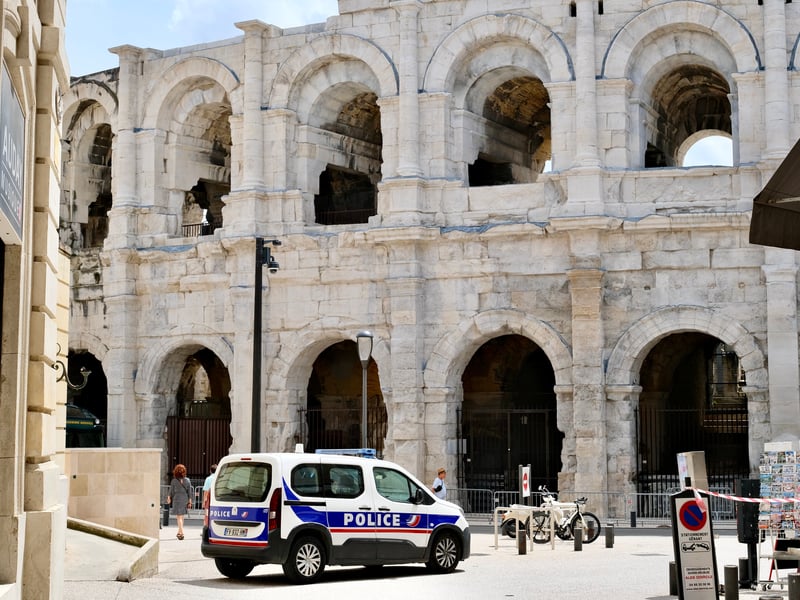
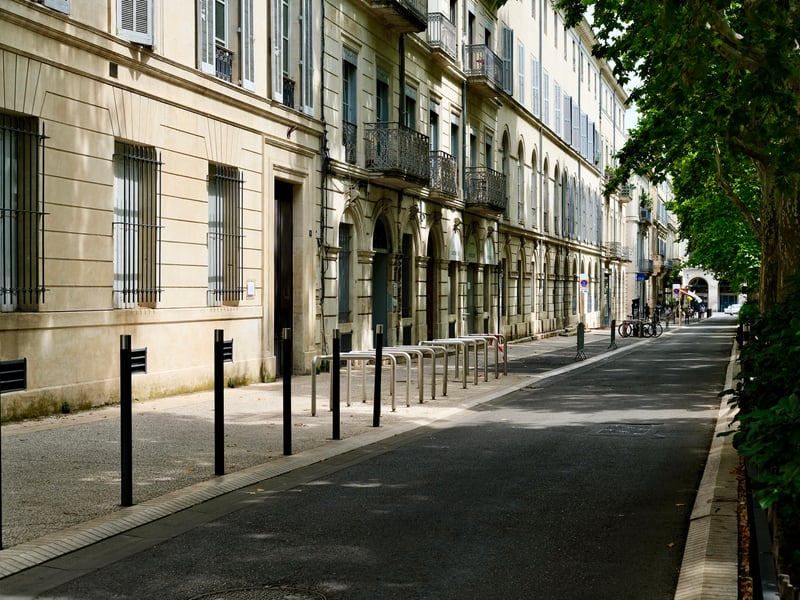
Nîmes has been named “the most Roman city outside of Italy.” Pastel-toned streets surround its amphitheater, which dates back to the first century and has become a tourist magnet. Pissevin is about a 10-minute bus ride from the arena and its surrounding postcard shops.
On Thursday, a food truck was parked near the bus stop and there were barely any cars on the road, which ran along a small strip mall. Most of the storefronts — a driving school, optical shop, pharmacy — were closed. The tobacco store, marked by “TABAC” written in red graffiti with arrows pointing to its entrance, was open.
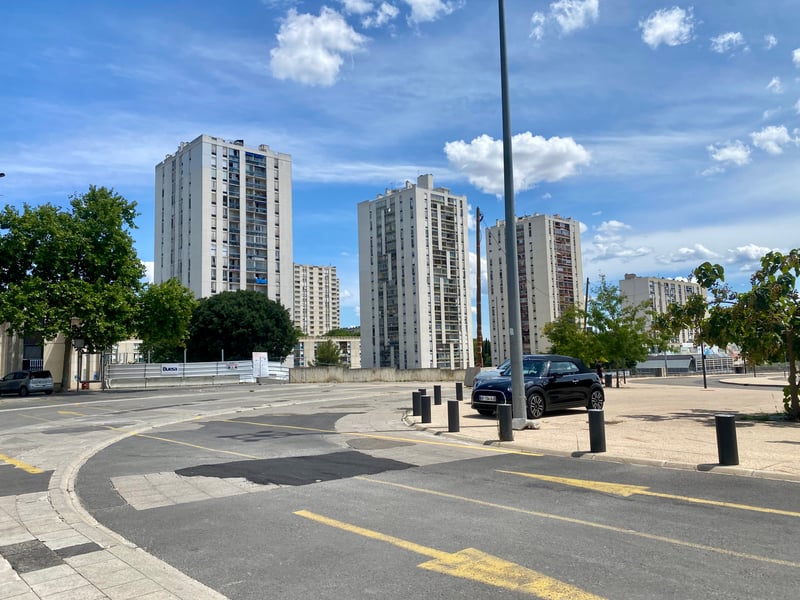
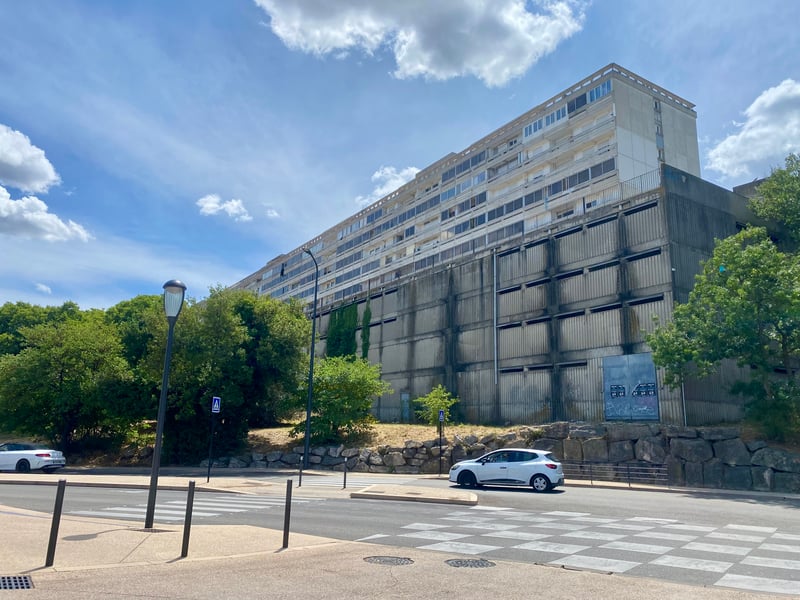
The strip mall was against the backdrop large, inexpensive apartment complexes, known as cités. In Nîmes and other cities across France, these are often where drug deals are set up.
“The police always try to shoot over there,” Ibtissam said, pointing to the blocks of buildings. She said she has learned to identify the sound of a gunshot. “When I hear it, I’m scared.”
She said she’s lived in Pissevin for four years, but it has become particularly violent in the past year. The police presence has calmed things down in the few days since the curfew was imposed, she said.
In France, drug consumption is spiking. Michel Gandilhon, an expert in the security and defense division of the National Conservatory of Arts and Métiers, a cultural and scientific institution based in Paris, told Courthouse News that cocaine use has increasedninefold since 2000. He said that the increase is partly due to a significant international supply of drugs and higher production levels in Europe.
“Today, the drug market is the union of supply and demand — with the increase in drug use in French society, we are also witnessing a significant growth in the trafficking networks that drive the supply,” he said. “Since these networks are organized around a division of labor, you need lookouts, you need dealers, you need a whole bunch of jobs and a certain number of young people enter into what we call criminal careers around drug dealing.”
Now, young people respond to ads on social media to become hit men.
“That’s a phenomenon that is quite striking … The old criminal milieu in France operated in a relatively professional manner, with relatively experienced killers tasked with settling scores,” Gandilhon said. “Today, we have a much more anarchic dimension, with young people recruited and paid a few thousand euros to carry out crimes, with extremely young killers compared to what we saw 30-40 years ago.”
On Thursday in Pissevin, Princeass, a local resident, was waiting for the bus in the shadow cast by the stop, rocking her baby’s stroller back and forth. She has two other kids — a 12-year-old girl and 5-year-old boy — and she has also noticed a difference in the three days since the curfew was imposed.
“I hope they prolong it just for one month, or even forever,” she said. “It’s a city in France with a bad reputation and it makes us scared … It has been very difficult for me and other parents, single mothers.”
She said the curfew sets a positive example for her daughter, who sees people taking action. And she’s relieved for her son. Princeass has noticed that when kids start to get involved in gangs, it’s hard to get them back.
“It would have been very difficult to retake control over my son when he gets older,” she said.
She has been encouraged by the quiet.
“It’s calm!” she said, gesturing around. She pointed to a school just down the road. Its sports yard was empty and surrounded by a fence. There used to be kids hanging out behind the building, but not anymore.
“When you passed, young people would threaten you and ask for your phone,” she said. “Now, the streets are empty, it’s really better — I see that it’s making things better.”
Yann Bisiou, a criminal law lecturer at Paul-Valéry University in Montpellier, told Courthouse News the involvement of young people isn’t new; minors benefit from fewer criminal repercussions if they’re caught, so the risks are lower.
In his view, rather than imposing curfews — which he sees as a “publicity stunt” by certain mayors — officials should be attacking root causes.
“We confuse cause, jurisdiction and consequence … Today, we’re interested in the consequences, the minors on the street who participate in trafficking, and the response is to ban it through curfew orders,” he said. “The question is how young people can find themselves involved in trafficking, how they can find themselves on the streets at midnight, at 1 a.m., or at 2 a.m. — and this problem of the crisis facing certain young people is absolutely not addressed by current policy.”
Nîmes has set a two-week timeline for its six-neighborhood curfew, which expires Aug. 4. Then, the mayor will decide whether to renew it.
“When the curfew goes away, it’ll all come back,” Princeass said. “But I think it would be super if it stays.”
 Follow @lilyradz
Subscribe to our free newsletters
Our weekly newsletter Closing Arguments offers the latest about ongoing trials, major litigation and rulings in courthouses around the U.S. and the world, while the monthly Under the Lights dishes the legal dirt from Hollywood, sports, Big Tech and the arts.