
 Search Articles


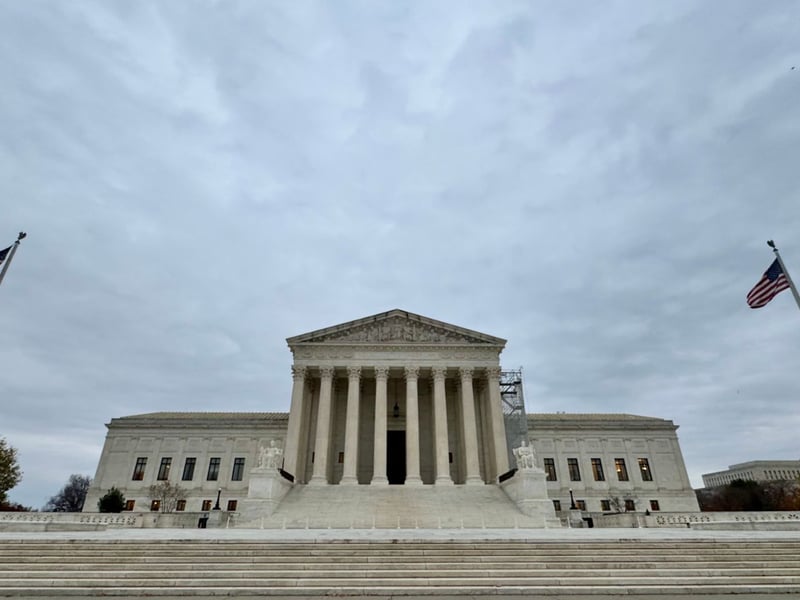
WASHINGTON (CN) — The Supreme Court refused to resurrect a lawsuit from the relatives of Israeli terror attack victims on Thursday, closing a lawsuit seeking accountability for Hamas terror attacks.
In a nearly unanimous ruling, the justices rejected the families’ do-over attempt. Justice Clarence Thomas, a George H.W. Bush appointee, said that federal regulations only allow cases to be reopened in extraordinary circumstances, which were not present here.
“We have consistently held that only ‘extraordinary circumstances’ can justify relief under the Rule 60(b)(6) catchall,” Thomas wrote. “The question presented is whether this rigorous standard applies when a Rule 60(b)(6) movant seeks to reopen a case for the purpose of filing an amended complaint. We hold that it does.”
Under Rule 60, “Relief from a Judgment or Order,” a federal judge can relieve a party from a ruling if there’s a mistake in the ruling, newly discovered evidence, misconduct by an opposing party, the judgment has been satisfied or no longer equitable and “any other reason that justifies relief,” the catchall.
Relatives of victims in attacks during the early 2000s wanted to renew charges against BLOM Bank under the Justice Against Sponsors of Terrorism Act using Rule 60. The families claimed that the bank knowingly provided financial assistance to Hamas associates.
The Second Circuit clarified its aiding-and-abetting standard, and the families said that the change constituted an extraordinary circumstance worthy of reopening their case.
However, the bank argues that the families were unlawfully pursuing a never-ending lawsuit that a lower court already put to rest.
“The case was filed in 2019,” Matthew McGill, an attorney with Gibson Dunn representing the bank, told the justices. “It’s about events that occurred 25 years ago. We won dismissal in 2021, we won affirmance in 2022, and somehow we’re here three years later talking about a zombie case that should have been over years ago.”
The Supreme Court took up a procedural dispute over the standard for reopening a judgment to amend a complaint. During a brief argument, the justices appeared sympathetic to the bank’s position but stopped short of a definitive ruling.
Justice Ketanji Brown Jackson joined most of the majority opinion, except for Part III, which held that the district court found the families failed to meet Rule 60(b)’s “extraordinary circumstances” standard.
She disagreed with the district court judge’s secondary reason, that the family wrongfully denied prior opportunities to amend their complaint, as neither “persuasive” nor consistent with judicial procedures.
“Assuming extraordinary circumstances otherwise exist, a plaintiff should not be faulted under Rule 60(b)(6) for reasonably having chosen to appeal rather than amend his complaint,” the Joe Biden appointee said.
Indian Satellite Firm Can Retry U.S. Claim
In another case involving jurisdictional hurdles, the Court addressed a dispute between an Indian satellite company and a state-run aerospace firm over the enforcement of an international arbitration award.
In a separate unanimous ruling, the justices said the satellite company should get a second shot at pulling the government-owned commercial arm of India’s space department into a U.S. court for contract violations.
Devas, an Indian corporation, requested that the court clarify the standard for foreign nations seeking to enforce arbitration agreements in American courts.
Antrix Corp, India’s state-owned aerospace firm, contracted Devas to provide satellite telecom services. The Indian government later ordered the deal terminated to reclaim rights to the S-band spectrum slated for lease.
Devas won $562.5 million in damages from an International Chamber of Commerce arbitration panel. The satellite company filed a suit in the U.S. to collect those damages, but the Ninth Circuit ruled that Devas didn’t meet a minimum contact standard to give the court jurisdiction over the appeal.
In February, Supreme Court justices seemed to agree that the minimum contact test was incorrect.
Writing for the court, Justice Samuel Alito, a George W. Bush appointee, said that the facts of the dispute were complex, but the question before the court was straightforward.
“The text and structure of the FSIA demonstrate that Congress did not require ‘minimum contacts’ over and above the contacts already required by the Act’s enumerated exceptions to foreign sovereign immunity,” Alito wrote, referring to the Foreign Sovereign Immunities Act.
Alito said the statute’s text and legislative history support the court’s finding.
The justices stopped short of fully endorsing Devas’ position. Alito said the court’s ruling did not address whether the Fifth Amendment’s due process clause required a showing of minimum contacts.
Justices Drop Labcorp ADA Class Appeal
While Devas hinged on when foreign entities can access U.S. courts, the justices also grappled with a separate procedural issue: whether a damages class can include plaintiffs who haven’t been harmed.
The issue arose in another case centered on Labcorp’s self-service kiosks, where blind patients claim the company’s technology violates the Americans with Disabilities Act and California’s Unruh Civil Rights Act by not making its kiosks accessible for blind patients.
A district court certified a damages class in May 2022, including all legally blind individuals in California who visited a Labcorp facility during the applicable limitations period.
The Supreme Court took up the case to decide whether federal courts can certify a damages class that includes both injured and uninjured members. The justices, however, did not decide the case; instead, they dismissed the appeal as improvidently granted.
The justices did not explain their ruling, but the blind patients had argued the appeal was moot because Labcorp appealed the wrong class-certification order.
Justice Brett Kavanaugh, a Donald Trump appointee, seemed to think his colleagues did not want to deal with that threshold argument. Kavanaugh, however, would have taken up the endeavor.
“The Court presumably dismisses the case because the Court does not want to tackle the threshold mootness question that plaintiffs have raised,” Kavanaugh wrote in dissent. “In my view, however, the plaintiffs’ mootness argument is insubstantial. I would rule that the case is not moot and would decide the question presented.”
Kavanaugh believes federal courts can not certify a damages class with both injured and uninjured plaintiffs.
“So overbroad and incorrectly certified classes can ultimately harm consumers, retirees, and workers, among others,” Kavanaugh wrote. “Simply put, the consequences of overbroad and incorrectly certified damages class actions can be widespread and significant.”
 Follow @KelseyReichmann
 Follow @kelseyreichmann.bsky.social
Subscribe to our free newsletters
Our weekly newsletter Closing Arguments offers the latest about ongoing trials, major litigation and rulings in courthouses around the U.S. and the world, while the monthly Under the Lights dishes the legal dirt from Hollywood, sports, Big Tech and the arts.