
 Search Articles


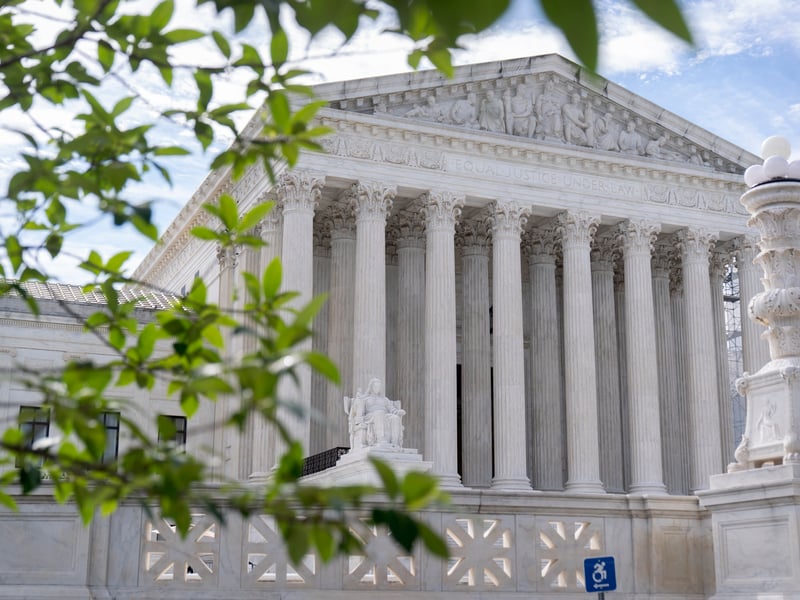
WASHINGTON (CN) — The Supreme Court on Tuesday said three Texas protesters can’t delay serving a seven-day jail sentence stemming from a 2020 protest of a Confederate monument despite an ongoing appeal.
For nearly four years, Amara Ridge, Torrey Henderson and Justin Thompson have been allowed to remain free throughout their trial and appeals, but prosecutors said the trio had to report to jail to serve their sentences before the Supreme Court reviewed their case.
Ridge, Henderson and Thompson claim their convictions raised fundamental First Amendment questions and asked the justices to delay their sentences, scheduled to begin on July 23.
“In the context of a peaceful protest, the First Amendment forbids punishment without proof that applicants themselves intentionally obstructed a passageway or directed others to do so — yet the court below affirmed the convictions without any such evidence,” the trio wrote in their emergency application.
The protesters are being presented by Savannah Kumar, an attorney with the ACLU Foundation of Texas.
The justices rejected the emergency application, however, a move that the protesters claim will force them to serve the entirety of their sentence before their case is settled.
In 2020, Ridge, Henderson and Thompson joined a group of around 30 protesters marching through the small town of Gainesville, Texas, to the Cook County Courthouse, calling for the removal of a Confederate monument.
Portions of the 11-minute march saw protesters diverted from the sidewalk onto the roadway. Police accompanied protesters for the duration of the demonstration, giving them the OK to utilize the roadway.
Three days after the march, Ridge, Henderson and Thompson were charged with obstructing a passageway. The Gainesville Police Department determined that every time a protester walked out in the roadway, they were obstructing traffic.
A jury found all three individuals guilty of intentionally and knowingly obstructing a passageway. They were sentenced to seven days in jail and a $2,000 fine. Their convictions were affirmed on appeal.
The protesters claim their convictions violate the First Amendment because the charges are based on others’ actions which Ridge, Henderson and Thompson had no control over.
“No evidence showed that applicants themselves intentionally or knowingly blocked any traffic or rendered any street impassable or unreasonably inconvenient or hazardous,” the protesters wrote in their emergency application. “The court below nonetheless upheld applicants’ convictions based on the actions of unidentified others in the march — an unnamed bicyclist and ‘the crowd’ generally.”
Texas contested the protesters’ characterization of events, stating that the march blocked traffic on a major highway that is routinely used by first responders. The state said officers following the march did not engage protesters to avoid escalating an already tense situation.
Unlike the protesters, the state did not think the court would hear the appeal, negating a need to further delay the prison sentences.
The high court has not yet decided whether to take up the case.
 Follow @KelseyReichmann
 Follow @kelseyreichmann.bsky.social
Subscribe to our free newsletters
Our weekly newsletter Closing Arguments offers the latest about ongoing trials, major litigation and rulings in courthouses around the U.S. and the world, while the monthly Under the Lights dishes the legal dirt from Hollywood, sports, Big Tech and the arts.