
 Search Articles


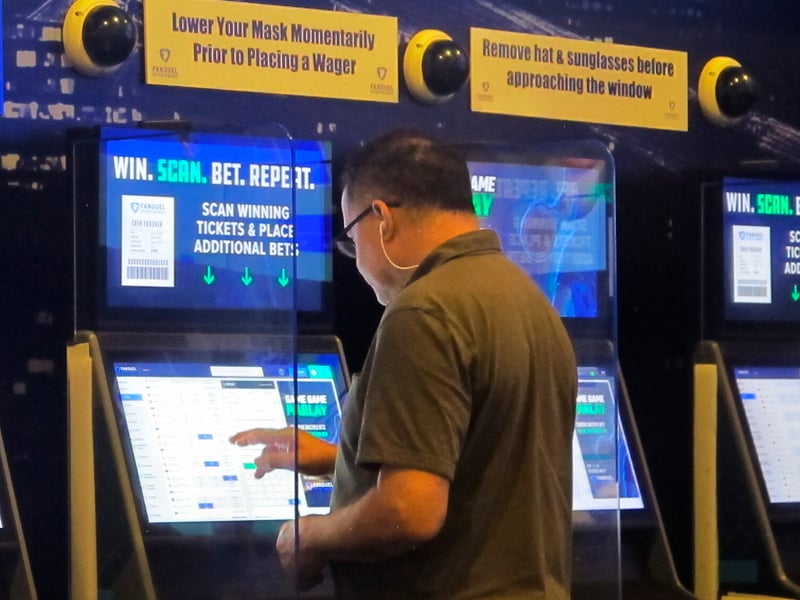
WASHINGTON (CN) —The Supreme Court refused to block a sports betting deal between Florida and the Seminole Tribe on Wednesday.
None of the high court justices publicly dissented from the order. Justice Brett Kavanaugh provided a statement respecting the court’s stay denial. The Trump appointee explained that he understood the lower court order to only permit on-reservation gaming operations.
“I agree that the stay application should be denied in light of the D.C. Circuit’s pronouncement that the compact between Florida and the Seminole Tribe authorizes the tribe to conduct only on-reservation gaming operations, and not off-reservation gaming operations,” Kavanaugh wrote.
Kavanaugh stipulated that Florida’s statute allowing the tribe to conduct off-reservation sports betting concerned him.
“To the extent that a separate Florida statute (as distinct from the compact) authorizes the Seminole Tribe — and only the Seminole Tribe — to conduct certain off-reservation gaming operations in Florida, the state law raises serious equal protection issues,” Kavanaugh wrote.
However, since a challenge to the state’s law was not the issue presented to the court, the justice would not address those concerns in the order.
Casinos in the state asked the high court to block the deal, arguing it gave the tribe a monopoly over sports betting in the states and violated the Constitution.
States lack authority over gaming on tribal lands, so tribal gambling follows federal law. The Indian Gaming Regulatory Act provides a regulatory framework for gambling used on tribal lands. The act allows states and tribes to negotiate deals and those deals are overseen by the federal government.
The Seminole Tribe signed a compact with Florida Governor Ron DeSantis in April 2021 which covered sports betting. According to the deal, tribes could conduct sports betting on their land.
Sports betting under the deal earned the ire of the casinos who challenged the case. According to the deal, the location of the servers used to place sports bets had to be on tribal lands. However, according to state law, the tribe was allowed to offer online sports betting. This made it so customers could place bets anywhere in the state as long as the wagers were received on tribal land.
The Interior Department did not intervene in the deal when it was submitted to the government for review. After the 45-day holding period, the compact took effect.
West Flagler Association and Bonita-Fort Myers Corporation sued the government, arguing it violated the Administrative Procedure Act by approving the compact. The casino owners claim allowing Floridians to place online bets on non-Indian lands violated the Indian Gaming Regulatory Act, and that those wagers were illegal under the Unlawful Internet Gambling Enforcement Act of 2006. West Flagler also claims the deal discriminates on the basis of race, trial affiliation, and national origin.
A lower court sided with the casino owners, finding that the compact violated the Indian Gaming Regulatory Act. That ruling was reversed on appeal. The D.C. Circuit found that the state and tribe properly interpreted the act.
The casino owners asked the Supreme Court to step in.
“Unless the mandate is stayed, the circuit opinion will upset the status quo in Florida by permitting the tribe to conduct online sports gaming throughout the state, even though the Florida Constitution prohibits any such gaming absent a citizens’ initiative, and UIGEA prohibits use of the internet to transmit payments between a jurisdiction where gambling is illegal (Florida) and one where it is legal (the tribe’s land),” Hamish Hume, an attorney with Boies Schiller representing the organizations, wrote
According to the government, the casino owners’ claims that the court of appeals upheld a compact that regulates sports betting off tribal lands was inaccurate. Instead, the government explains that the lower court only upheld the tribe’s activity on its own land.
The government argued that because Congress authorized the operation of gaming activities on tribal lands, those same provisions would apply to matters off Indian lands that are directly related to gaming activities on Indian lands.
“States have ‘capacious’ authority to regulate ‘tribal gaming outside Indian territory,’” U.S. Solicitor General Elizabeth Prelogar wrote. “And if a state can authorize a tribe to conduct gaming operations on non-Indian lands, a State can also authorize the portion of a tribe’s gaming activities that occur on non-Indian lands where the balance of the activities occurs on Indian lands.”
Chief Justice John Roberts issued a temporary pause to allow the justices to review the matter, which was then vacated when the stay request was denied.
 Follow @KelseyReichmann
 Follow @kelseyreichmann.bsky.social
Subscribe to our free newsletters
Our weekly newsletter Closing Arguments offers the latest about ongoing trials, major litigation and rulings in courthouses around the U.S. and the world, while the monthly Under the Lights dishes the legal dirt from Hollywood, sports, Big Tech and the arts.