
 Search Articles


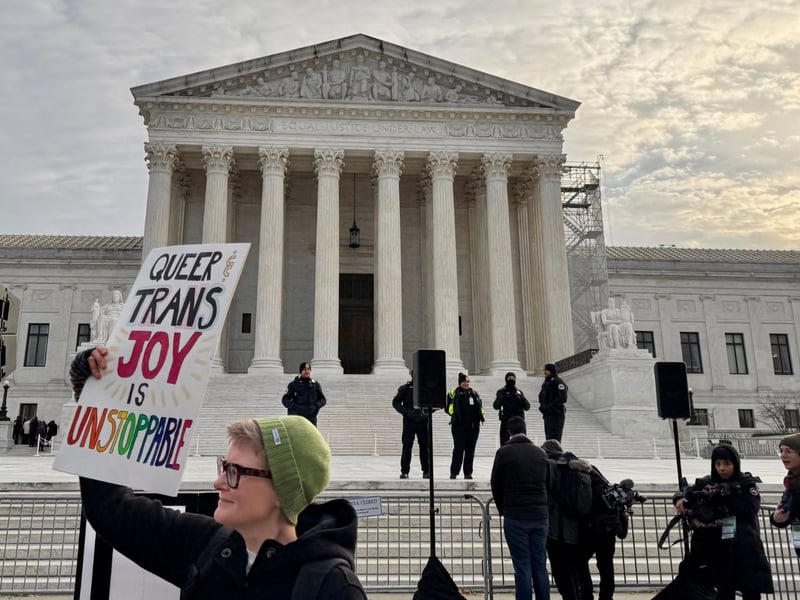
WASHINGTON (CN) — The Supreme Court is set to review Colorado’s ban on conversion therapy next week in a case that could strengthen attacks on knowledge institutions, pitting the free speech concerns of a religious counselor against the subject matter experts in their field.
“This is a court that has shown itself extremely hostile to expertise, including scientific expertise,” Scott Skinner-Thompson, a law professor at the University of Colorado Boulder, said, citing Justice Clarence Thomas’ concurring opinion in United States v. Skrmetti .
The George H.W. Bush appointee detailed his opposition to medical transition surgery for transgender minors despite the case only concerning minors’ use of hormone therapy. Skinner-Thompson said the high court could continue the trend of commenting on medical expertise in an appeal over Colorado’s ban on conversion therapy.
The American Psychological Association and 13 other mental health and medical professional organizations say sexual orientation and gender identity change efforts — also known as conversion therapy — do not meet the criteria of a legitimate therapeutic treatment. According to the organizations, such efforts are harmful and not supported by credible scientific evidence.
Kaley Chiles, a counselor at Deeper Stories Counseling in Colorado Springs, disagrees. She claims her minor clients have sought out faith-based counseling to reduce or eliminate unwanted sexual attractions or change sexual behaviors.
Chiles says she is barred from providing such care, however, because under Colorado law, conversion therapy on minors is considered unprofessional conduct for licensed therapists. The Minor Conversion Therapy Law only applies to licensed healthcare providers, not religious or spiritual leaders.
A slew of religious and conservative advocacy groups lined up to support Chiles, arguing Colorado’s law unconstitutionally outlaws speech based on the state’s preferred ideology. On the other side of the ledger, medical organizations and other scholars say Colorado’s law regulates professional conduct based on industry standards.
On Oct. 7, the Supreme Court will hear both sides, and legal experts say who prevails could have broad impacts on professional conduct and speech nationwide.
What is conversion therapy?
Chiles says Colorado’s law favors expression of some views and not others, restricting counselors’ conversations with clients.
“Colorado allows counselors to express ‘[a]cceptance, support, and understanding for the facilitation of an individual’s coping, social support, and identity exploration and development,’ but not when a client requests ‘counseling…to change sexual orientation or gender identity’ or any associated behavior, expression, or feeling,” Chiles wrote.
She argued that the state used the charged term “conversion therapy” to enforce broad restrictions that violate counselors’ First Amendment rights. Chiles says that because counselors use their speech in their practice, the state can’t enforce such restrictions.
“Chiles’ counseling conversations are constitutionally protected speech,” Chiles wrote. “They communicate messages that clients want to hear as they struggle to address some of the most important issues, moral questions, and feelings they are facing.”
Colorado says states have regulated health care practices for centuries, stating that patients expected licensed professionals to provide a high standard of care. The state argued that the First Amendment has never barred states’ ability to prohibit substandard care. Colorado said health care professionals can share information and opinions with patients and others.
“The only thing that the law prohibits therapists from doing is performing a treatment that seeks the predetermined outcome of changing a minor’s sexual orientation or gender identity because that treatment is unsafe and ineffective,” the state wrote.
Licensed professional counselors in Colorado must complete a master’s degree from an accredited professional counseling program. Depending on the type of counseling provided, therapists in the state must also undergo post-degree clinical practice and pass clinical exams.
Medical associations stress that accreditation requirements and licensing guidelines require therapists to use evidence-based counseling strategies. Counselors must also stay up to date with ongoing licensure requirements, including education on evidence-based treatments.
According to the American Psychological Association’s research, conversion therapy can consist of “aversive” techniques to change sexual orientation, like inducing nausea and paralysis, electric shock therapy, shame-aversion therapy and systematic desensitization. The organization also studied “non-aversive” approaches like assertiveness and dating trainings, affection training with physical and social reinforcement and hypnosis.
After a two-year study, the American Psychological Association recommended ending the use of conversion therapy in 2009, concluding that its methods were ineffective and harmful. In 2021, the group reaffirmed its opposition to the practice after reviewing additional research.
The American Psychological Association says therapists should use gender-affirming practices known as affirmative therapy that help sexual minorities cope with the impact of stress and stigma.
“‘[First] do no harm’ has long been foundational to the practice of health care professionals,” the association wrote. “For this reason, an ethical practitioner should not offer treatments that would harm the patient’s health, or for which no evidentiary basis exists to satisfy a patient’s request; for example, a physician would decline to prescribe antibiotics for a viral infection — even if the patient insists.”
Chiles rejected the medical associations’ view of the science, relying instead on studies suggesting that gender-affirming care can have negative consequences. She cited the controversial Cass Review — a UK study that has been used to justify prohibitions on gender-affirming care, including at the Supreme Court. Yale researchers claimed the Cass Review ignored established standards for evaluating evidence and misinterpreted and misrepresented its own data.
How will the justices decide who’s right?
When the Supreme Court reviews Chiles’ appeal, it will weigh whether Colorado’s law regulates conduct or violates the Free Speech Clause.
Arguing in favor of conduct, Colorado says the First Amendment has never been understood to give professionals a constitutional right to deliver treatment that violates standards of care.
The state cited the court’s 2018 ruling in National Institute of Family and Life Advocates v. Becerra . Colorado said the ruling identified malpractice law and informed-consent law as regulations that do not trigger strict scrutiny even where they regulate healthcare professionals’ treatment that involves words.
“Both malpractice and informed-consent law routinely regulate the words health care professionals use when providing treatment to their patients,” Colorado wrote. “Both do so to protect patients from substandard care.”
Chiles countered that the justices should follow 303 Creative v. Elenis , which said a wedding website designer had a First Amendment right to deny service to gay couples.
“Just as the Free Speech Clause stopped Colorado a few years ago, it does so again here,” Chiles wrote. “Because the state’s restriction silences Chiles’ counseling conversations based on viewpoint, this application of the statute must satisfy strict scrutiny.”
If the Supreme Court sides with Chiles, Skinner-Thompson said other longstanding regulations of professional conduct could be upended. He said the justices also risked weakening the standard for evaluating First Amendment violations.
“Courts could basically say, ‘Well, we’re applying strict scrutiny, but we really don’t want these laws to be struck down, so we’re going to apply sort of a watered-down strict scrutiny light,’ which will further muddy the constitutional waters,” Skinner-Thompson said.
The Supreme Court’s 2025 term begins on Oct. 6.
 Follow @KelseyReichmann
 Follow @kelseyreichmann.bsky.social
Subscribe to our free newsletters
Our weekly newsletter Closing Arguments offers the latest about ongoing trials, major litigation and rulings in courthouses around the U.S. and the world, while the monthly Under the Lights dishes the legal dirt from Hollywood, sports, Big Tech and the arts.