
 Search Articles


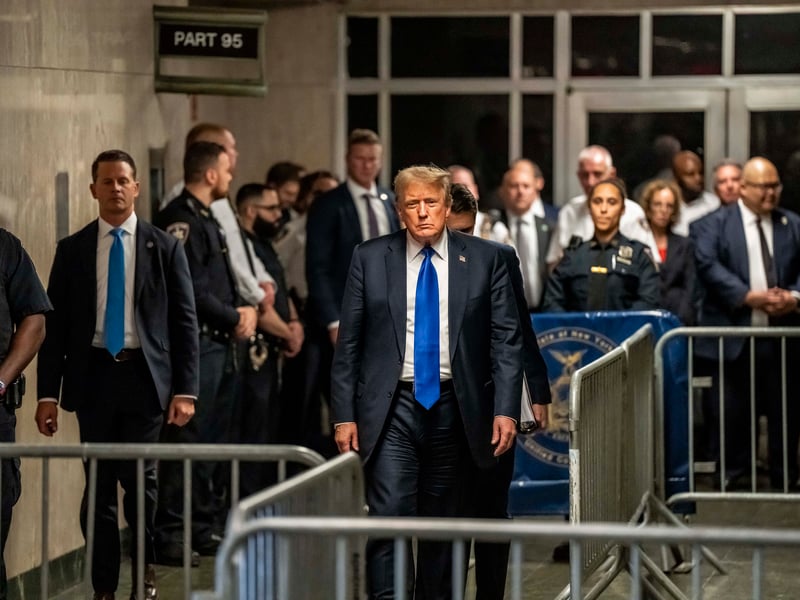
WASHINGTON (CN) — The Supreme Court on Monday rejected a novel appeal from Missouri, refusing to lift a gag order and delay Donald Trump’s sentencing for felony convictions in his hush money criminal case.
Missouri filed a bill of complaint against New York in early July, claiming that the Empire State infringed on the rights of Missouri voters and electors by prosecuting Trump for falsifying business records to cover up payment to an adult film star before the 2016 election.
The state argued that Trump’s impending sentence for 34 felony counts and gag order prevented electors from fulfilling their federal functions. Missouri also claimed that Trump’s gag order prevented voters from hearing campaign speeches in violation of their First Amendment rights.
“Missouri respectfully submits that the forgoing violations establish considerable harms to voters and electors in Missouri, who will be precluded from fully engaging with and hearing from a major-party presidential candidate in the run-up to the November election,” Joshua Divine, Missouri’s solicitor general, wrote in the state’s brief.
New York said Missouri was trying to further the individual interests of the former president, not its voters. The Empire State said the speculative grievances of Missouri residents are not concrete harms worthy of an original jurisdiction appeal.
“Allowing Missouri to file this suit for such relief against New York would permit an extraordinary and dangerous end-run around former President Trump’s ongoing state court proceedings and the statutory limitations on this Court’s jurisdiction to review state court decisions,” Barbara Underwood, New York’s solicitor general, wrote in the state’s brief.
The court did not explain its denial. Justices Clarence Thomas and Samuel Alito indicated they would have allowed Missouri to file its case at the court, which is in line with previous fights between states. None of the justices said they would have granted the injunction requested by Missouri to lift Trump’s gag order and prevent his sentencing.
Missouri framed its motion as a “modest request” but the high court’s action on original jurisdiction cases is exceedingly rare. The posture allows the justices to be the first and only court to hear the appeal — a departure from its normal role as the last to review a case.
Original jurisdiction appeals are limited to cases impacting parties without a clear jurisdiction in the lower courts, such as disputes among states.
Missouri said that New York’s conviction interfered with Trump’s campaign travel, which in turn violated the rights of Americans everywhere.
The state attacked New York prosecutors for bringing the case against Trump, suggesting that it was politically motivated.
“Nothing is more destructive to the health of a democracy than distrust in the outcome of an election,” Divine wrote. “And yet New York has brought transparently weak charges for the transparent purpose of trying to impose political damage against Trump and trying to restrain his ability to campaign in advance of an election forecasted by the polls to be very close.”
Missouri asked for an injunction preventing New York from enforcing Trump’s gag order or moving forward with sentencing. The state filed an additional brief requesting expedited review of its petitions.
New York doubted in its brief that Trump’s potential sentence — which was delayed until September — and speech restrictions prevented voters from hearing from the former president.
Under the gag order, Trump can talk about Manhattan District Attorney Alvin Bragg and witnesses who testified in his case, but he cannot make or direct any public statements about the district attorney or court staff or their families.
New York Supreme Court Justice Juan Merchan, who presided over the case, is not covered under the gag order but Trump is prohibited from speaking about Merchan’s family.
Since the trial, members of the district attorney’s office were threatened online. An employee’s address was leaked in one social media post and another included sniper sights on people close to the case or their family members. Two people involved in the case also received bomb threats.
Bragg cited these incidents for reasons to uphold Trump’s gag order following his conviction.
Even if Missouri’s injuries met the court’s standard, New York said it isn’t the authority on the case. Only either Bragg or the courts considering Trump’s appeals would have to grant any kind of relief.
Earlier this month, Trump launched his own fight against the verdict with an assist from the Supreme Court. The former president cited the conservative majority’s ruling on presidential immunity to challenge evidence shown to the jury.
 Follow @KelseyReichmann
 Follow @kelseyreichmann.bsky.social
Subscribe to our free newsletters
Our weekly newsletter Closing Arguments offers the latest about ongoing trials, major litigation and rulings in courthouses around the U.S. and the world, while the monthly Under the Lights dishes the legal dirt from Hollywood, sports, Big Tech and the arts.