
 Search Articles


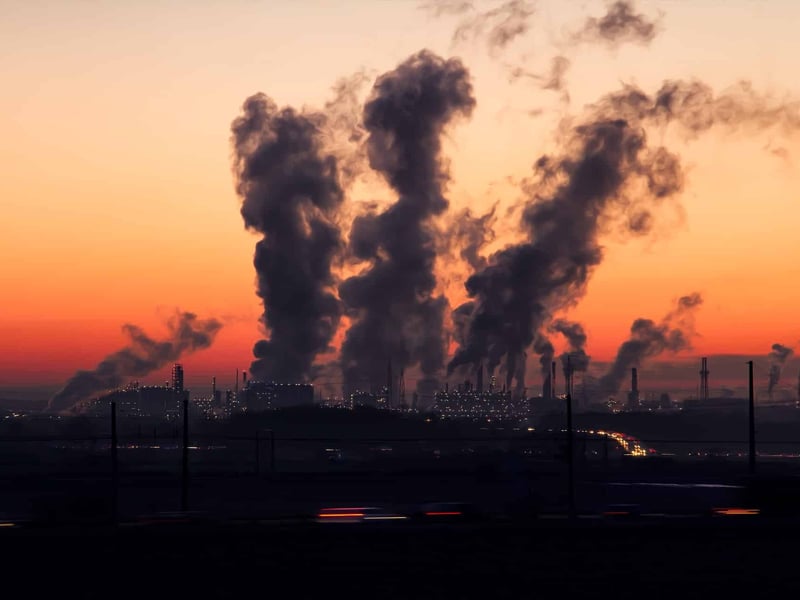
WASHINGTON (CN) — The Supreme Court agreed Monday to review the D.C. Circuit’s position as the nation’s air regulation adjudicator.
Conservative states and the Biden administration clash over whether national air quality standards need uniform judicial review or individualized review based on locale.
“Given the massive effect of EPA cross-state ozone regulation on local economies, these disputes are too important to be litigated amidst such a legal haze,” Oklahoma told the court.
The jurisdictional dispute puts the Environmental Protection Agency’s Good Neighbor Rule on the Supreme Court docket only a few months after the justices paused regulations in certain states. In June, the court split in an unusual emergency appeal on the merits docket, ruling that the government ignored states’ concerns in a federal implementation plan.
While the current petitions are separate appeals from those reviewed by the court last term, the justices will address similar concerns over balancing state and federal authority over air pollution.
Under the Clean Air Act, the EPA is responsible for setting standards for air quality, including transient pollution that puts a bigger burden on downwind states. The Good Neighbor Rule requires states’ emissions plans to prohibit in-state pollution that will significantly interfere with another state’s maintenance of healthy air quality.
The agency determined that almost two dozen states failed to account for cross-border pollution in plans after a crackdown on ozone standards. States and industry groups challenged the EPA’s rejection of half of those plans.
Oklahoma, Utah and other industry groups filed petitions for review in the 10th Circuit and the D.C. Circuit. The EPA asked to transfer the cases to D.C.
“The action at issue here is EPA’s disapproval action, which applies to 21 states spanning ‘eight EPA regions and 10 federal judicial circuits,’ and which invokes ‘a uniform statutory interpretation and common analytical methods’ to ‘examine the overlapping and interwoven linkages between upwind and downwind states in a consistent manner,’” the government wrote.
The Biden administration says congressional lawmakers made the D.C. Circuit the venue for nationally applicable rules that could have nationwide scope or effect.
The 10th Circuit agreed with the EPA, sending the case to the D.C. Circut, but the Fifth Circuit ruled against the agency in a similar case from small refineries.
“That outcome creates precisely the risk of duplicative litigation and inconsistent rulings that Congress sought to avoid, and it interposes substantial obstacles to the orderly operation of EPA programs,” the government wrote.
Environmental advocacy groups warned that the case could open the floodgates to disruptive litigation from industry groups “seeking to punch holes in the fabric of our nation’s clean air laws.”
“At stake is whether we will have more pollution afflicting millions of people due to chaotic industry litigation,” Vickie Patton, general counsel for the Environmental Defense Fund, continued in her statement. “EDF opposes these efforts to destabilize our congressionally created and long-established clean air protections.”
The justices granted an additional petition from Edgardo Esteras, Timothy Jaimez and Torian Leaks Jr. challenging the criteria for parole violations. All three men were sent back to prison for disobeying the terms of their supervised release after being convicted on felony charges.
The justices will review whether the courts improperly considered certain factors when deciding to send the men back to prison.
 Follow @KelseyReichmann
 Follow @kelseyreichmann.bsky.social
Subscribe to our free newsletters
Our weekly newsletter Closing Arguments offers the latest about ongoing trials, major litigation and rulings in courthouses around the U.S. and the world, while the monthly Under the Lights dishes the legal dirt from Hollywood, sports, Big Tech and the arts.