
 Search Articles


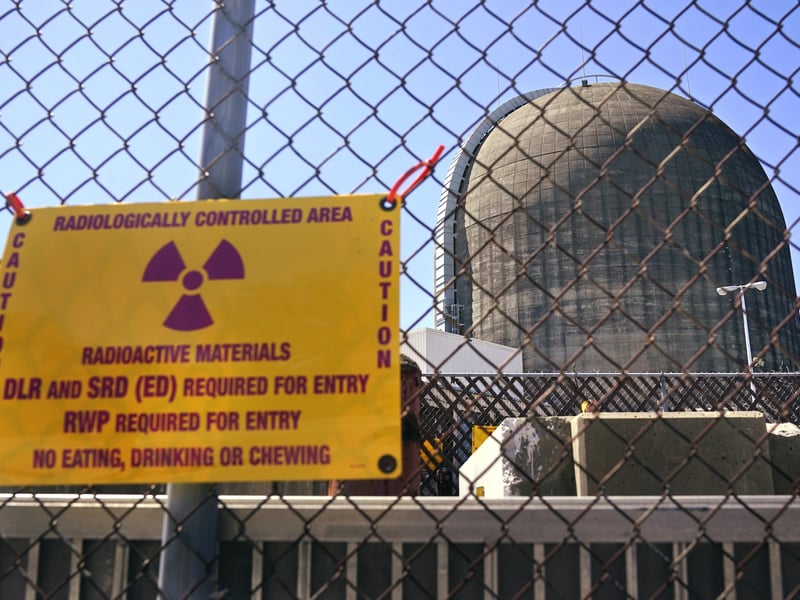
WASHINGTON (CN) — The U.S. Supreme Court on Friday said it would hear arguments in two cases challenging the government’s ability to approve storage sites for used nuclear fuel from power plants, marking its official foray into the yearslong battle over what to do with the country’s growing stockpile of radioactive waste.
The high court granted certiorari to a pair of petitions filed by the U.S. Nuclear Regulatory Commission and waste disposal conglomerate Interim Storage Partners, which both requested that the justices review an August ruling from the Fifth Circuit Court of Appeals.
The court is expected to take up the case in its forthcoming term, which begins Monday. Arguments likely will begin next year, with a decision possible by the summer.
At issue for the justices is Nuclear Regulatory Commission’s 2021 approval of Interim Storage Partners’ proposed spent fuel storage facility in west Texas. Interim Storage Partners, a joint venture between Dallas-based Waste Control Specialists and French nuclear services giant Orano, first applied for a federal license to build the site back in 2016.
Nuclear waste regulators licensed the proposed facility to operate for 40 years. If built, the company has said its site could house as much as 40,000 tons of spent nuclear fuel.
The facility is one of two privately owned spent fuel storage sites federal regulators have approved in recent years. The Nuclear Regulatory Commission granted a separate license for a similar site proposed for southeastern New Mexico by New Jersey-based Holtec International.
But, following a lawsuit from Texas Governor Greg Abbott, the Fifth Circuit ruled in August 2023 that federal law did not give the commission legal authority to approve such facilities, hitting pause on both projects.
In addition to accusing nuclear regulators of violating the law, Texas leaned on new Supreme Court precedent — the high court’s 2022 ruling in the case West Virginia v. EPA — which held that federal agency actions that constitute “major questions” of political or economic significance should be left to Congress.
Abbott accuses the federal government of aiming to make Texas the country’s nuclear waste “dumping ground” despite opposition to the storage project in Austin.
The commission, for its part, has argued that the Atomic Energy Act — its founding law — gives it the power to license away-from-reactor nuclear waste storage sites. Further, it contends, Texas and other stakeholders opposing the Interim Storage Partners project forfeited their right to sue because they did not participate in agency-level licensing proceedings.
The Supreme Court’s decision to hear the case is positive news no matter where you fall on the issue, said Steven Nesbit, former president of the American Nuclear Society.
“It’s good that the Supreme Court took this up, because they are very important issues and they have wide ranging implications,” he told Courthouse News in an interview. “These are the kinds of questions that deserve to be addressed by the top court in the land so that the nation can have some certainty as to what the rules of the game are going forward.”
In a statement Friday, Ellen Ginsberg, senior vice president of nuclear trade group the Nuclear Energy Institute said the organization was “pleased” with the court’s decision to take up the case.
But Nesbit, who previously led one of the nuclear industry’s foremost professional organizations, also called the Fifth Circuit’s 2023 ruling contrary to the existing understanding of the regulatory commission’s authority.
The agency has already licensed away-from-reactor waste storage facilities of the kind the appeals court held exceeded its authority, he argued, pointing to a General Electric-operated site in Morris, Illinois, that houses fuel assemblies from civilian nuclear plants such as Connecticut’s decommissioned Connecticut Yankee plant.
“I don’t know what the appeals court thought the implication should be — if the NRC can’t license [sites], what’s the solution there?” Nesbit said. “I don’t think they thought broadly when they made their decision.”
While he said he was optimistic about a ruling in favor of the nuclear regulator, he forecast that a Supreme Court decision upholding the Fifth Circuit’s judgment not only would scuttle the two proposed waste storage projects but also could open “Pandora’s Box” on the commission’s broader licensing processes, including for operating nuclear power plants.
“Adopting the Fifth Circuit’s conclusion … would further delay progress in advancing a safe, environmentally sustainable and well-managed used fuel management system,” said Ginsberg.
The high court’s conservative majority has on several occasions ruled in favor of restricting the authority of federal agencies. In addition to their decision in the West Virginia case, the justices in June struck down the so-called “Chevron deference,” a precedent which held that courts should defer to agency expertise when weighing certain issues.
The ongoing debate over temporary nuclear waste storage, often referred to as consolidated interim storage, arose thanks to the lack of a permanent disposal solution for the roughly 100,000 tons of spent nuclear fuel stranded at nuclear power plants across the country.
Spent fuel rods, the byproduct of electric generation at nuclear power plants, have very specific disposal requirements given the heat and radiation they will give off for thousands of years after they are removed from a nuclear reactor. While they can be stored safely at the plants where they were generated, such measures were intended to be temporary, until the government opened a permanent nuclear waste repository.
Congress in the 1980s designated Nevada’s Yucca Mountain one such site. But decades of delays and political opposition kept the facility as little more than a hole in the ground, and in 2010 President Barack Obama mothballed the project.
Since then, the nuclear industry has turned to interim storage as a possible stopgap. Proponents of interim storage facilities have said they would be the country’s first actionable steps toward solving its decades-old nuclear waste dilemma.
But detractors argue that, in the absence of a permanent disposal site, these interim projects will become de facto permanent storage sites.
Anti-nuclear advocacy group Beyond Nuclear, which emerged as a chief opponent of the two proposed private storage facilities and was deeply involved in licensing proceedings, did not immediately return a request for comment on the Supreme Court’s decision to hear the Interim Storage Partners case.
 Follow @BenjaminSWeiss
Subscribe to our free newsletters
Our weekly newsletter Closing Arguments offers the latest about ongoing trials, major litigation and rulings in courthouses around the U.S. and the world, while the monthly Under the Lights dishes the legal dirt from Hollywood, sports, Big Tech and the arts.