
 Search Articles


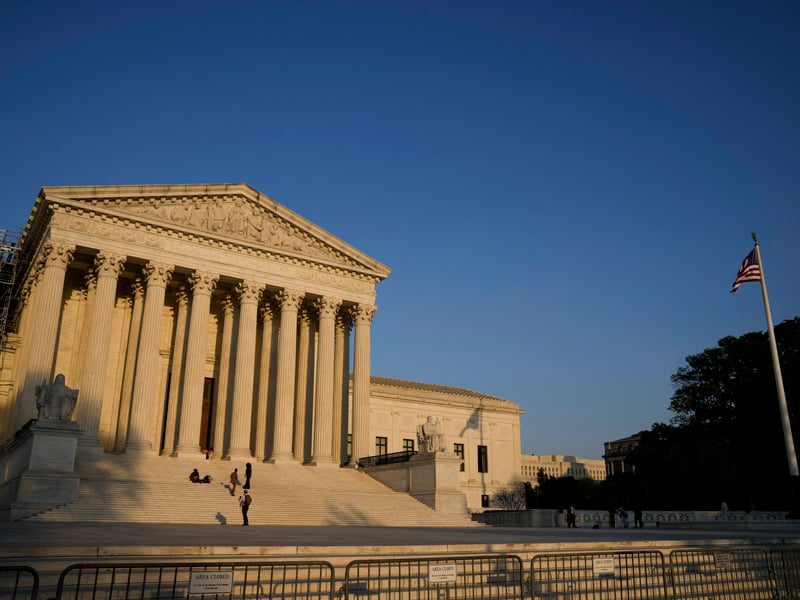
WASHINGTON (CN) — Justices Sonia Sotomayor and Neil Gorsuch teamed up during Monday’s Supreme Court arguments in a civil forfeiture case to defend car owners who often lose possession of their property for years, and at no fault of their own.
Sotomayor and Gorsuch, who are often at odds in high court debate, looked for an opening to prevent this kind of abuse by requiring a post-deprivation hearing to quickly return repossessed property to its rightful owners.
“These cases are most important for one group of people: innocent owners,” Sotomayor said, referring to people whose property was seized based on suspected conduct of which the owner was unaware.
The Obama appointee rebutted arguments that post-deprivation hearings would allow criminals to retain property. She said criminal defendants would often choose to forgo an additional hearing to avoid having to testify about their criminal act.
Gorsuch expressed concerns similar to Sotomayor’s, albeit with a more narrow focus. The conservative justice said Alabama was leaving owners with no ability to obtain their property, describing the long waits individuals often face to get their property back.
“Your argument would seem to strip the court of the tools to address that,” the Trump appointee told the owners’ attorneys.
However, Gorsuch seemed to think the case before the court might not be the right vehicle to address those concerns.
“While I’m very sympathetic to the problem, I’m just wondering if this is the case,” Gorsuch said.
Gorsuch did concede that the court was the one to take up this case.
The case was brought by an Alabama woman, Halima Culley, whose car was seized by the city of Satsuma during her son’s arrest on possession of marijuana and drug paraphernalia charges.
Alabama tried to seize the vehicle permanently by filing a civil asset forfeiture action in state court. Culley would wait almost two years for a hearing; the state court ultimately ruled in her favor under Alabama’s innocent-owner defense.
Lena Sutton’s story follows a similar path, leaving her carless for over a year before a court determined she was an innocent owner.
Culley and Sutton filed class actions claiming the state conspired to take their property unlawfully. The suits alleged that Culley and Sutton had their Eighth and 14th Amendment rights violated.
The lower courts ruled against them, but Culley and Sutton fought back by arguing the wrong test was used to reach that ruling. The test in question was developed in the court’s 1972 ruling in Barker v. Wingo, which determined when delays deprive criminal defendants of their constitutional rights.
Culley and Sutton argue the courts should have used the test developed in the court’s 1975 ruling in Mathews v. Eldridge , which determines whether the cities’ continued impoundment of the cars violates due process.
“The question presented is narrow,” Shay Dvoretzky, an attorney with Skadden, Arps, Slate representing Culley, said, “Mathews or Barker .”
Dvoretzky said the court should decide the answer was Mathews , which he said was about not micromanaging courts, but protecting due process.
Alabama urged the justices to avoid upending a helpful tool to cripple crime. The federal government argued with the state, arguing that the justices did not need to create a rehearing requirement.
Justice Ketanji Brown Jackson pushed back on the government’s argument.
“I appreciate that the government thinks it knows the answer in all these cases, which is you don’t get a hearing,” the Biden appointee said.
Sotomayor argued against some of her colleagues who believed that filing for summary judgment would provide a solution for these owners. She said the purpose of summary judgment is to decide who owns the car, however, the purpose of post-deprivation hearings was to decide who keeps the car.
However, although the three liberal justices might have converted one vote to their side in Gorsuch, it’s not clear there would be a fifth to decide the case along their views.
Justice Amy Coney Barrett described the car owners’ arguments as having “a hard road to hoe.” Justice Brett Kavanaugh seemed to believe the court’s precedents set out a very clear path that did not require a post-deprivation hearing. Justice Samuel Alito worried about the implications of requiring this additional hearing.
“If the retention has to occur within 48 hours … is it practical for the police to prove there were drugs in the car?” the Bush appointee asked.
Justice Clarence Thomas appeared to think that Alabama’s current system would do the job.
“Here’s my problem," the Bush appointee told the owner’s attorney, “you say that under Alabama procedures you could have got your property back.”
 Follow @KelseyReichmann
 Follow @kelseyreichmann.bsky.social
Subscribe to our free newsletters
Our weekly newsletter Closing Arguments offers the latest about ongoing trials, major litigation and rulings in courthouses around the U.S. and the world, while the monthly Under the Lights dishes the legal dirt from Hollywood, sports, Big Tech and the arts.