
 Search Articles


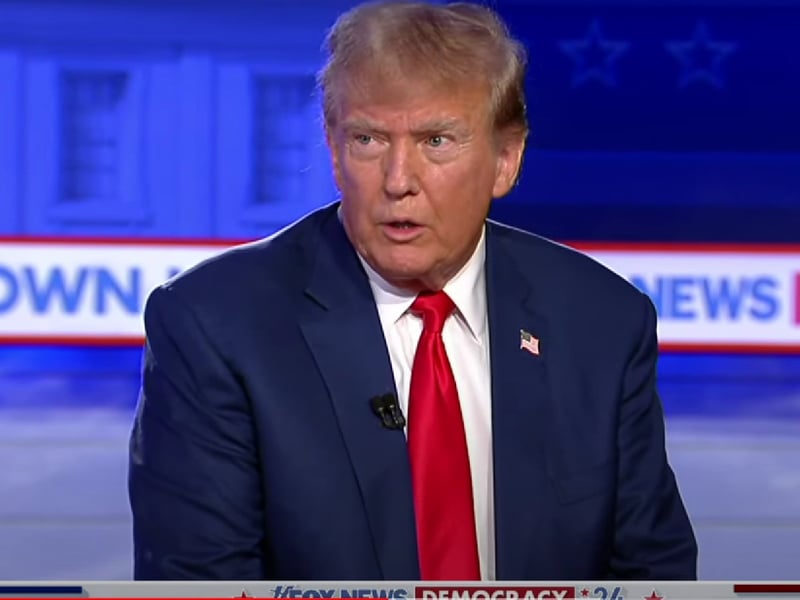
WASHINGTON (CN) — The Supreme Court refused Monday to review whether a gag order on social-media giant X, which prevented the company from notifying former President Donald Trump of a government search warrant for his account data, was unconstitutional.
In January 2023, as part of the the government’s investigation into 2020 election interference, Special Counsel Jack Smith sought a warrant under the Stored Communications Act for information on Trump’s then-Twitter account.
Additionally, Smith requested a nondisclosure order prohibiting X from disclosing the warrant or its content.
Under the Stored Communications Act, search warrants on electronic communications can merit nondisclosures if there’s a threat that knowledge of the warrant will endanger someone’s life, create a flight risk, compromise evidence or jeopardize an investigation.
Smith believed that telling Trump would lead to the destruction of evidence, witness tampering or otherwise harm the investigation. The lower court agreed, issuing a warrant forcing X to hand over Trump’s data within 10 days. It also issued a nondisclosure order prohibiting the company from notifying the former president.
X refused to comply with the order, challenging the nondisclosure mandate as unconstitutional. The site claimed that Trump’s First Amendment rights were violated by the nondisclosure order, arguing the stakes were heightened because of executive-privilege issues.
A lower court held X in contempt for refusing to give Smith Trump’s data. But the court also paused the search warrant while litigating the nondisclosure challenge.
After failing to meet a new deadline to comply with the warrant, X eventually sent Smith 32 direct messages from Trump’s account — a fraction of what the special counsel had requested. A court ordered X to pay a civil contempt sanction of $350,000.
Two D.C. courts upheld the nondisclosure order, finding it valid under the First Amendment.
The details of the warrant were widely reported after Trump was indicted — and Smith notified the court that the nondisclosure order was no longer necessary. X, however, nonetheless suggested the Supreme Court use this case to review the constitutionality of the order.
Online platforms receive tens of thousands of nondisclosure orders every year. Those orders can only be challenged by the providers. X said it was rare for challenges of these orders to receive appellate review because the government often modifies their request. Other times, the case has to be heard on an expedited schedule to accommodate an ongoing investigation.
If an appeal came to the Supreme Court, it would likely be on the emergency docket where the justices wouldn’t have the benefit of a full briefing and review.
“If the court does not grant this petition, it could be decades (if ever) before it gets another clean vehicle to resolve the important and recurring questions presented,” X wrote.
X claimed that search warrants and nondisclosure orders undermined the executive privilege of the presidency, giving prosecutors a loophole to obtain privileged materials. The platform warned that the consequences of this authority were broad, potentially allowing the government to violate attorney-client or journalist-source privileges.
Smith argued that X wanted to inject unfounded executive-privilege claims into its challenge. He said the platform didn’t have standing to bring such claims. He also said the Fourth Amendment permits the government to obtain search warrants for property belonging to an innocent third party as long as it’s supported by probable cause.
Smith took the opposite view of the X, seeing the moot conflict as a reason for the court not to hear the appeal.
“If review of the underlying legal issues were ever warranted, the court should await a live case in which the issues are concretely presented,” Smith wrote.
The justices apparently agreed — though they did not explain their denial. There were no noted dissents.
 Follow @KelseyReichmann
 Follow @kelseyreichmann.bsky.social
Subscribe to our free newsletters
Our weekly newsletter Closing Arguments offers the latest about ongoing trials, major litigation and rulings in courthouses around the U.S. and the world, while the monthly Under the Lights dishes the legal dirt from Hollywood, sports, Big Tech and the arts.