Search Articles


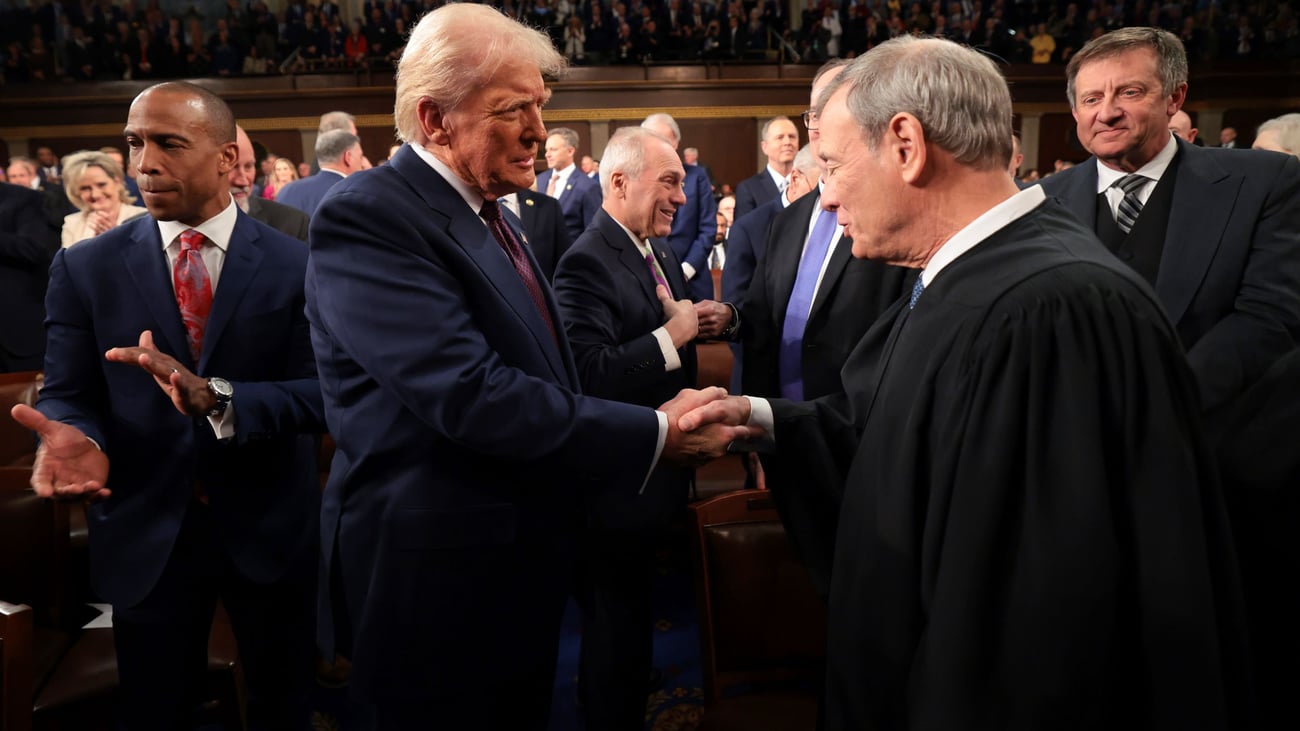
WASHINGTON (CN) — The sprint to summer break is in full swing as the Supreme Court prepares for several weeks of blockbuster rulings on elections, birthright citizenship and presidential power.
The justices typically depart Washington at the end of June, leaving just weeks for the court to dispense with two dozen appeals that remain undecided on the merits docket. Half of the outstanding cases are expected to net high-profile rulings, some of which could come as soon as Thursday when the justices take the bench to issue opinions.
Topping the list is Trump v. Slaughter, which could overturn nearly a century of precedent governing the independence of federal regulatory bodies. At issue is whether President Donald Trump had authority to fire Federal Trade Commissioner Rebecca Slaughter, but the broader case could open up impartial agencies to presidential influence.
During a contentious oral argument in December, the liberal justices were concerned about upending the structure of the democratic system, while the conservative wing worried that their colleagues wanted to handcuff the president’s oversight of the executive branch.
The high court looked more likely to find common ground in Trump v. Cook, which asks whether Trump had emergency authority to fire Federal Reserve Board Governor Lisa Cook. The justices seemed to view the Federal Reserve — which wields vast authority over the U.S. and international economy — differently than other regulatory bodies, appearing skeptical that Trump had unreviewable removal authority over its members.
One of the most closely watched appeals of the term that’s still undecided is Trump v. Barbara, concerning the president’s push to limit birthright citizenship. Although the conservative justices have typically endorsed a broad understanding of executive power, Trump’s executive order claiming to redefine the 14th Amendment over 150 years after its enactment seemed to be a bridge too far for the court.
Trump’s immigration agenda could still get a Supreme Court boost, however. In Mullin v. Al Otro Lado, the justices were sympathetic to letting Trump reinstate a border turnback policy, allowing border agents to prevent migrants from seeking asylum by physically blocking them from setting foot over the border. The administration has not formally stated whether it would restart the policy if the high court rules it lawful.
The high court also looked unlikely to limit the federal government’s ability to put certain green card holders on parole in Blanche v. Lau.
In Mullin v. Doe and Trump v. Miot, the court will weigh in on the administration’s decisions to end temporary protected status for Haitian and Syrian migrants. The justices were more critical of the administration’s perfunctory review of the perilous conditions migrants would face if stripped of legal status to reside in the U.S. But they seemed to acknowledge a path for the White House to prevail, even with a temporary setback.
Republican priorities
April’s landmark voting rights ruling was a boon for Republicans in a redistricting fight kicked off by the president. In Watson v. RNC, the justices could give the party a long-sought victory on mail-in ballots. The case stems from a challenge to a Mississippi law permitting absentee ballots to be counted as long as they were postmarked on or before the date of the election and received by the registrar no more than five business days after the election.
The high court will also rule on a Republican challenge to campaign finance regulations in NRSC v. FEC, which questioned if contribution limits that political parties can spend in coordination with a candidate violated the First Amendment.
Other conservative policy priorities like guns and transgender sports bans are awaiting rulings too. Although the justices struggled to decide whether the federal government could disarm illegal drug users in United States v. Hemani, they seemed likely to strike down default prohibitions requiring gun owners to receive permission to carry on private property in Wolford v. Lopez.
And in West Virginia v. BPJ and Little v. Hecox, red states are waiting for the high court to decide whether laws restricting girls’ sports teams based on biological sex discriminate against transgender athletes.
Under the radar
While less closely watched, another dozen lower profile appeals are also awaiting rulings. These include Roundup’s effort to squash a cancer patient’s personal injury lawsuit; the constitutionality of geofence warrants; violations of a Rastafarian’s religious rights while in a Louisiana prison; and a foreclosure fairness bid after a Michigan county seized a family home to satisfy a $2,000 tax bill.
The Supreme Court does not announce when specific decisions will be handed down from the bench. After indicating that they will issue rulings on the court’s public schedule, the justices reveal which appeal has been decided by reading a summary of the opinion from the bench. While the public can attend these sessions, the audio is not broadcast live like oral arguments.
A recording of the justices’ bench statements is released at the beginning of the following term. Per the court’s tradition, the justices are on recess between July and September. While they typically do not act on merits appeals during this time, the justices can act on emergency applications on the shadow docket. The high court’s term does not officially end until the first Monday in October, when a new term begins.
 Follow @KelseyReichmann
 Follow @kelseyreichmann.bsky.social
Subscribe to our free newsletters
Our weekly newsletter Closing Arguments offers the latest about ongoing trials, major litigation and rulings in courthouses around the U.S. and the world, while the monthly Under the Lights dishes the legal dirt from Hollywood, sports, Big Tech and the arts.