
 Search Articles


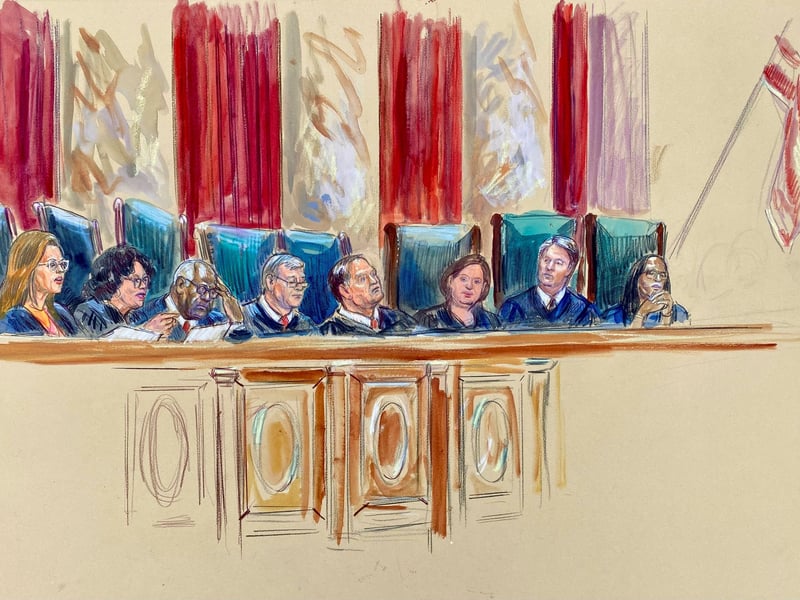
(CN) — The Supreme Court sided Tuesday against a New York-based auto parts company that claimed its funds were improperly seized, ruling that a challenge to a judgment considered void must be filed within a reasonable time limit.
In a unanimous opinion, Justice Samuel Alito wrote this finding is supported by the plain text interpretation of the law for challenging judgments under federal rules of civil procedure. While the law expressly imposes a one-year limit on motions claiming mistakes, new evidence or fraud, it does not include an “analogous unlimited-time principle for motions alleging voidness.”
The dispute before the high court arose in 2014, when Vista-Pro Automotive LLC, a Nashville-based auto parts corporation, entered bankruptcy proceedings.
Later represented by its Chapter 7 trustee, Jeanne Ann Burton, Vista-Pro initiated adversary proceedings against Coney Island Auto Parts Unlimited Inc., a New York corporation, to recover $50,000 in unpaid invoices.
Vista-Pro attempted to serve process on Coney Island by mail but purportedly failed to comply with federal rules governing service on corporations by addressing the summons only to the corporate entity and not to any individual.
As a result, Coney Island did not file an answer to the complaint, and the Bankruptcy Court entered a default judgment against it in May 2015.
Over the next six years, Vista-Pro’s bankruptcy trustee attempted to enforce the judgment against Coney Island. These efforts bore fruit in 2021 when a marshal seized funds from Coney Island’s bank account in satisfaction of the judgment.
Coney Island argued Vista-Pro’s failure to make proper service rendered the judgment void. But the Bankruptcy Court denied relief, holding Coney Island failed to abide by a requirement that parties make motions for relief within a “reasonable time.” The U.S. District Court for the Middle District of Tennessee and the Sixth Circuit Court of Appeals affirmed.
Allowing parties such as Coney Island to claim voidness at any time would have extreme implications, such as allowing parties to ignore deadlines for filing notices of appeal or petitions for certiorari when subject-matter jurisdiction is contested, Alito wrote in Tuesday’s opinion.
The George W. Bush appointee added that the Supreme Court cannot uphold any principle requiring courts to keep their doors perpetually open to allegations of voidness.
“Even if the passage of time cannot cure voidness, the same principle holds true for most legal errors,” Alito wrote. “Nevertheless, statutes and rules routinely limit the time during which a party can seek relief from a judgment infected by error.”
Therefore, a party in Coney Island’s position would need to show that some principle of law, such as the Due Process Clause, gives a party the right to claim voidness at any time, Alito added.
However, Justice Sonia Sotomayor scorned the justices’ consideration of possible due process arguments as they were not expressly raised by Coney Island or the Sixth Circuit.
In a separate opinion, she wrote that, while she agrees with the majority’s conclusion, it “unnecessarily opines on the potential validity of a constitutional challenge to the ‘reasonable time’ limit under the due process clause.”
“This court does ’not generally entertain arguments that were not raised below and are not advanced in this court by any party,’” Sotomayor wrote, quoting the high court’s precedent from the 2014 case Burwell v. Hobby Lobby Stores.
“There is no reason to depart from that practice absent unusual circumstances, which certainly are not present here,” added the Barack Obama appointee.
Attorneys representing Coney Island did not immediately respond to a request for comment on the ruling.
“We were obviously very pleased with the result and felt all along that the Sixth Circuit had the proper reading of Rule 60. Any other interpretation would conflict with a plain reading of the rule,” Vista-Pro’s attorney, Phillip Young with the Thompson Burton firm, said.
 Follow @Megwiththenews
Subscribe to our free newsletters
Our weekly newsletter Closing Arguments offers the latest about ongoing trials, major litigation and rulings in courthouses around the U.S. and the world, while the monthly Under the Lights dishes the legal dirt from Hollywood, sports, Big Tech and the arts.