
 Search Articles


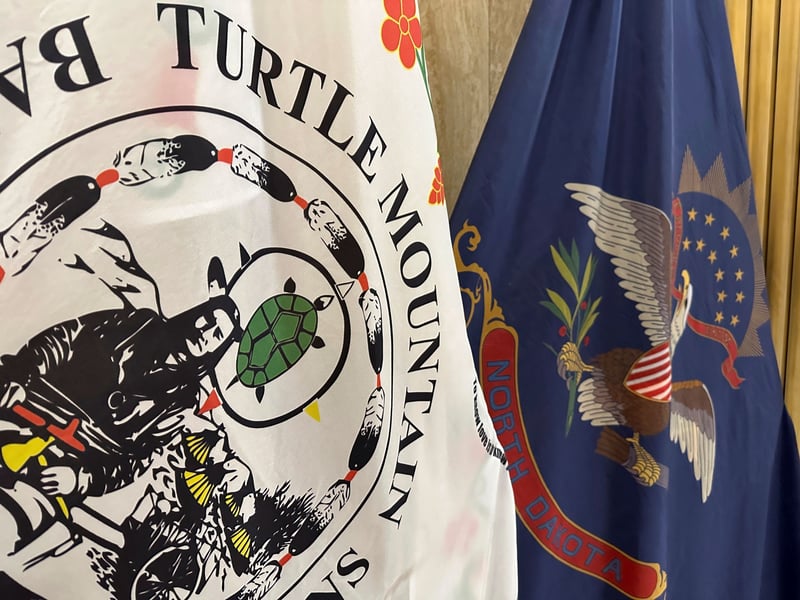
WASHINGTON (CN) — The Supreme Court revived a key provision of the Voting Rights Act protecting minority voters on**** Thursday, siding with North Dakota tribes fighting for equal representation in upcoming elections.
The Turtle Mountain Band of Chippewa Indians, Spirit Lake Tribe and three voters asked the justices to block a lower court ruling that would shake up North Dakota’s 2021 redistricting maps.
In an apparent 6-3 ruling, the high court granted their appeal. Justices Clarence Thomas, Samuel Alito and Neil Gorsuch dissented. The court did not explain its decision.
The tribes and voters challenged North Dakota’s 2021 state legislative redistricting plan under Section 2, claiming the plan diluted the votes of Native Americans. Section 2 of the Voting Rights Act bans racial discrimination against voters. The remaining vestige of the landmark law has been at the center of voting rights litigation over the last decade, providing a path to challenge discriminatory redistricting plans that dilute the voting power of minorities.
A trial court held that North Dakota’s map discriminated against Native American voters in violation of Section 2.
North Dakota’s secretary of state, however, claimed that only the Department of Justice can sue for Section 2 violations. The Eighth Circuit agreed, leaving no path for private parties to enforce the landmark statute.
The Eighth Circuit’s ruling would upend decades of precedent in appeals courts across the nation, as well as the Supreme Court.
Private plaintiffs have been a party in over 96% of Section 2 cases since 1982, starring as the sole litigant in over 86% of those cases, according to research from Ellen D. Katz, a law professor and voting rights expert at the University of Michigan Law School. Katz’s 2024 analysis on enforcement of the Voting Rights Act was cited by the Justice Department in an amicus brief submitted before a North Dakota court during this litigation. Filed under the then-Biden administration, the government noted that private plaintiffs have brought over 400 Section 2 cases compared to just 44 from the Justice Department.
“Section 2 is, and always has been, enforced primarily by private litigants,” the tribes told the court.
Under the appeals court’s ruling, Collette Brown, one of the voters involved in the case from the Spirit Lake Tribe, could be ejected from her seat on the North Dakota Legislature. North Dakota’s legislative map must be set by Dec. 31, and without a stay, the maps would be reinstated for the 2026 election.
Justice Brett Kavanaugh, a Donald Trump appointee, issued an administrative stay on July 16, preventing the ruling from being enforced while the court reviewed the appeal.
The tribes warned that the Eighth Circuit’s ruling kneecapped Congress’ most important civil rights statute.
“Citizens in the Eighth Circuit’s seven states now have fewer enforceable rights and protections against racial discrimination in voting than citizens in the rest of the nation,” the tribes wrote. “That result is unjust, untenable and requires action by this court.”
North Dakota argued that while courts have “uncritically assumed” that private plaintiffs have a right to bring vote dilution claims under Section 2, there remained an open question about whether that was Congress’ intention.
“Applicants claimed that Section 2 of the VRA not only permits — but requires — the state to draw such a district in order to maximize the electoral power of members of one racial group (which also predictably benefits one political party),” the state wrote. “‘Redistricting is never easy.’ But redistricting in a world where well-funded private plaintiffs can induce federal courts to strike down state maps based on theories like those that were asserted in this case becomes nearly impossible.”
The Supreme Court’s ruling maintains the status quo until litigation over North Dakota’s maps is resolved.
 Follow @KelseyReichmann
 Follow @kelseyreichmann.bsky.social
Subscribe to our free newsletters
Our weekly newsletter Closing Arguments offers the latest about ongoing trials, major litigation and rulings in courthouses around the U.S. and the world, while the monthly Under the Lights dishes the legal dirt from Hollywood, sports, Big Tech and the arts.