
 Search Articles


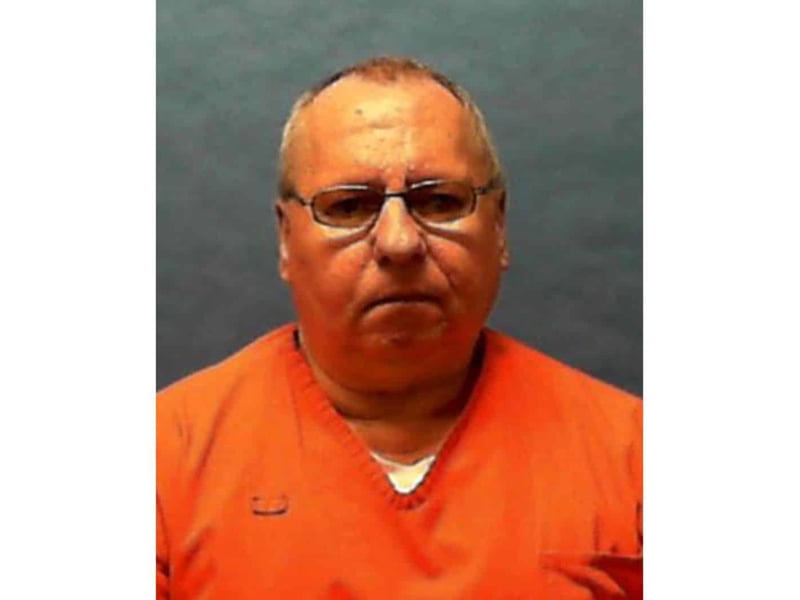
WASHINGTON (CN) — The Supreme Court on Wednesday shot down a Florida man’s attempt to halt his execution on an insanity claim.
Duane Owen faces execution Thursday for the 1984 murders of a mother and a teenager. Owen confessed to the crimes but almost four decades later he is arguing his execution would be unconstitutional because of his mental illness.
Justice Clarence Thomas referred his application and certiorari petition to the full court, which denied both requests without explanation. There were no noted denials.
Owen killed a Boca Raton mother identified as GW in court documents after breaking into her house in 1984. Court documents say he bludgeoned her with a hammer in her sleep and then sexually assaulted her. GW’s children found her dead the next morning while getting ready for school.
A day after the murder, Owen was arrested on unrelated charges. While being questioned by the police, Owen confessed not only to GW’s murder but also to the killing of a 14-year-old identified as KS in Delray Beach that same year.
Alongside Owen’s confession to GW’s murder, law enforcement found his fingerprints on a book at the crime scene. At a jury trial for GW’s murder, Owen was conviction of first-degree murder, sexual battery, and burglary. He was given two life sentences and sentenced to death. For KS’s murder, Owen was given another death sentence for first-degree murder, attempted sexual battery, and burglary while armed.
The Florida Supreme Court affirmed Owen’s convictions and death sentences on appeal. He attempted to get postconviction relief through multiple avenues but was denied at every stage.
Florida Governor Ron DeSantis issued a death warrant for Owen on May 9. The death row inmate then filed a letter invoking a state law that prevents a person from being executed if they may be insane. The letter triggered the creation of a commission consisting of three psychiatrists to evaluate Owen.
The doctors met with the Department of Corrections staff, reviewed Owen’s medical records, and interviewed Owen during their assessment. According to the commission, Owen was not schizophrenic nor does he have a personality disorder. The doctors said he was exaggerating his symptoms to avoid his impending execution.
Owen’s attorneys argue the commission’s findings are at odds with the findings of another specialist, Dr. Hyman Eisenstein. After a 13-hour evaluation, Eisenstein, a neuropsychologist, found Owen to have delusions, schizophrenia, and dementia — all conditions that would make him incompetent for execution.
A two-day hearing was conducted to review Owen’s execution competency. In testimony before the court, Eisenstein said Owen suffered from dementia, brain damage, gender dysphoria delusion, and schizophrenia. The doctors in the commission also testified, stating they had no reason to believe Owen was experiencing delusions. They also rejected Owen’s schizophrenia diagnosis, stating he did not meet the criteria and was never medicated for the illness during his sentence.
The trial court found Owen to be competent for execution. The Florida Supreme Court affirmed.
Owen then turned to the Supreme Court, seeking a stay of his execution and asking the justices to find his death sentence unconstitutional.
“Owen’s severe mental illness, delusions, and dementia inhibit his ability to rationally understand why the ultimate punishment is to be imposed upon him,” Lisa Fusaro, an attorney with the Law Office of the Capital Collateral representing Owen, wrote in his petition. “Owen is precisely the case that the Eighth Amendment seeks to protect.”
Claiming their witness testimony was discounted, Owen’s attorneys argue he does not understand the link between his crimes and his punishment.
“The state courts inappropriately discount Dr. Eisenstein’s testimony even though he spent almost eight times the amount of time with Owen as the Commission did, and also conducted relevant testing,” Fusaro wrote. “Dr. Eisenstein’s testimony and results should have been afforded much higher weight than the confrontational doctors who only briefly met with Owen and erroneously considered Owen’s past sanity. The state courts have incorrectly applied the standards of this Court and their findings violate the Eighth Amendment.”
Florida argues that Owen is using prior arguments that have already been dismissed to try to skirt his execution. In his trial for KS’s murder, Owen used the defense of insanity based on a delusional disorder and schizophrenia. The jury rejected those defenses.
”Now before this Court, just days before his scheduled execution, Owen repackages most of the same evidence as a claim that he is insane to be executed,” C. Suzanne Bechard, associate deputy attorney general for the state, wrote. “This continued recycling of the same suspect and incredible facts to support a stay would be a gross miscarriage of justice and would amount to a commutation of his death sentences for the duration of the stay. Owen is not entitled to any further review.”
Since his insanity defense was already rejected, Florida argued it would not be in the public interest to pause Owen’s execution on the same grounds.
“In summary, it is not in the public interest to delay an execution so that Owen can pursue a claim, the factual basis of which has been rejected previously; which the state courts have found to be completely devoid of any merit; and to be conjured up by a malingering defendant,” Bechard wrote. “It is not in the public interest to grant a stay which would accomplish nothing but to compromise a federal court’s ability to protect States from dilatory or speculative suits, and certainly from frivolous suits.”
Owen is set to be executed on Thursday evening. Attorneys for the inmate and the state did not respond to requests for comment.
 Follow @KelseyReichmann
 Follow @kelseyreichmann.bsky.social
Subscribe to our free newsletters
Our weekly newsletter Closing Arguments offers the latest about ongoing trials, major litigation and rulings in courthouses around the U.S. and the world, while the monthly Under the Lights dishes the legal dirt from Hollywood, sports, Big Tech and the arts.