
 Search Articles


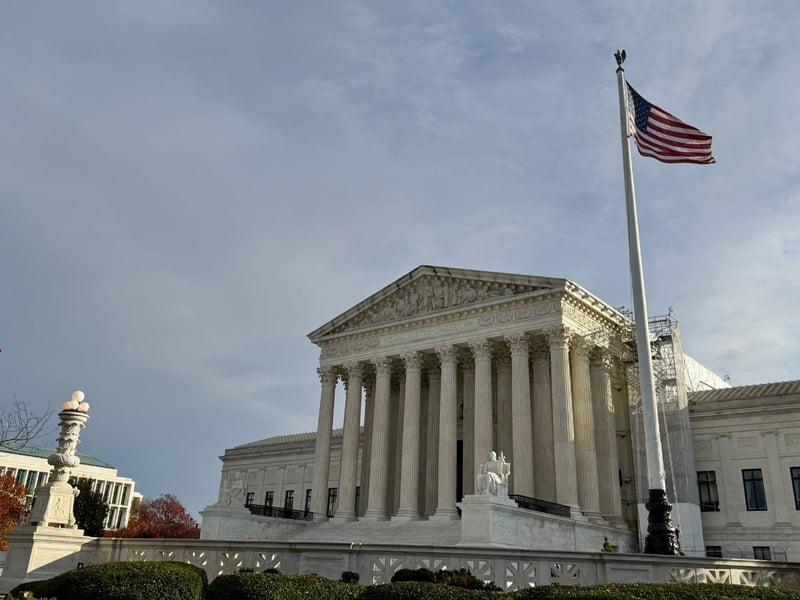
(CN) — The Supreme Court declined to hear an appeal from parents challenging a Wisconsin school district’s plan for providing support to transgender students.
Three justices — Brett Kavanaugh, Samuel Alito and Clarence Thomas — favored granting the Seventh Circuit appeal from Parents Protecting Our Children, a parents association that sought to block the plan’s implementation in the Eau Claire Area School District.
Alito wrote in a dissent published Monday that the case presented a question of “great and growing national importance” while expressing concerns that the lower courts were too eager to use a legal technicality to dismiss tough cases.
Parents Protecting Our Children sued the school district, as well as its board members and administrators, in September 2022 in the Western District of Wisconsin over the district’s administrative guidance plan for addressing gender identity issues.
School officials recommended in the plan that staff speak with a student about their gender identity first before discussing it with a parent or guardian, citing safety concerns and lack of acceptance. A proposed gender support plan would record the shared understanding between the student and the school district of a student’s gender identity and parental involvement in the process.
The association argued the district’s administrative guidance plan encouraged school staff to hide “critical information” from parents about their children’s health decisions.
The school district countered that the association had “grossly” mischaracterized the guidelines, pointing out that a parent has the right to access any pupil document, including the gender support plan.
In 2023, District Magistrate Judge Stephen Crocker granted the school district’s motion to dismiss the case, finding the parents lacked the authority to sue since none of their children were transgender or gender nonconforming and, thus, subject to the guidance.
Crocker wrote in an opinion that the association had also mischaracterized the plan, which did not mandate that parents and guardians be excluded from gender identity discussions.
A panel of judges for the Seventh Circuit affirmed the magistrate judge’s decision in March. Circuit Judge Michael Scudder Jr., a Donald Trump appointee, wrote in the opinion that the association filed its lawsuit “as the ink was still drying” on the school district’s plan and before any parent suffered injury or faced imminent harm.
Alito, a George W. Bush appointee, questioned the ruling in Monday’s dissent, arguing that under the plan and associated equity training, officials encouraged school personnel to keep parents in the dark about their children’s gender identities. Kavanaugh was appointed by Donald Trump, while Clarence Thomas was appointed by George H.W. Bush.
“Thus, the parents’ fear that the school district might make decisions for their children without their knowledge, and consent is not ‘speculative,” Alito wrote. “They are merely taking the school district at its word.”
Alito wrote in the dissent he wanted to grant the petition to specifically address the lower court’s “questionable understanding” of Clapper v. Amnesty International USA .
In that 5-4 decision, the Supreme Court ruled that groups of attorneys, journalists and human rights workers did not have standing to challenge the government’s foreign intelligence gathering practices. Alito wrote in the majority’s opinion that the groups lacked standing because they could not provide proof they were subjected to electronic monitoring by the U.S. government.
Alito wrote that he was concerned some federal courts were “succumbing to the temptation” to use Article III doctrine to avoid thorny constitutional questions.
“While it is important that federal courts heed the limits of their constitutional authority, it is equally important that they carry out their ‘virtually unflagging obligation … to exercise the jurisdiction given to them,” Alito wrote.
 Follow @SteveGarrisonPC
Subscribe to our free newsletters
Our weekly newsletter Closing Arguments offers the latest about ongoing trials, major litigation and rulings in courthouses around the U.S. and the world, while the monthly Under the Lights dishes the legal dirt from Hollywood, sports, Big Tech and the arts.