
 Search Articles


WASHINGTON (CN) — The Supreme Court ruled on Friday to revoke the legal status of over half a million migrants from Cuba, Haiti, Nicaragua and Venezuela who are temporarily in the U.S. for humanitarian needs, boosting President Donald Trump’s mass deportation plan.
In an apparent 7-2 ruling, the high court allowed Trump to ignore a lower court ruling that upheld the migrants’ status while a legal battle ensues.
Justice Ketanji Brown Jackson, a Joe Biden appointee, dissented, lamenting what she called her colleagues’ “botched” decision-making. Joined by Justice Sonia Sotomayor, a Barack Obama appointee, Jackson noted that the court denied appeals with identical arguments during former President Joe Biden’s term.
“Somehow, the court has now apparently determined that the equity balance weighs in the government’s favor, and, I suppose, that it is in the public’s interest to have the lives of half a million migrants unravel all around us before the courts decide their legal claims,” Jackson wrote.
In 2022, then-Secretary Alejandro Mayorkas used a provision of the Immigration and Nationality Act to grant two-year parole to around 532,000 migrants from Cuba, Haiti, Nicaragua and Venezuela. The Trump administration claimed that the mass parole programs deterred illegal border crossings but did nothing to clear a path to lawful status.
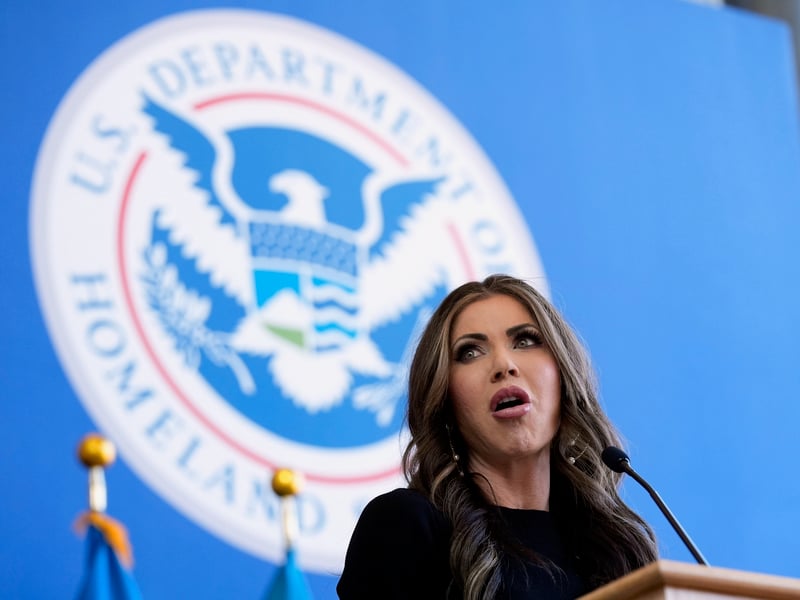
Homeland Security Secretary Kristi Noem revoked the Biden-era special parole program in March, but a federal judge temporarily blocked the administration from making any changes. Trump pushed the justices to reinstate Noem’s policy and correct a “recent, destabilizing trend in immigration cases.”
When considering emergency appeals, the justices weigh the applicant’s likelihood of success on the merits, the irreparable harm they could face without a stay and whether the public interest is on their side.
Jackson said the court botched that assessment here.
“While it is apparent that the government seeks a stay to enable it to inflict maximum predecision damage, court-ordered stays exist to minimize — not maximize — harm to litigating parties,” Jackson wrote.
Preventing harm, she said, is more important than predicting who will eventually win. Jackson said that Trump couldn’t show an urgent need to terminate parole statuses now, before courts have determined if they are lawful.
Unlike Trump, Jackson said the migrants demonstrated tangible, imminent and significant harm if the termination is enforced. Migrants will have to choose between voluntarily leaving the U.S. or risking deportation. Jackson noted that no one disputed that removing half a million migrants from communities would cause social and economic chaos.
“At a minimum, granting the stay would facilitate needless human suffering before the courts have reached a final judgment regarding the legal arguments at issue, while denying the government’s application would not have anything close to that kind of practical impact,” Jackson wrote.
The White House welcomed the ruling, stating that it affirmed their policy positions.
“Just as we always said, President Trump and Secretary Noem acted within their legal authority to revoke temporary status granted to hundreds of thousands of individuals during the Biden administration,” Abigail Jackson, a White House spokesperson, said in an email.
The administration claimed that Biden’s program violated immigration law, but a Trump appointee upheld the policy in 2024. Current litigation centers on the process used by Noem to end Biden’s policy.
The White House vilified a lower court judge who temporarily blocked Noem’s actions.
“The liberal, unelected, Obama-appointed, local judge never had the authority to interfere in our immigration and national security policy,” Abigail Jackson wrote. “We are confident in the legality of our actions to protect the American people and look forward to further action from the Supreme Court to vindicate us."
The government’s arguments mirror those made before the Supreme Court in a fight over Trump’s executive order limiting birthright citizenship for certain immigrants. In this case, the White House argued that lower courts were usurping the executive branch’s control over immigration policy.
“The district court has nullified one of the Trump administration’s most consequential immigration policy decisions, revoking Secretary Noem’s decision and maintaining parole for up to two years for 532,000 aliens whose continued presence in the United States the Secretary deems contrary to U.S. interests,” U.S. Solicitor General John Sauer wrote in the administration’s appeal.
Advocacy groups sued the administration, claiming that Noem’s policy would unnecessarily harm parole beneficiaries and tear families and communities apart.
U.S. District Judge Indira Talwani sided with the immigration groups, stating that the White House’s action was unprecedented and contrary to law. The First Circuit refused to freeze the ruling, finding that Noem hadn’t proven that the parole terminations would hold up on appeal.
Talwani didn’t bar Noem from terminating or limiting class members’ parole or employment authorizations. Instead, her order only related to status changes through Noem’s federal register notice.
“The order does not prohibit or require the secretary to do anything at all except to respect the district court’s preliminary conclusion that her attempt to truncate parole en masse violated the Administrative Procedure Act because it was, among other things, based on her incorrect understanding of the law,” the advocacy groups wrote.
If 500,000 migrants were suddenly stripped of their protective status, the advocacy groups said, the migrants and the communities they live and work in would be harmed.
“Categorically terminating CHNV beneficiaries’ parole would render those without another lawful status undocumented and, with the loss of work authorization, legally unemployable,” the groups wrote. “A stay would put many CHNV parole beneficiaries immediately at risk of deportation without normal due process protections, separating them from their family here in the United States.”
 Follow @KelseyReichmann
 Follow @kelseyreichmann.bsky.social
Subscribe to our free newsletters
Our weekly newsletter Closing Arguments offers the latest about ongoing trials, major litigation and rulings in courthouses around the U.S. and the world, while the monthly Under the Lights dishes the legal dirt from Hollywood, sports, Big Tech and the arts.