
 Search Articles


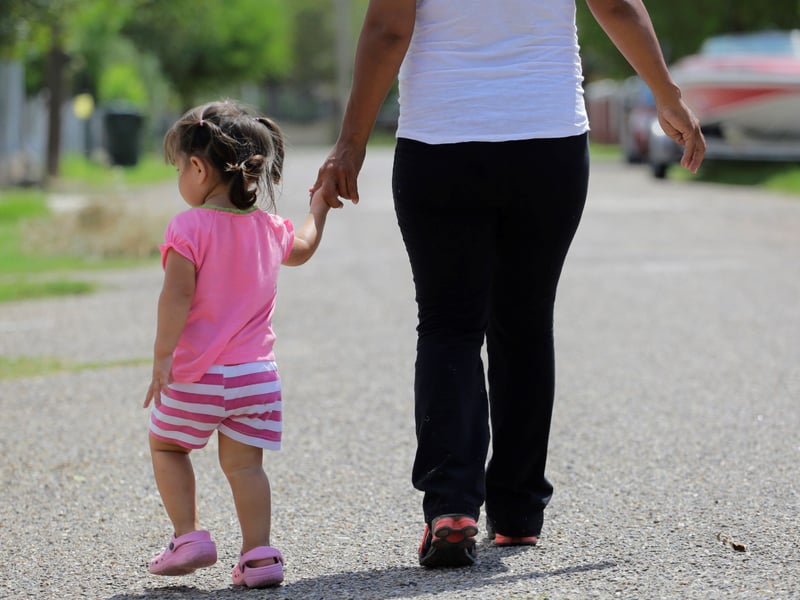
WASHINGTON (CN) — President Donald Trump can enforce limits on birthright citizenship for some immigrants, the Supreme Court ruled on Friday, allowing the White House to implement one of its most controversial policies.
Led by Justice Amy Coney Barrett, the six-justice conservative supermajority strictly limited courts’ oversight of the executive branch. Barrett, a Trump appointee, said courts are only supposed to resolve cases and controversies before them.
“When a court concludes that the executive branch has acted unlawfully, the answer is not for the court to exceed its power, too,” Barrett wrote.
The three liberals sharply dissented. Justice Sonia Sotomayor, a Barack Obama appointee, said the decision was an open invitation for the government to bypass the Constitution.
“The executive branch can now enforce policies that flout settled law and violate countless individuals’ constitutional rights, and the federal courts will be hamstrung to stop its actions fully,” Sotomayor wrote.
In a separate dissent, Justice Ketanji Brown Jackson, a Joe Biden appointee, called the decision an existential threat to the rule of law.
“This court’s complicity in the creation of a culture of disdain for lower courts, their rulings, and the law (as they interpret it) will surely hasten the downfall of our governing institutions, enabling our collective demise,” Jackson wrote.
Those named in the lawsuits — advocacy groups and pregnant mothers — will continue to be protected by the lower courts’ injunctions. The high court declined to decide whether the states could challenge Trump’s order, keeping open whether states could later secure relief for individuals within their borders.
One pregnant mother who will still be exempt from Trump’s order said the ruling would be devastating for U.S. families who were now vulnerable.
“Hundreds of thousands of other U.S.-born children are in danger of not receiving U.S. citizenship,” the pregnant mother identified as Monica in court documents said in a statement. “I know that every pregnant mother cannot file a lawsuit to make sure their children have U.S. citizenship — that is why I filed this lawsuit to not only protect my child’s rights, but the constitutional rights of all U.S.-born children of immigrants.”
On his first day back in the Oval Office, Trump issued an executive order limiting birthright citizenship to legal permanent residents. Birthright citizenship began as a rebuke to Dred Scott v. Sanford , which affirmed the legality of slavery and denied Black people citizenship.
After the Civil War, lawmakers enshrined the 14th Amendment, which declares that “all persons born or naturalized in the United States and subject to the jurisdiction thereof, are citizens of the United States and of the state wherein they reside.”
Trump claims that people in the country illegally or temporarily are not “subject to the jurisdiction” of the U.S. and therefore are not necessarily citizens.
Judges in Washington state, Maryland and Massachusetts found that Trump’s executive order is likely unconstitutional, blocking its enforcement nationwide. Instead of challenging the merits of those rulings — whether limits on birthright citizenship are lawful — Trump asked the Supreme Court to review whether judges could freeze his policies nationwide.
Injunction, what’s your function?
Nationwide injunctions, sometimes called universal injunctions, are court orders that apply beyond the plaintiffs who filed a lawsuit. Once a rarity, nationwide injunctions have become increasingly commonplace, mirroring the swelling power of the executive branch.
There is near-universal critique for lone federal judges dictating the executive’s authority nationwide. Democrats were outraged in 2023 when U.S. District Judge Matthew Kacsmaryk, a Trump appointee, single-handedly moved to take abortion drugs off shelves across the U.S.
Trump framed injunctions against his policies as personal attacks, however. In just the first few months of his second term, judges across the country have issued over two dozen injunctions against Trump’s executive orders.
At the Supreme Court, the Trump administration argued that universal injunctions exceed the judiciary’s Article III power and forced judges to make rushed, high-stakes, low-information decisions. U.S. Solicitor General John Sauer said relief should be tailored to individual plaintiffs, requiring anyone affected by a policy to file a lawsuit to receive relief.
Most of the justices appeared open to judges’ authority to offer nationwide relief during oral arguments, but they struggled to find a path to do so in the context of Trump’s birthright citizenship order.
In the end, they decided Congress had not given the judiciary authority to issue nationwide injunctions because they extended to individuals outside of just those who brought a case before a court.
Barrett grounded the court’s ruling in history, stating that justices had to decide whether universal injunctions were sufficiently analogous to relief by the High Court of Chancery in England. She found that it was not, noting that it was the “judicial prerogative of the king” that addressed causes judges were incapable of determining.
“The ‘judicial prerogative of the king,’” Barrett wrote, only extended to cases ordinary judges were incapable of determining. The court found that universal injunctions were also absent from the founding-era courts in the U.S., only becoming a feature of litigation in the 20th century.
“The bottom line? The universal injunction was conspicuously nonexistent for most of our nation’s history,” Barrett wrote.
Barrett noted that a modern device didn’t need to have an exact historical match, but it must have a founding-era antecedent.
Courts have long had the authority to offer plaintiffs “complete relief,” but Barrett said that principle only covered complete relief for the plaintiffs before the court, not everyone affected by a potentially unlawful act.
“Here, prohibiting enforcement of the executive order against the child of an individual pregnant plaintiff will give that plaintiff complete relief: Her child will not be denied citizenship,” Barrett wrote.
The liberal justices said their colleagues had ignored the likely underlying constitutionality of Trump’s executive order, focusing only on technical questions of federal courts’ authority. They said they could not be “complicit in so grave an attack on our system of law.”
Sotomayor said the real-life consequences of the court’s order would deprive newborns of citizenship rights.
“If allowed to take effect, the order may even wrench newborns from the arms of parents lawfully in the United States, for it purports to strip citizenship from the children of parents legally present on a temporary basis,” Sotomayor wrote. “Those newborns could face deportation, even as their parents remain lawfully in the country.”
Jackson emphasized the ruling’s impact on the rule of law, stating that it cleared the path for the president to choose law-free action at a perilous moment for the Constitution.
“Executive power will become completely uncontainable, and our beloved constitutional republic will be no more,” Jackson wrote.
A century of precedent
Birthright citizenship is enshrined in the Constitution, a federal statute and 127 years of Supreme Court precedent. The vast majority of scholars considered birthright citizenship settled in 1898 when the Supreme Court upheld the right for children of noncitizens in United States v. Wong Kim Ark .
Trump’s alternative theory stems from his former lawyer, John Eastman, who started pushing his alternative argument after 9/11. Eastman, who clerked for Justice Clarence Thomas, also provided Trump with legal arguments used to challenge the 2020 election.
Trump argues that the 14th Amendment guaranteed citizenship to the children of former slaves, not illegal aliens or temporary visitors.
Ramifications of the ruling
On May 15, the high court held a special oral argument session to review nationwide pauses preventing Trump from enforcing his birthright citizenship executive order. In essence, the justices’ arguments centered on who should benefit from the lower courts’ rulings.
New Jersey and 17 other states, the District of Columbia and San Francisco challenged Trump’s executive order in Massachusetts, and pregnant mothers and immigrant rights groups filed separate challenges in Maryland and Massachusetts.
Limiting the injunctions to the plaintiffs, New Jersey argued, would create serious problems with birth certificates and benefits programs. New Jersey said that if children moved to the Garden State from other states not covered by the injunction, they would lack Social Security numbers or other necessary documents to seek benefits.
Advocacy groups like CASA and the Asylum Seeker Advocacy Project have members nationwide. Even if all of their members were covered by the court order, the groups said their members would be forced to prove their membership to obtain relief. CASA and ASAP said identifying their members in court documents could put them at risk for retaliation.
State attorneys general strongly disagreed with the court’s ruling but expressed optimism that they could secure a favorable ruling in the lower courts.
“For a century and a half, this has not been a dispute, and we are confident that as we litigate this case, that fact will remain,” New Jersey Attorney General Matthew Platkin said in a news conference. “We will never stop fighting for people’s rights in our states and states across the country.”
Attorney General Pam Bondi was confident that the Supreme Court would soon weigh in on the merits of whether Trump’s order was constitutional. While Bondi suggested that the justices could do so as soon as October, that is unlikely since there is no appeal before the court and there’s no guarantee the justices would agree to hear the case. The justices also typically do not issue opinions in October.
 Follow @KelseyReichmann
 Follow @kelseyreichmann.bsky.social
Subscribe to our free newsletters
Our weekly newsletter Closing Arguments offers the latest about ongoing trials, major litigation and rulings in courthouses around the U.S. and the world, while the monthly Under the Lights dishes the legal dirt from Hollywood, sports, Big Tech and the arts.