
 Search Articles


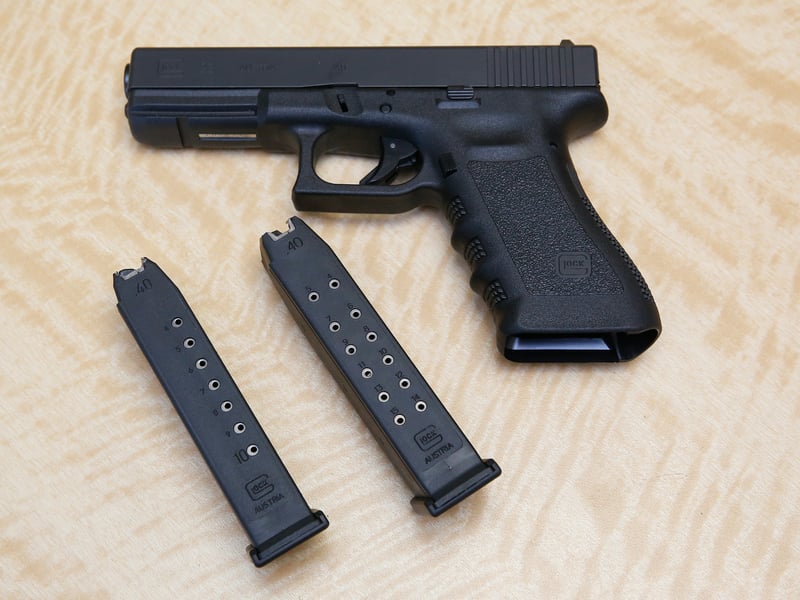
WASHINGTON (CN) — The Supreme Court on Monday declined to review a Second Amendment group’s appeal of a Maryland gun registration law, maintaining an en banc decision by the Fourth Circuit Court of Appeals to uphold the law.
Maryland’s Firearm Safety Act of 2013 requires citizens to get a qualification license before buying a handgun; steps include fingerprint registration, a 4-hour safety course and proof one can safely fire live ammunition at a firing range.
Maryland Shall Issue, the petitioner, said on its its Facebook page that the Supreme Court’s decision Monday was the “end of the road” in the case, but noted the justices did not act on two pending petitions concerning Maryland’s assault weapons ban and Delaware’s large-capacity magazine ban.
“So this handgun qualification license case may be over, but the issue is most definitely not,” the gun rights group wrote.
Referring to the the assault weapons ban case, the group added, “As Snope illustrates, Second Amendment advocates don’t give up.”
Maryland Shall Issue — alongside gun shop Atlantic Guns and fellow petitioners Deborah Kay Miller and Susan Brancato Vizas — argued that the “ahistorical and burdensome” law violated the Supreme Court’s 2022 ruling New York State Rifle and Pistol Association v. Bruen, which requires gun regulations have a historical analogue.
The Fourth Circuit’s decision upholding the Maryland law, the gun rights groups argue, was an effort to avoid applying Bruen’s holding and “strain the constitutional text to fit desired policy ends.”
The gun rights groups say the Fourth Circuit’s decision effectively immunized any “shall-issue licensing regimes” from the historical tradition analysis outlined in Bruen by declaring such licensing regimes do not infringe on the Second Amendment unless they are “so abusive” they effectively deny an individual’s right to bear arms outright.
Maryland Governor Wes Moore defended the statute, noting in a reply brief that between the law’s passage in October 2013 and 2020, 192,506 Marylanders had obtained handgun qualification licenses. During each year from 2017 to 2020, there were more handgun transfers than in any year before 2013.
‘Onerous, expensive and lengthy’
The gun rights groups first brought suit in 2016 in the U.S. District Court for the District of Maryland, charging the statue with creating an “onerous, expensive and lengthy application process” that deterred individuals from exercising their Second Amendment rights.
A federal judge granted summary judgment to Maryland, holding that while the licensing process did make it “considerably more difficult” for someone to acquire a firearm, there was no evidence anyone who went through the process was ever denied.
The judge concluded that the statute’s requirements placed no more than “marginal, incremental or even appreciable restraint on the right to keep and bear arms.”
Following that decision, the Supreme Court decided Bruen June 2022, rejecting the previous two-pronged test that federal courts had used when reviewing gun regulations.
The Fourth Circuit heard supplemental arguments in the case, ruling on Nov. 21, 2023, that the Maryland law failed Bruen’s historical analogue test.
The three-judge panel ruled 2-1. U.S. Circuit Judges Julius Richardson and Steven Agee, a Donald Trump and George W. Bush appointee, concluded that while Maryland’s law was consistent with the rationale behind the historical tradition of keeping firearms out of dangerous people’s hands, the burden was “markedly different” and therefore unconstitutional.
U.S. Circuit Judge Barbara Keenan, a Barack Obama appointee, dissented, noting that the Maryland law was smilier to the shall-issue schemes referenced in Bruen because the statute allowed a law-abiding citizen to get a handgun qualification license by completing objective criteria outlined in the statute.
Keenan added that she would have recommended remanding the case to the District of Maryland to determine whether the statute infringed on the rights of law-abiding citizens.
Maryland then requested an en banc hearing before the full Fourth Circuit, where the appellate court upheld the district court’s decision that the statute was constitutional.
In the majority opinion, Keenan, joined by nine other judges, wrote that because the Maryland law provided a clear process for law-abiding citizens to obtain the necessary license, the law qualified as presumptively constitutional under Bruen.
Further, Keenan noted that while steps like background checks and training instruction could cause some delay — the gun rights groups argued delays reached up to 30 days — that did not infringe on applicants’ Second Amendment rights, adding there was no evidence of any application being delayed longer than 15 days.
 Follow @Ryan_Knappy
Subscribe to our free newsletters
Our weekly newsletter Closing Arguments offers the latest about ongoing trials, major litigation and rulings in courthouses around the U.S. and the world, while the monthly Under the Lights dishes the legal dirt from Hollywood, sports, Big Tech and the arts.