
 Search Articles


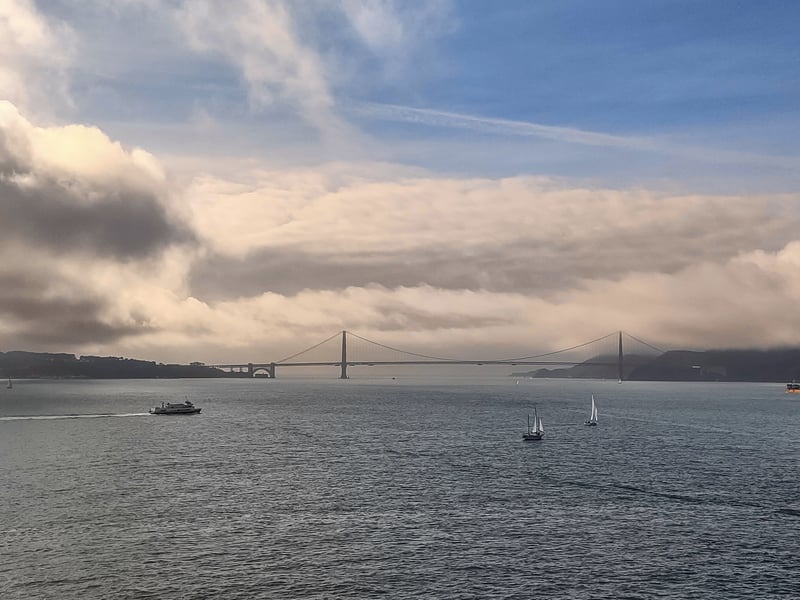
WASHINGTON (CN) — The Environmental Protection Agency lost its Supreme Court battle over generic permit standards for wastewater discharges on Tuesday.
In a 5-4 decision, the high court sided with the city of San Francisco, finding that the EPA’s so-called “end-result” requirements, which held certain permit recipients responsible for the quality of water they discharged pollutants into, was unlawful.
Justice Samuel Alito, a George W. Bush appointee, wrote the court’s opinion and said that the practice exceeded the EPA’s statutory authority under the Clean Water Act and was “not necessary to protect water quality.”
Alito, joined by Chief Justice John Roberts and justices Clarence Thomas, Brett Kavanaugh and Neil Gorsuch, said that the EPA could conduct individual assessments for wastewater facilities rather than rely on a blanket rule. Roberts is a George W. Bush appointee, Thomas a George H.W. Bush appointee, and Kavanaugh and Gorsuch are both Donald Trump appointees.
“If the EPA does its work, our holding should have no adverse effect on water quality,” Alito wrote.
Under the Clean Water Act, the EPA controls exceptions to pollution prohibitions through National Pollutant Discharge Elimination System permits. San Francisco’s discharge permit included both technical effluent limitations — which are based on quantities and concentrations of chemicals and other materials in wastewater — and generic restrictions.
The city and county of San Francisco challenged the latter; they argued that an order prohibiting any discharges that cause or contribute to reduced receiving water quality was vague and left the city exposed to litigation.
Several major cities joined San Francisco, including New York, Washington, Boston and Buffalo, as well national and state associations
The EPA, on the other hand, argued that generic limitations worked in the dischargers’ favor because they’re harder to enforce. The agency says it uses the standards only when it lacks information critical to developing effluent limitations.
San Francisco operates two wastewater treatment facilities: the Bayside plant, which discharges into San Francisco Bay, and the Oceanside plant, which discharges into the Pacific Ocean. The city challenged the permit for its Oceanside plant, which treats water from 250 miles of sewers and serves about 250,000 residents.
The facility had renewed its permit time and again without issue, until 2019 when the two end-result requirements were implemented.
The first requirement prohibited facilities from making any discharge that “contributes to a violation of any applicable water quality standard.” The second prevents the city from performing any treatment or discharge that creates “pollution, contamination or nuisance” under California’s water regulations.
San Francisco challenged the new provisions at the EPA’s Environmental Appeals Board, which rejected their claim. The city then petitioned the Ninth Circuit Court of Appeals, where a divided panel declined to hear the case as the EPA could impose “any” such limitation that would protect water quality standards.
Alito wrote that the EPA had effectively instructed cities to prevent pollution without providing a concrete plan to reduce pollution.
He compared the agency’s instructions to a state ordering schools to meet certain math proficiency standards; a school principal calls a faculty meeting where he tells teachers to implement those standards with the expectation that they would create a learning plan.
“It is unlikely that the principal would be happy if the teachers simply told their students that a state math proficiency test would be administered and that they should make sure they passed,” Alito said.
Justice Amy Coney Barrett, a Trump appointee, dissented and was joined by justices Sonia Sotomayor and Elena Kagan, both Barack Obama appointees, and Ketanji Brown Jackson, a Joe Biden appointee.
Barrett wrote that San Francisco was wrong to argue that the EPA did not have statutory authority to issue the permit restrictions and that placing such conditions preventing a city from violating water quality standards were plainly permissible under the Clean Water Act.
During oral arguments in October, the justices reopened old wounds over court interference with federal agency rulemaking. Kagan cautioned that San Francisco’s disagreement stemmed from a policy agreement, not a legal fight.
The Supreme Court reversed the Ninth Circuit’s decision and remanded the case for further proceedings.
Ana Schwab, whose firm Best Best & Krieger filed an amicus brief on behalf of the National League of Cities, said in an interview with Courthouse News Tuesday that the decision was a win for local governments.
“The court wants to ensure that permittees have clear guidelines to follow and ensure a clean environment,” Schwab said.
She said that under the EPA’s generic regulations, cities were held responsible for discharges they did not commit, comparing the receiving waters to Olympic-sized pools where a single lifeguard could not keep guests from dropping trash on the far side.
Attorneys for the EPA and San Francisco did not respond to requests for comment.
 Follow @KelseyReichmann
 Follow @kelseyreichmann.bsky.social
Subscribe to our free newsletters
Our weekly newsletter Closing Arguments offers the latest about ongoing trials, major litigation and rulings in courthouses around the U.S. and the world, while the monthly Under the Lights dishes the legal dirt from Hollywood, sports, Big Tech and the arts.