
 Search Articles


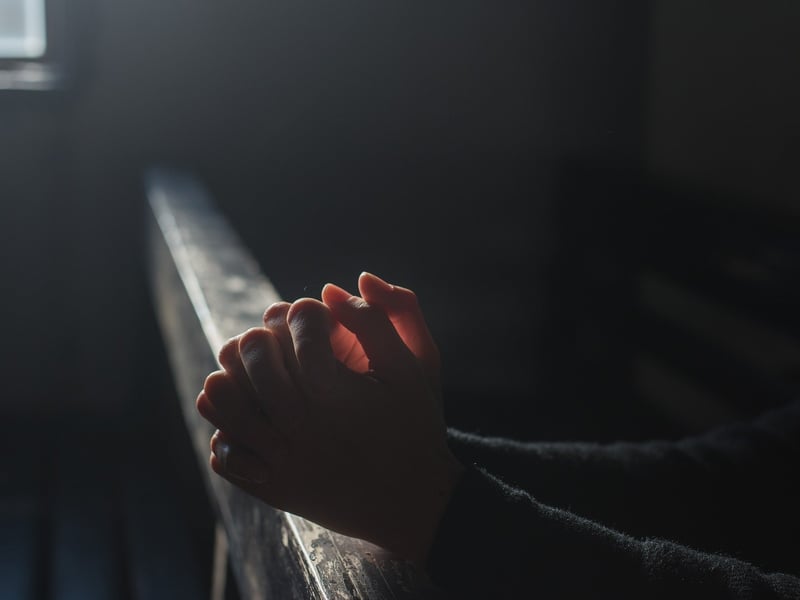
WASHINGTON (CN) — The conservative justices expressed interest in approving the nation’s first religious charter school on Wednesday, marking a major shift in public education in the U.S.
“All the religious school is saying is don’t exclude us on account of religion,” Justice Brett Kavanaugh said.
The Donald Trump appointee suggested that Oklahoma was excluding St. Isidore of Seville Catholic Virtual School from its charter school program because it would teach a religious curriculum. St. Isidore — named after the patron saint of the internet — would give K-12 students across Oklahoma access to a virtual Catholic education on the taxpayers’ dime.
Kavanaugh and his conservative colleagues viewed St. Isidore as a natural extension of recent precedent favoring religious expression. In 2017, the Supreme Court ruled that excluding churches from a nonsecular aid program was unconstitutional in Trinity Lutheran v. Comer . A few years later, the justices would allow nonsecular scholarships to be used at a Christian school in Espinoza v. Montana and approve the use of school vouchers at religious schools in Carson v. Makin .
Unlike the conservative justices, however, Oklahoma said St. Isidore wasn’t just the next link in a chain of precedent. Because charter schools are run by the state, Oklahoma said endorsing St. Isidore’s use of public funds for religious education would mark a sea change in education.
“Teaching religion as truth in public schools is not allowed,” Gregory Garre, an attorney with Latham & Watkins representing the state, told the Supreme Court.
The Establishment Clause prohibits government-sanctioned religion. Allowing St. Isidore into Oklahoma’s public charter school system, Garre said, would change the definition of public education.
Justice Clarence Thomas, a George H.W. Bush appointee, saw a disconnect between Oklahoma and St. Isidore. Thomas viewed the relationship as a contract between the Catholic Church — a private entity — and the state.
St. Isidore claimed that it didn’t fit into the mold of traditional public schools because it was privately created and privately run. Charter schools offer diverse educational opportunities to the public school system, St. Isidore claimed, but Oklahoma “deemed religion to be the wrong kind of diversity.”
Kavanaugh and Justice Samuel Alito said Oklahoma’s opposition to St. Isidore was “motivated by hostility to religion.” Alito, a George W. Bush appointee, claimed that Oklahoma’s prohibition on nonsecular schools was rooted in anti-Catholic sentiment of the 19th century.
When Garre disputed the characterization, Alito responded, “I think you’re rewriting history.”
The three liberal justices seemed to think their colleagues were leaving history behind. Oklahoma’s charter school program was modeled after the federal statute that provides funds for state initiatives. The Democratic appointees appeared shocked when the Trump administration offered support for St. Isidore.
“You’re conceding that the federal charter school system is unconstitutional?” Justice Sonia Sotomayor, a Barack Obama appointee, asked Solicitor General John Sauer.
Sauer said the Trump administration was only abandoning the provision requiring public charter schools to be nonsectarian.
Justice Ketanji Brown Jackson, a Joe Biden appointee, balked at the administration’s “nothing to see here” position on concerns that St. Isidore would violate the Establishment Clause. Jackson questioned how the use of public funds for religious proselytization wouldn’t pose serious constitutional questions.
Charter schools are operated by private entities, but their curriculum must meet state requirements. Sotomayor worried that the state would be forced to regulate religious views that conflict with nonsecular education.
“What if a school wanted to teach creationism instead of evolution?” Sotomayor asked.
Even if some religions could comply with state curriculum requirements, Kagan warned that other faiths that couldn’t would be excluded, creating a group of “accepted establishment religions.”
The Trump administration brushed off these concerns, suggesting that not all religions wanted to run charter schools.
Kagan retorted that there would be a “line out the door” if religious groups knew they could operate a school for free.
Justice Amy Coney Barrett, a Trump appointee, recused herself from the case. With only eight justices weighing in, Chief Justice John Roberts, a Bush appointee, appeared to hold the deciding vote. While Roberts initially questioned whether St. Isidore fit into the court’s precedents, he later appeared concerned that finding charter schools to be state actors would upend funding for religious charities and other groups.
Judicial Network President Carrie Severino said the justices’ questions at oral arguments on Tuesday made clear that religious groups couldn’t be treated as second-class citizens.
“St. Isidore’s met the state’s criteria for the program and parents have a choice whether to enroll their children there or in a secular public or charter school,” Severino said in a statement following arguments. “I expect the court will follow precedent and allow St. Isidore to offer educational choice for Oklahoma’s students.”
If the court sides with St. Isidore, Rachel Laser, president and CEO of Americans United for Separation of Church and State, predicted a sea change for public education in the U.S. Public schools traditionally teach unity by bringing a diverse group of students together, but Laser worried that adding religion into the equation would create stark divides.
“Dividing public schools — and public school students — along religious lines is the last thing our already-divided country needs,” Laser said.
Laser said it was un-American and unconstitutional to force the public to fund religious proselytization.
“This case sits at the nexus of Christian Nationalists’ two-pronged attack on public education: Infusing public schools with one narrow set of religious beliefs and forcing taxpayers to fund private religious education,” Laser said. “We need a national recommitment to separate church and state — our democracy depends on it.”
 Follow @KelseyReichmann
 Follow @kelseyreichmann.bsky.social
Subscribe to our free newsletters
Our weekly newsletter Closing Arguments offers the latest about ongoing trials, major litigation and rulings in courthouses around the U.S. and the world, while the monthly Under the Lights dishes the legal dirt from Hollywood, sports, Big Tech and the arts.