
 Search Articles


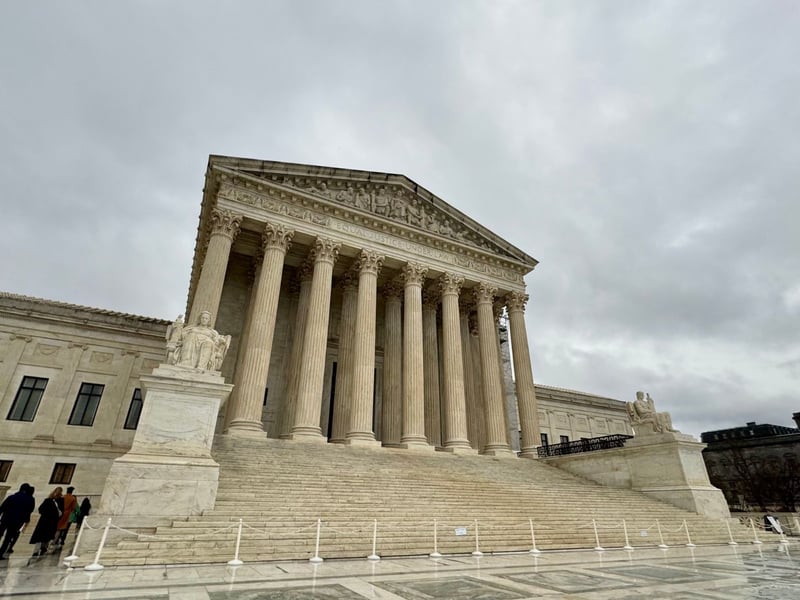
WASHINGTON (CN) — The Supreme Court freed Ohio voters on Tuesday to begin collecting signatures for a proposed ballot amendment exposing state officials to greater liability in court.
Justice Brett Kavanaugh, a Donald Trump appointee, temporarily froze progress on the proposed constitutional amendment while the justices considered an emergency appeal from Ohio Attorney General Dave Yost.
Kavanaugh, along with Justices Clarence Thomas and Samuel Alito, would have kept the initiative on ice, but their colleagues lifted the stay. The majority did not explain their order.
The justices’ ruling marks a break in Yost’s longtime effort to prevent the amendment from featuring on Ohio ballots. Yost has blocked the initiative nearly a dozen times.
Ohio voters Cynthia Brown, Carlos Buford and Jenny Sue Rowe began advancing an amendment titled ”Protecting Ohioans’ Constitutional Rights” over two years ago, hoping to get the initiative on 2024 ballots. The amendment would repeal immunity defenses for government actors sued for violations of constitutional or civil rights.
To put a proposed amendment on Ohio ballots, advocates must collect 1,000 signatures and receive the attorney general’s certification on a summary of the amendment to assure that it is a fair and truthful statement before the proposal goes before voters.
Voters gathered 1,000 signatures eight times for their qualified immunity amendment, but each time, Yost rejected their summaries.
In March 2024, the voters challenged Yost’s denial in court, arguing that he had violated their First Amendment rights.
“Yost’s exercise of his unilateral statutory authority to reject plaintiffs’ summary restricts their core political speech by preventing them from describing their proposed amendment during the circulation process in the manner they would prefer,” the voters wrote.
Earlier this year, the Sixth Circuit ruled that the fair-and-truth review violated their right to communicate about their petition with the public. The voters’ win was paused until the full Sixth Circuit reviewed the appeal, however.
In the interim, the voters filed a ninth summary for Yost’s approval. It was denied again, this time because it lacked a title. Yost later certified the summary after the Ohio Supreme Court said the attorney general’s certification role does not extend to ballot proposal titles.
Despite the agreement, the 2024 election had passed, and the voters decided to revert to the previous summary.
A lower court and the Sixth Circuit ruled in favor of the voters once again, finding that Ohio’s law placed a content-based restriction on voters’ speech and likely violated the First Amendment.
Earlier this month, Yost asked the U.S. Supreme Court to prevent the voters from proceeding with their 10th signature-gathering stage, arguing that it could put an amendment on Ohio ballots that the state has deemed unfair. He requested a stay pending appeal, preventing the voters from advancing their proposed amendment until the case is fully litigated.
“What happens, for example, if the proposal makes it on the ballot but the attorney general ultimately prevails in this case?” Yost asked. “And what are Ohio voters who support the plaintiffs’ proposal (based on an unfair summary) to think of Ohio’s initiative process in the end? A stay will prevent these harms, which are a bell that cannot be unrung later.”
 Follow @KelseyReichmann
 Follow @kelseyreichmann.bsky.social
Subscribe to our free newsletters
Our weekly newsletter Closing Arguments offers the latest about ongoing trials, major litigation and rulings in courthouses around the U.S. and the world, while the monthly Under the Lights dishes the legal dirt from Hollywood, sports, Big Tech and the arts.