
 Search Articles


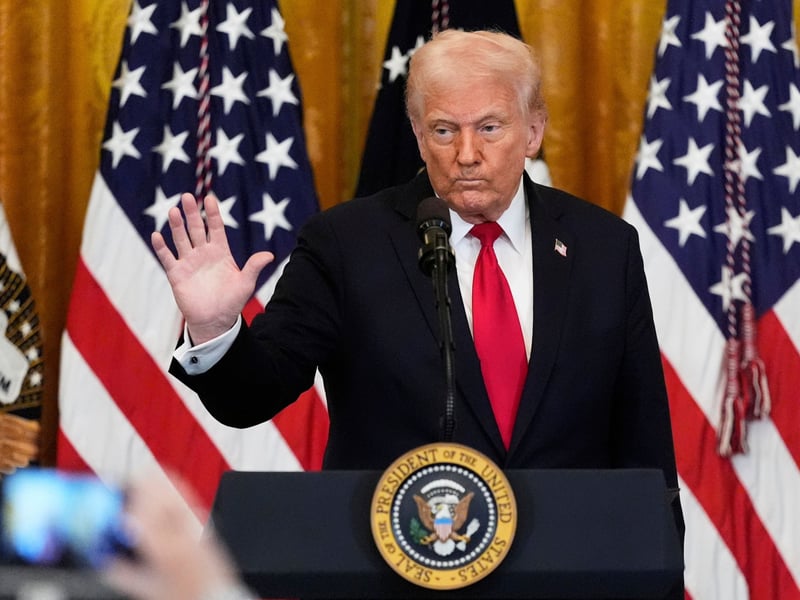
WASHINGTON (CN) — The Supreme Court on Monday threw out safeguards protecting migrants deported to countries not of their origin, allowing the Trump administration to ignore torture fears for noncitizens sent to the war-torn nation of South Sudan.
In an apparent 6-3 ruling, the conservative supermajority cleared the way for President Donald Trump to move forward with third-country deportations against the judgment of a lower court. The court did not explain its order.
Justice Sonia Sotomayor, a Barack Obama appointee, chided her colleagues for rewarding lawlessness and undermining the foundational principle that the U.S. has a government of laws, not men.
“Rather than allowing our lower court colleagues to manage this high-stakes litigation with the care and attention it plainly requires, this court now intervenes to grant the government emergency relief from an order it has repeatedly defied,” Sotomayor wrote in a dissent joined by her liberal colleagues. “I cannot join so gross an abuse of the court’s equitable discretion.”
Migrants from Cuba, Mexico and Vietnam have been stuck in limbo at a military base in the East African nation of Djibouti since May 21, when a federal judge halted a deportation flight headed to South Sudan.
In a prior order, U.S. District Judge Brian Murphy required the administration to give migrants adequate time to raise claims that they might be tortured in a country that wasn’t their own. The Joe Biden appointee said the flights headed to South Sudan “unquestionably” and “obviously” violated his ruling.
President Donald Trump asked the Supreme Court to override Murphy’s order, arguing that judges were interfering with the executive’s core sovereign function of removing illegal migrants from this country.
“Having done so, the court wielded its own subjective ‘sense’ of ‘fairness,’ under the guise of constitutional due process principles, to second-guess the executive’s judgments about how best to remove dangerous aliens while complying with this nation’s [convention against torture] obligations,” U.S. Solicitor General John Sauer wrote.
The dispute is part of Trump’s ongoing push to send migrants in the U.S. illegally to dangerous places like Libya or El Salvador’s infamous mega-prison without due process. The Supreme Court has upheld migrants’ rights to these protections in multiple rulings in the opening months of Trump’s second term.
A group of migrants filed a class action in late March to challenge the Department of Homeland Security’s failure to provide meaningful notice and an opportunity to present relevant fear-based claims before removal to a third country.
The Trump administration argued that no process was due before sending migrants to a third country.
On April 18, Murphy certified a nationwide class for migrants facing deportation to third countries, creating broader protection than just for the named plaintiffs in the case, and ordered that the administration must provide migrants with due process before any third-country removals.
Trump, however, tried to advance multiple third-country deportations without due process in the following months, including to El Salvador, Libya and Saudi Arabia.
On May 20, migrant advocates filed an emergency restraining order after reports that the administration planned to send migrants to South Sudan.
“The men received ‘fewer than 24 hours’ notice, and zero business hours’ notice, before being put on a plane and sent to a country’ that is the subject of a ‘Do not travel’ warning from the U.S. Department of State,” the advocates wrote.
All of the men refused to sign a notice provided by DHS — a document that was only provided in English. The men were not given access to their lawyers or an opportunity to file a fear of torture claim before a flight took off to South Sudan.
Murphy granted the migrants’ restraining order, but the Trump administration opted to keep the migrants at a military base in nearby Djibouti while the legal battle unfolded. Immigrant advocates said they have not been able to contact their clients since then, however.
Migrant advocates said that removing migrants to third countries was “intentionally punitive.” They urged the justices to deny Trump’s emergency application, arguing that their clients faced serious consequences without the safeguard.
“Absent the injunction, class members face a substantial risk of deportation to third countries where they could face torture or death without a meaningful ability to contest that fate,” the advocates wrote.
The Trump administration says giving the migrants more time to challenge their deportations is unworkable.
“Those judicially created procedures are currently wreaking havoc on the third-country removal process," Sauer wrote. “In addition to usurping the executive’s authority over immigration policy, the injunction disrupts sensitive diplomatic, foreign policy, and national security efforts.”
Several of the migrants on the flight to South Sudan were identified by Homeland Security. Nyo Myint, a citizen of Burma, and Tuan Thanh Phan, a Vietnamese national. The department claims that Myint was in prison for first-degree sexual assault, while Phan was convicted of first-degree murder and second-degree assault.
Trump described the migrants as some of the worst illegal aliens, and the administration bemoaned the challenging process needed to deport these individuals, since their countries of origin often won’t take them back.
Sotomayor said that the Trump administration unambiguously violated multiple court orders preventing migrants from being deported to third countries. Once when the administration flew four noncitizens to Guantanamo Bay and then deported them to El Salvador, and again, when it sent six migrants to South Sudan.
“This is not the first time the court closes its eyes to noncompliance, nor, I fear, will it be the last,” Sotomayor wrote. “Yet each time this court rewards noncompliance with discretionary relief, it further erodes respect for courts and for the rule of law.”
The lower court’s preliminary injunction blocked 13 migrants from being sent to Libya, another man spent months hiding in Guatemala and the men in this case could be released in South Sudan. In a footnote, Sotomayor noted that the State Department removed government employees from the country for safety concerns.
Sotomayor characterized the Trump administration’s objections to the migrants’ due process claims as an “arsonist who calls 911 to report firefighters for violating a local noise ordinance.”
The Trump administration argued that it did not have to provide migrants with due process “in the context of removal proceedings.” Sotomayor appeared appalled that the government thought it could whisk noncitizens off the streets and onto planes out of the country without any legal proceedings.
“By rewarding lawlessness, the court once again undermines that foundational principle,” Sotomayor wrote. “Apparently, the court finds the idea that thousands will suffer violence in farflung locales more palatable than the remote possibility that a district court exceeded its remedial powers when it ordered the government to provide notice and process to which the plaintiffs are constitutionally and statutorily entitled.”
Sotomayor called her colleagues’ use of discretion incomprehensible and inexcusable.
“Respectfully, but regretfully, I dissent,” she wrote.
 Follow @KelseyReichmann
 Follow @kelseyreichmann.bsky.social
Subscribe to our free newsletters
Our weekly newsletter Closing Arguments offers the latest about ongoing trials, major litigation and rulings in courthouses around the U.S. and the world, while the monthly Under the Lights dishes the legal dirt from Hollywood, sports, Big Tech and the arts.