
 Search Articles


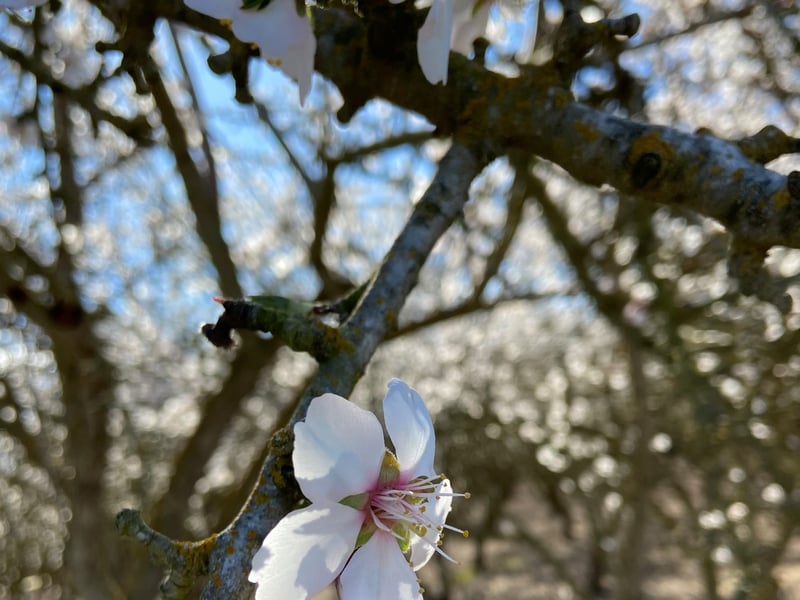
(CN) — Smoke from massive wildfires is not just a health concern for people — it’s also detrimental to California’s orchard trees, according to research that adds to the growing list of wildfire impacts that could affect both agricultural and natural ecosystems.
Scientists from the University of California Davis discovered that long-term exposure to wildfire smoke can drain trees’ energy reserves and cut nut production by as much as 50%. These effects can last for months, long after the fires are out.
The findings, published Wednesday in Nature Plants, focused on how the smoke from megafires affects almond, pistachio, and walnut trees in California’s Central Valley, a hub for nut farming.
“A lot of research focuses on the impact of smoke on humans, but there is less study on the effects of smoke on plant health,” Lead author Jessica Orozco, a postdoctoral researcher at UC Davis, said in a press release. “Our study suggests that trees are just as vulnerable as humans.”
The typically summertime fires come at a particularly bad time for orchard trees, often hitting during the period when trees need to store up carbohydrates to carry them through winter and support spring growth. Without enough stored energy, future harvests can take a serious hit.
The research team looked at 467 orchard sites from 2018 to 2022, to see how trees handled stressful conditions like heat and drought. But when the megafires of 2020 ravaged over 4.2 million acres and filled the skies with smoke, the researchers jumped on the chance to study how the smoke affected trees’ energy storage.
“Photosynthesis produces carbohydrates, which are critical elements for tree survival,” Orozco said. “Trees need carbohydrates not just to grow but to store energy for when they’re under stress or when photosynthesis isn’t happening.”
Smoke clouds block direct sunlight, but they also scatter light, creating more diffused light, which can actually help trees. However, in this case, Orozco and her team found the smoke was just too thick for the trees to fully compensate, despite the increase in diffused light.
The research also showed that smoke exposure had lasting effects. Trees exposed to smoke for a long time had lower carbohydrate reserves, leading to reduced nut yields — sometimes cutting production by half. And the negative impact continued well beyond the wildfire season.
Researchers are still trying to pinpoint what exactly in the smoke caused the trees to lose so much energy.
During the 2020 megafires, the smoke didn’t just block sunlight, it also raised ozone and particulate matter levels — both of which can mess with how trees perform photosynthesis. It’s unclear if one of these factors, or a mix of them, is to blame for the decline in tree carbohydrates.
“We were expecting to see some impact, especially in the months when the smoke was really dense,” Orozco said. “But we weren’t expecting the smoke to have such a lingering effect and result in a significant drop in yield.”
Subscribe to our free newsletters
Our weekly newsletter Closing Arguments offers the latest about ongoing trials, major litigation and rulings in courthouses around the U.S. and the world, while the monthly Under the Lights dishes the legal dirt from Hollywood, sports, Big Tech and the arts.