
 Search Articles


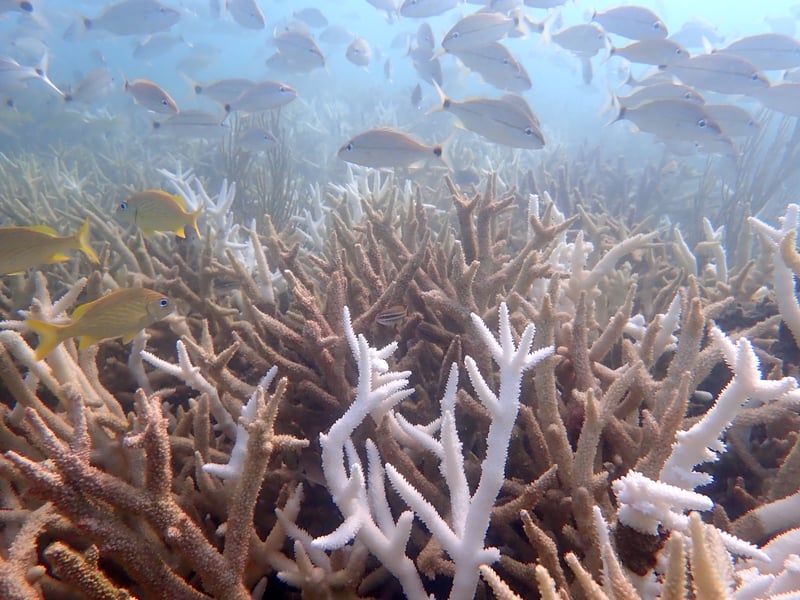
CN — Two species of coral in the Florida Reef are now “functionally extinct” as a result of an unprecedented 2023 marine heat wave that caused mass coral bleaching, according to a study from marine researchers that was published on Thursday.
The new study paints a bleak portrait of underwater ecosystems that rely on the Florida Reef — the only living coral barrier reef in the continental United States — as marine heat waves become more common due to climate change.
Staghorn coral and elkhorn coral suffered between 97.8% and 100% mortality from bleaching, mostly among the Florida Keys, the researchers reported. The reef extends about 350 miles, primarily east to west, along the state’s southern coast and partially north along its east coast.
“It turns out that threat of coral bleaching has only become more and more pressing over the last couple decades as we have seen more frequent and more severe heat waves culminating with what we saw in 2023, which was the most severe heat wave by far in Florida that caused catastrophic mortality of these acropora species,” said Ross Cunning, a coral biologist with the Shedd Aquarium in Chicago. “We know one of the biggest underlying factors is climate change, we know our oceans are warming. That increases the likelihood of events like the 2023 warming.”
According to the National Oceanic and Atmospheric Administration, the global “mean sea surface temperatures” set a record in 2023 with ocean temperatures reaching above the 90th percentile for five days or more in a row.
“This sort of baseline warming of our ocean that is driven by climate change increases the severity and frequency of these heat waves,” Cunning said.
Coral is described by the NOAA as the largest biological structure on earth. Though it takes root on the ocean floor like a plant, coral is technically considered an invertebrate animal that shares a symbiotic relationship with algae.
Bleaching is when corals expel the “symbiotic algae” living within it, causing it to turn white, according to the NOAA. Bleaching is most commonly due to stress from environmental changes, such as temperature changes. Though coral can survive after bleaching, it is more vulnerable, according to the NOAA.
Cunning described the 2023 temperatures in the Florida Reef as “hot tub temperatures.” Temperatures peaked in July that year at 90 degrees, according to the study.
“It was shocking just how hot the water was and how extreme the heat wave was,” said Cunning, who also led underwater surveys of the Florida Reef near the Dry Tortugas islands for the study. “We, as scientists studying the corals, have been aware for a very long time that these have become more severe, so it’s not a surprise that this happened. It was a shocking event and it was heartbreaking to see the consequences of it.”
There are still some elkhorn and staghorn coral left in the Florida Reef. Only about 38% of the coral died in the reef’s northern stretch, most likely due to cooler temperatures in the area, the researchers wrote.
However, the overall numbers are so few that they are no longer performing their function in the ecosystem, which is to build reefs, Cunning said.
The corals’ extinction in the region ends a legacy of reef building that dates back nearly half a million years, the researchers wrote in their study.
The information, while bleak, should be a call to action, Cunning said.
“It’s hard to find much of a positive from the data we present alone,” Cunning said. “There are things we can do that have positive impacts to potentially rebuild these species in the future. We need to find ways to build their heat tolerance, if we want any hope for future survival.”
Researchers recommended in the study “aggressive interventions” to help save the coral species in the reef from the next heat wave. Such interventions include crossbreeding different types of corals to introduce genetic diversity and heat tolerance, as well as the manipulation of the algae communities living within the coral to withstand the increasing temperatures.
However, Cunning said there is a major caveat to these solutions.
“We cannot outpace current rates of climate change with crossbreeding, or any of these interventions for that matter," he said. “We must simultaneously conduct this research and try to throw corals a lifeline, but we must address the root of the problem which is the future warming of our planet, and that is absolutely essential to securing a future for coral reefs. That is the most important thing.”
Subscribe to our free newsletters
Our weekly newsletter Closing Arguments offers the latest about ongoing trials, major litigation and rulings in courthouses around the U.S. and the world, while the monthly Under the Lights dishes the legal dirt from Hollywood, sports, Big Tech and the arts.