
 Search Articles


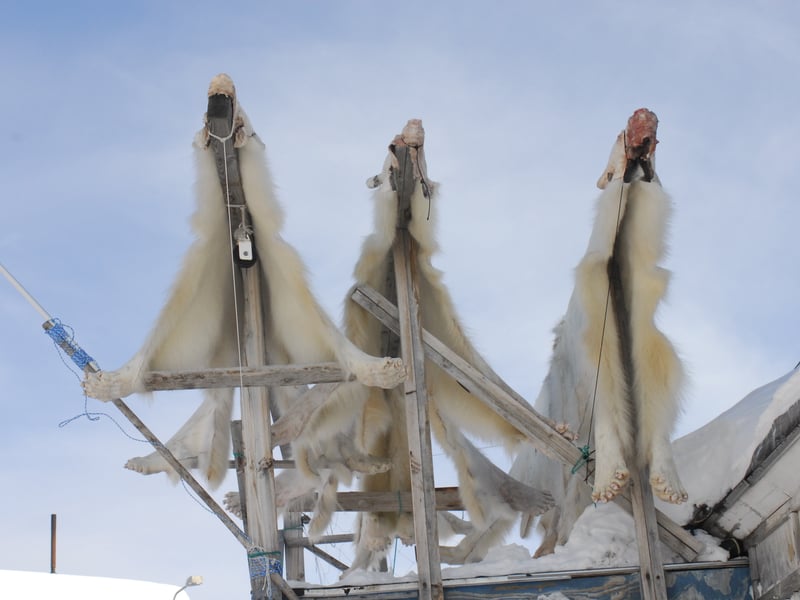
(CN) — They live close to nature and far away from industrial production and big factories. Yet Greenlandic hunters in the small society of Ittoqqortoormiit show record-breaking levels of PFAS chemicals in their blood, according to new research.
Scientists in the study, recently published in the journal Lancet Planetary Health, conclude that the “forever chemicals” travel via ocean and wind currents only to be consumed by marine animals such as whales, seals and polar bears, that the locals eat.
Eighty-six percent of the tested inhabitants in the eastern Greenland area had PFAS levels of 164 nanograms per milliliter (ng/mL) in their blood, which far exceeds the highest severe risk category limit value of 32 ng/mL set by the European Food Safety Authority. Such levels indicate severe risk of damage to the immune system.
Alarmingly high PFAS concentrations in the Arctic also appeared in Denmark and the country’s autonomous Faroe Islands. Researchers found many people with levels near the highest concentration of PFAS in their blood — close to 30 ng/mL. They compared the Greenland numbers to data from a large number of published articles in a first nationwide assessment of PFAS exposure. Globally, the problem is most prevalent in Europe and North America.
PFAS (per- and polyfluoroalkyl substances) are a group of artificial chemicals that have been used in everything from textiles to nonstick cookware and food packaging to pesticides to cosmetics. The chemicals are infamous for breaking down very slowly; after consumption or exposure, they stay in the human body for many years.
According to the European Chemicals Agency, PFAS contain chemical carbon-fluorine bonds, one of the strongest types in terms of resisting degradation. Therefore, they accumulate in surface water, groundwater and the soil, and removing them is costly.
For that reason, the new Danish findings should sound all political alarm bells, according to biology professor Rune Dietz from the Institute for Ecoscience at Aarhus University in Denmark. He is one of the researchers behind the new scientific article.
“Our professional opinion is that when you see such high concentrations of PFAS in an indigenous society, we need to act. It shows how far these chemicals travel, how they biomagnify in the food chain and how persistent they are,” he said.
The EU has proposed limiting the use of more than 10,000 PFAS chemicals; Norway, Denmark, Germany, the Netherlands and Sweden have backed the idea, which would apply directly to all member states.
However, there is a need for more political action now, Dietz said.

“Humans will continue to consume these pollutants through water, meat and vegetables until they are actively removed and forbidden in the industries. It is unacceptable. We cannot survive without water, so a key factor is to secure its quality,” Dietz said. He added that PFAS are also present in pesticides used for farming, which ultimately find their way into the groundwater.
Denmark has already taken some steps to regulate the chemicals. In 2020, the nation became the first to ban PFAS in food packaging.
In April, the Conservative Party called for a total ban on PFAS in the country.
The public debate about the chemicals has gained momentum recently, especially after an inquiry in March revealed that concentrations were 100 times over the limit value in various locations around the country.
Mother and nutritional therapist Rachel Pryce Roed, a member of a PFAS group on Facebook, is concerned about how the pollution will affect the lives of young generations.
“Right now we unwillingly consume PFAS, when swimming or drinking. I am afraid, because it makes our intestines more dysfunctional and can affect the structure of the brain — not to mention lower vitality and fertility,” she said.
According to Bjarne Hansen, a founder of the Facebook group, the findings in Greenland emphasize how important it is to take swift political action. Hansen lives by the Harboøre Tange peninsula in the Northern Jutland region of Denmark. He worries that spill water from the nearby Cheminova factory contaminates the ocean with PFAS.
“We had some samples taken. Even after coming out of the sewage treatment plant, the water had 1400 nanograms of PFAS per milliliter in it. The EU has set a limit value of 40 around beaches and bathing water,” he said.
In Hansen’s opinion, Denmark needs to ban PFAS discharge altogether. The change will not happen on its own, since it is costly for companies to clean the water properly, he believes.
“We need authorities to take responsibility for this issue. Right now, everyone is sitting on their hands. The municipalities count on the regions to do something. The regions count on the state, and the state ultimately refers to the problem as an EU affair. So nothing happens,” he said.
Subscribe to our free newsletters
Our weekly newsletter Closing Arguments offers the latest about ongoing trials, major litigation and rulings in courthouses around the U.S. and the world, while the monthly Under the Lights dishes the legal dirt from Hollywood, sports, Big Tech and the arts.