
 Search Articles


(CN) — Forget fingerprints or retinal scans—the future of biometric ID could be as simple as a deep breath. A groundbreaking study finds each person’s breathing pattern is uniquely identifiable and reveals clues about mental and physical health.
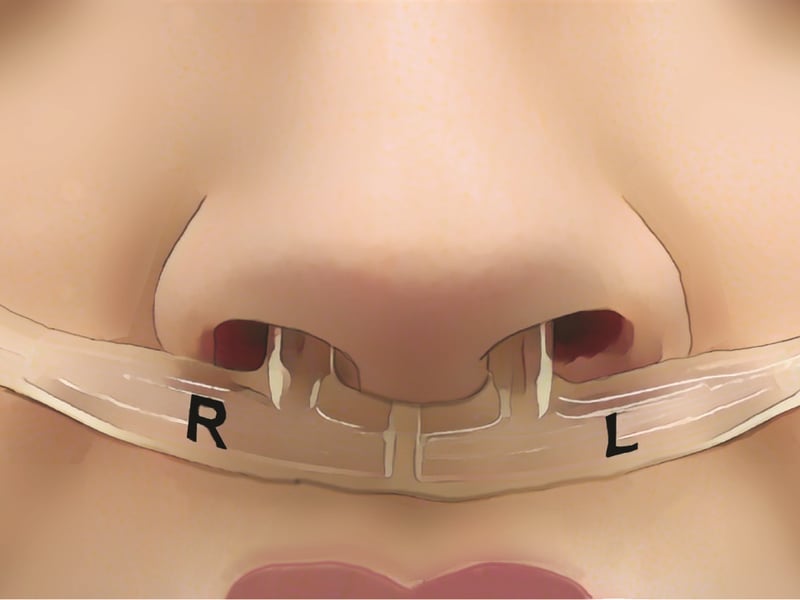
Published Thursday in the journal Current Biology, the research from Israel’s Weizmann Institute of Science used a lightweight wearable device to track nasal airflow in 100 young, healthy participants over 24-hour periods. The results were striking: breathing patterns alone could identify individuals with 96.8% accuracy, rivaling voice recognition systems.
“Actually, the idea of using an individual’s breathing pattern as a unique signature has been discussed for decades within the respiratory science community,” study co-author Timna Soroka wrote via email. What changed? Technology finally caught up with theory.
“The development of a tiny wearable device capable of recording over extended periods enabled us to present the concept in such a compelling way,” Soroka explained. “I thought it would be really hard to identify someone because everyone is doing different things, like running, studying, or resting. But it turns out their breathing patterns were remarkably distinct.”
Breathing patterns also reveal health indicators like BMI, sleep cycles, anxiety and behavior. Anxious individuals, for instance, showed shorter inhales and irregular pauses during sleep. While the current nose-tube device is limited, researchers are developing a more discreet version and exploring whether altering breath could boost mental health—a potential “brain readout,” coauthor Noam Sobel says.
“We intuitively assume that how depressed or anxious you are changes the way you breathe,” Sobel wrote in a statement. “But it might be the other way around. Perhaps the way you breathe makes you anxious or depressed. If that’s true, we might be able to change the way you breathe to change those conditions.”
Soroka explained that the team focused on nasal airflow for three key reasons. First, nasal breathing is less intrusive than mouth breathing. It doesn’t interfere with speaking, eating or other daily activities. Second, because the mouth and nose are connected through the larynx, even if someone breathes only through their mouth, that signal can still be detected in the nose. Finally, Soroka said the link between respiration and brain activity is more pronounced during nasal breathing.
The ultimate goal? “We definitely want to go beyond diagnostics to treatment,” Sobel said, hinting at potential mental health applications.
 Follow @gabetynes
Subscribe to our free newsletters
Our weekly newsletter Closing Arguments offers the latest about ongoing trials, major litigation and rulings in courthouses around the U.S. and the world, while the monthly Under the Lights dishes the legal dirt from Hollywood, sports, Big Tech and the arts.