
 Search Articles


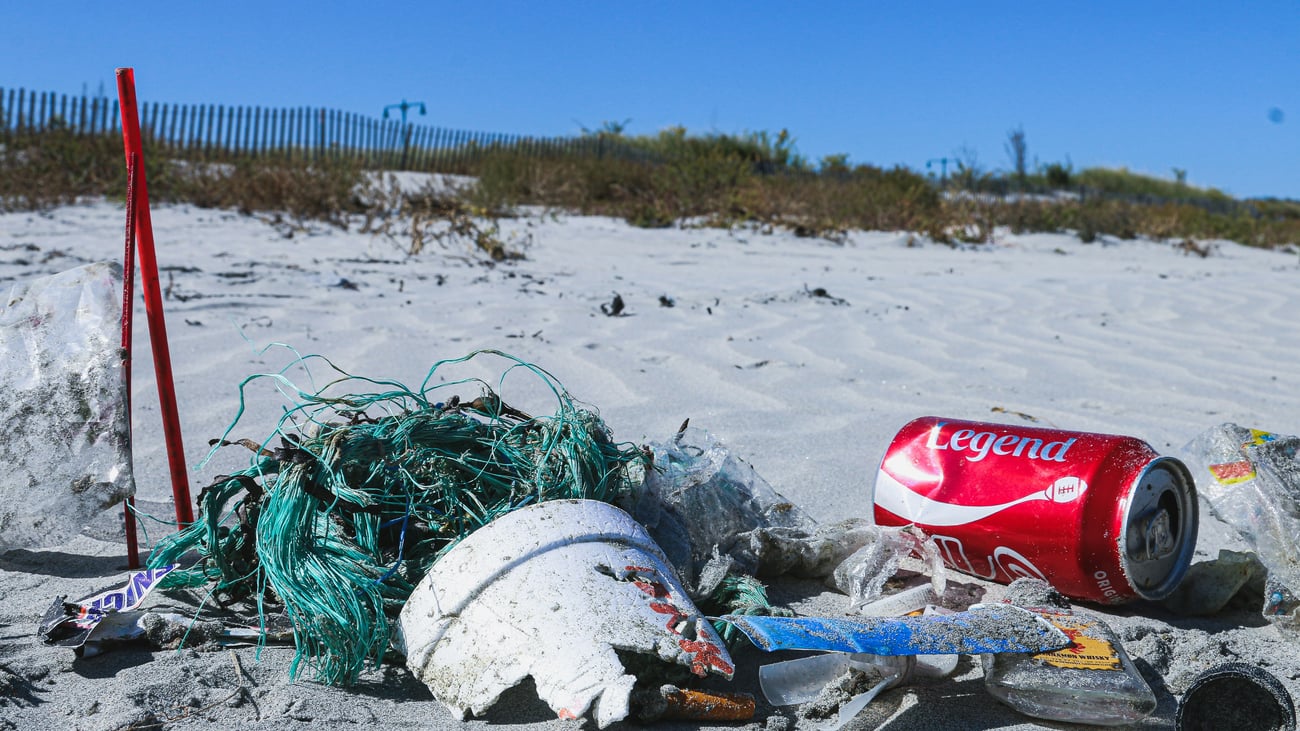
(CN) — Plastic waste, while unsightly, could also be impacting global warming in ways that we did not realize.
Colored microplastics lingering in the atmosphere could contribute to climate change much more than we previously thought, according to a new study published on Monday in the monthly science journal Nature Climate Change.
The study suggests that colored microplastic and nanoplastic particles could be contributing to climate change at a level equivalent to 16.2% of the effect of black carbon, or soot.
The researchers discovered a pronounced warming effect caused by airborne microplastics in certain oceanic gyres, where garbage has accumulated into enormous patches, such as the Great Pacific Garbage Patch.
“In plain language, tiny plastic particles floating in the air — especially colored ones — can absorb sunlight and warm the atmosphere,” Hongbo Fu, a researcher with Fudan University in Shanghai and an author of the study, wrote in an email to Courthouse News. “So plastic pollution has a climate dimension we had largely overlooked.”
Fu and 10 colleagues examined the behavior of individual microplastics and nanoplastics in the atmosphere using high‑resolution imaging to measure it, then combined these measurements with atmospheric simulations.
The study, titled “Atmospheric Warming Contributions from Airborne Microplastics and Nanoplastics,” could help improve our future understanding of climate change by incorporating the new data on microplastics, Fu said.
“Our findings can help improve climate models by adding microplastics and nanoplastics as a new type of light‑absorbing aerosol,” Fu said. “They also inform plastic pollution policies: reducing plastic waste entering the environment not only helps oceans and health, but may also reduce a previously unrecognized source of atmospheric warming.”
A microplastic is any plastic particle less than 5 millimeters in at least one dimension. It can be manufactured at that size or formed as larger pieces of plastic break down. Nanoplastics are even smaller, typically less than one micron. For comparison, a human hair is about 70 micrometers in diameter.
The study found the strongest warming effect in the North Pacific Subtropical Gyre, a massive oceanic current system between North America and Asia, home to the Great Pacific Garbage Patch. There, airborne microplastics and nanoplastics produced about 1.34 watts per square meter of radiative forcing, a measure of trapped heat, nearly five times the local effect of black carbon, Fu said.
“Other hotspots include the other four subtropical ocean gyres, Mediterranean coastal areas, eastern North America, and East Asia,” Fu said. “These are places where plastic accumulates or is emitted heavily, and atmospheric transport further concentrates them.”
One challenge of the project was measuring how individual plastic particles interact with light, which researchers analyzed using advanced electron microscopy, Fu said. They also estimated the global distribution despite limited data and accounted for atmospheric aging, which can alter the heat-trapping effects of the plastics depending on their color and size.
About 400 million metric tonnes of plastic are produced globally each year, according to the United Nations Environment Programme, which calls it a growing threat. UNEP estimates that 19 million to 23 million tonnes of plastic enter rivers, lakes and seas each year — roughly the equivalent of 2,000 garbage trucks dumping waste into these ecosystems daily.
“Since the 2015 discovery of microplastics in atmospheric fallout, global evidence has solidified the ubiquity of airborne microplastics and nanoplastics (MNPs) in the global atmosphere,” the researchers write in the paper. “These particles are increasingly recognized as agents of non-negligible radiative forcing, with impacts projected to escalate alongside rising plastic emissions. Thus, it is urgent to understand how MNPs perturb radiation balance and climate systems of the Earth.”
Subscribe to our free newsletters
Our weekly newsletter Closing Arguments offers the latest about ongoing trials, major litigation and rulings in courthouses around the U.S. and the world, while the monthly Under the Lights dishes the legal dirt from Hollywood, sports, Big Tech and the arts.


