
 Search Articles


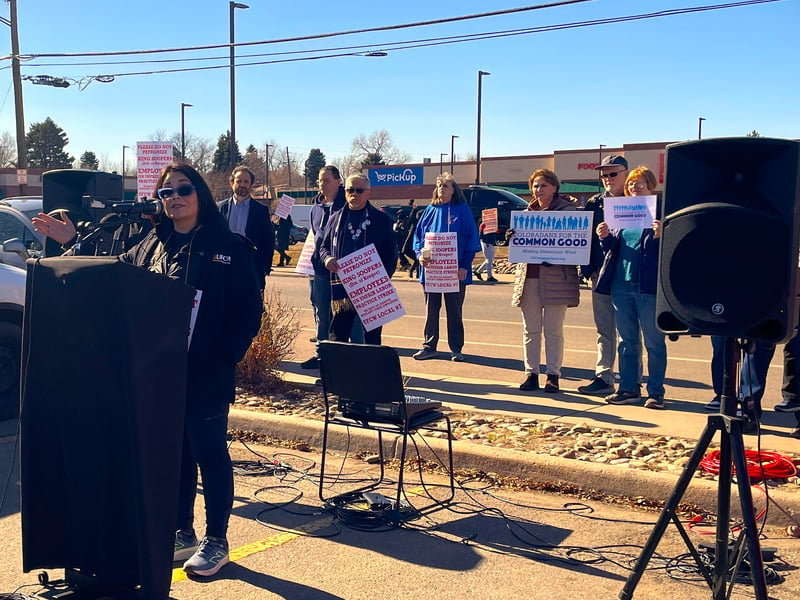
DENVER (CO) — A Denver judge on Friday declined Colorado grocery chain King Sooper’s request for a restraining order limiting the number of picketers and their speech outside grocery stores, but granted a plea to prohibit striking union members from blocking entrances to stores or setting up tents.
“The balance of equities favors the granting of a limited injunction given the allegations regarding access to ingress and egress,” wrote Second Judicial District Judge Sarah Wallace in an 11-page order.
“By narrowly tailoring the temporary restraining order, defendants will still be permitted a broad ability to picket consistent with their First Amendment rights, with only minimum restrictions to protect public and employee safety,” Wallace, an appointee of Governor Jared Polis, added.
United Food and Commercial Workers Local 7 filed an unfair labor practices complaint with the National Labor Relations Board before starting its two-week strike on Feb. 6, days before the Super Bowl and a week before Valentine’s Day, when shoppers often splurge.
During an evidentiary hearing Thursday, King Soopers’ attorney Raymond Deeny introduced parking lot footage to sum up six days of illegal activity across 80 stores, featuring footage of a single tent set up near the entrance of an Aurora store and picketers using propane heaters brought to stave off falling snow.
Although King Soopers claimed strikers were blocking handicapped parking spaces, Wallace observed ample handicapped spots around the picket line and noted that she did not see anyone prevented from parking in the videos presented.
“In short, King Soopers comes to this court and requests this court cease all picketing activity it finds inconvenient and distracting,” Wallace wrote in the temporary restraining order.
Although a minority of stores appeared to have issues, Wallace agreed with King Soopers that it was inappropriate for picketers to block a delivery truck. One physical altercation also occurred off Colorado Boulevard and Yale in Denver, when a picketer punched a security guard and was taken into police custody.
Of King Sooper’s requested 16 limitations on the picket line, Wallace granted two, blocking union members from “impeding the ingress or egress of delivery vehicles,” and “erecting temporary structures or piles of trash on the sidewalk in front of King Soopers such that they impede either traffic or pedestrian access to the store.”
A spokesperson for the union applauded the order.
“The overwhelming majority of King Soopers’ requests were denied,” wrote executive secretary Monique Palacios in a statement. “According to the court, King Soopers asked for a sweeping injunction to severely limit our picketing activity — describing the request as seeking — in short — to restrict any picketing activity the company finds inconvenient and distracting. The court soundly rejected these requests.”
The union represents 23,000 workers across Colorado and Wyoming, including 12,000 King Soopers and City Market employees, about 10,000 of whom are on strike in Pueblo and the Denver metro area.
In a statement, King Soopers’ president Joe Kelley said the decision to seek a restraining order was about ensuring safety, not to restrict picket line speech.
“Regrettably, we’ve seen more than 300 instances of picketers making choices that compromise safety over the last 9 days," said Kelley said in a statement. “We appreciate the court’s decision to grant critical elements of our temporary restraining order, that supports our commitment to safety for everyone.”
Within the strike’s first week, King Sooper’s parent Dillon Companies fired off two lawsuits: a federal complaint claiming the union unfairly colluded with out-of-state unions in negotiations, and a state suit over union members impeding grocery store traffic.
In the state suit, the grocery company had requested a temporary restraining order to limit stores to six picketers and require them to maintain a distance of 20 feet from customers, employees and vendors.
When announcing the strike, the union claimed the grocery company questioned union members about union activity and refused to provide sales data needed for staffing proposals during contract negotiations. According to the union, King Soopers also sent a contract proposal that would fund active worker pay increases by pulling from retiree health benefits.
Although King Soopers has implemented more self-checkout stands in recent years, workers say there still aren’t enough people to prepare food, stock shelves and help customers.
In response, the grocery company urged customers to continue shopping online with a coupon to waive delivery fees and highlighted workers’ above average wages.
According to a company spokesperson, King Soopers workers make an average hourly rate of $22.68, with healthcare and retirement benefits. Minimum wage is currently $14.81 in Colorado and $18.81 in Denver.
King Soopers brought similar claims against the union during its 2022 strike over wages, but dismissed the complaint when the parties reached a contract agreement.
Kroger, which owns Dillon Companies and King Soopers, faces two additional civil lawsuits in Denver alongside fellow grocery chain Albertsons over a non-compete agreement from the union’s January 2022 strike in which workers advocated for higher wages. According to the suit filed by Colorado Attorney General Phil Weiser on Feb. 14, 2024, Albertsons agreed it would not hire striking King Soopers workers or poach pharmacy customers. A Jan. 31 worker-led class action is advancing similar claims.
King Soopers attorney, Deeny, who practices with the Denver firm Taft Stettinius, did not immediately respond to an inquiry for comment.
 Follow @bright_lamp
Subscribe to our free newsletters
Our weekly newsletter Closing Arguments offers the latest about ongoing trials, major litigation and rulings in courthouses around the U.S. and the world, while the monthly Under the Lights dishes the legal dirt from Hollywood, sports, Big Tech and the arts.