
 Search Articles


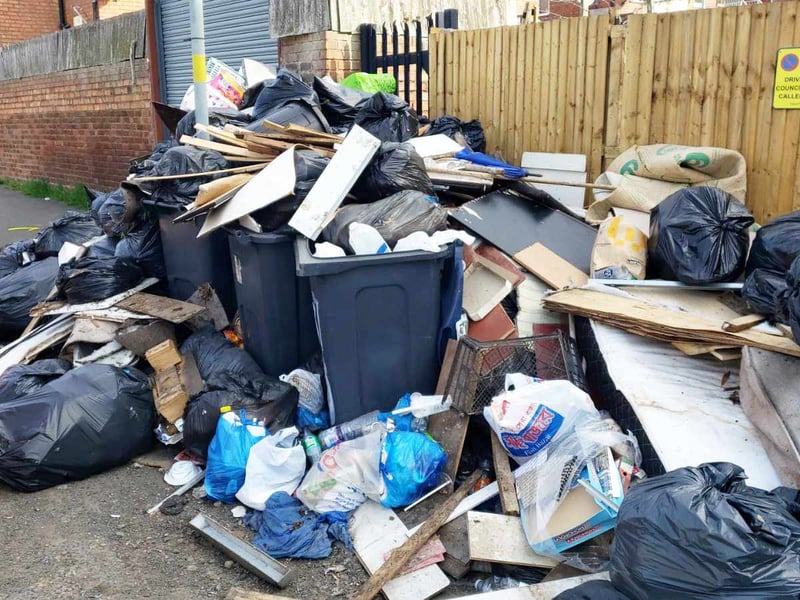
MANCHESTER, England (CN) — A monthslong garbage strike has left trash piling up in Birmingham, England’s second-largest city, as council and union leaders struggle to reach a settlement in a city facing deep financial woes.
Birmingham is far from alone in its struggles. According to the United Kingdom’s National Audit Office, 42 cities and towns needed extra national support as of February to stay afloat for the fiscal year.
But the city’s problems are deep and visible. The strike, led by Unite the Union, began in January when more than 350 trash collectors staged a series of walkouts over proposed contract changes. As negotiations broke down, workers escalated to indefinite strike action on March 11, leaving streets across Birmingham strewn with uncollected waste.
The city’s troubling finances
The roots of the dispute trace back to Birmingham’s financial collapse. In September 2023, Birmingham City Council — the largest local authority in Europe, serving over a million residents — declared bankruptcy, citing an estimated $1 billion bill to settle historical equal pay claims.
The payout, which was later negotiated to $335 million, followed a landmark 2012 Supreme Court case that addressed decades of underpayment to workers in female-dominated services such as catering and cleaning.
Rhea Wolfson, a leader at the union that brought the case, described the deal as a “historic outcome” for women employed by the council.
It triggered the council to impose sweeping austerity, including $400 million in cuts, while increasing council tax — similar to property tax — by 17.5% in the last two years.
Despite the public sector squeeze, Birmingham councilors accepted a 5.7% raise this year, as recommended by an independent panel that cited rising workloads and the cost of living.
Waste collection workers are arguing the same is true for them.
The union claims the council’s plans will lead to an annual pay cut of $10,700 for 150 drivers.
“Our members are facing a pay cut of either a quarter or a fifth of their income depending on their role," said David Carnell, a Unite spokesperson.
On April 14, union members overwhelmingly rejected the council’s latest offer, calling it “totally inadequate” and claiming it failed to guarantee that drivers’ pay would be protected.
“This rejection is no surprise,” said Unite’s General Secretary Sharon Graham. “Workers simply cannot afford to take pay cuts of this magnitude to pay the price for bad decision after bad decision.”
Birmingham Council maintains it cannot budge.
Labour leader of the council John Cotton said the only way for normal waste collection schedules to resume was for the strike to end, but warned there were “red lines” the council would not cross.

Government intervenes, army called in
The national government has also weighed in. During a visit to Birmingham on April 10, Deputy Prime Minister Angela Rayner, who was a trade union representative before entering Parliament, urged the union to end the “misery and disruption” by accepting a pay deal.
Asked about the council’s handling of the matter, Carnell said that it has been “dreadful,” adding that “it has delayed negotiations and failed to put forward solutions to resolve the dispute.”
With talks deadlocked, the council brought in army logistics specialists to help clear piles of rubbish, along with temporary waste collection workers.
Clean streets and mounds of trash
In wealthier areas such as Bournville, Moseley and Harborne, the streets have largely been tidied. But inner-city neighborhoods like Sparkbrook, Balsall Heath, and Bordesley Green are still struggling — areas of dense, aging terraced housing that rank among the most deprived in the country.
Joy Doal, a resident of Sparkbrook, said her area had not seen a regular household waste collection since March, nor recycling since January.
“I’ve helped neighbors who don’t have cars haul their rubbish to mobile collection sites. There was a mountain of black bags and the queues were chaotic — it took me four trips to empty one wheelie bin and two neighbors’ worth of waste."
Doal is part of a group that picks up litter. Other neighbors have helped with recycling drop-offs, and local mosques and community groups have organized clean-up teams. But the strain is showing.
She has also seen an increase in racist messages online. “It has been horrible how some people have been really racist on social media, saying that they should clear up the waste that they produce,” she said.
“But it’s been unfair,” she said, pointing to the wealthier areas that have had collection every two weeks during the strike. “Poorer, more majority-ethnic-minority areas have had none.”
Former Councilor Martin Mullaney, who lives in a more affluent part of the city, witnessed the contrast firsthand after visiting Small Heath.
“There was litter everywhere, ripped open by foxes and crows and the contents spread further by the wind," he said. “The rainwater gullies were clogged with mounds of litter. At the end of roads, you would see black bin bags piling up, sometimes at shoulder height.
“It was only when you walked away that you realized how disgusting it was,” Mullaney added. “When I got home I could smell it on my clothes and had to disinfect the soles of my shoes.”
The political consequences
The fallout may seal defeat for Labour, which has mostly governed the city since the early ‘80s. Much of its recent support comes from Muslim voters in the same areas where the waste is piled highest. Already frustrated by the Labour government’s position on Gaza, its handling of local services may lead to change in local elections in May 2026.
Meanwhile, Unite’s spokesperson Carnell said while the strike is ongoing, it is fully prepared to enter into negotiations with Birmingham Council “morning, noon, and night to achieve a negotiated settlement.”
Carnell said that if the council confirmed in writing that no worker will lose any money, “then an agreement could be in touching distance.”
Until then, Birmingham residents remain caught in the middle, with those in the most challenged areas of the city left to deal with the daily realities of rising piles of trash.
 Follow @jayfranklinlive
Subscribe to our free newsletters
Our weekly newsletter Closing Arguments offers the latest about ongoing trials, major litigation and rulings in courthouses around the U.S. and the world, while the monthly Under the Lights dishes the legal dirt from Hollywood, sports, Big Tech and the arts.