
 Search Articles


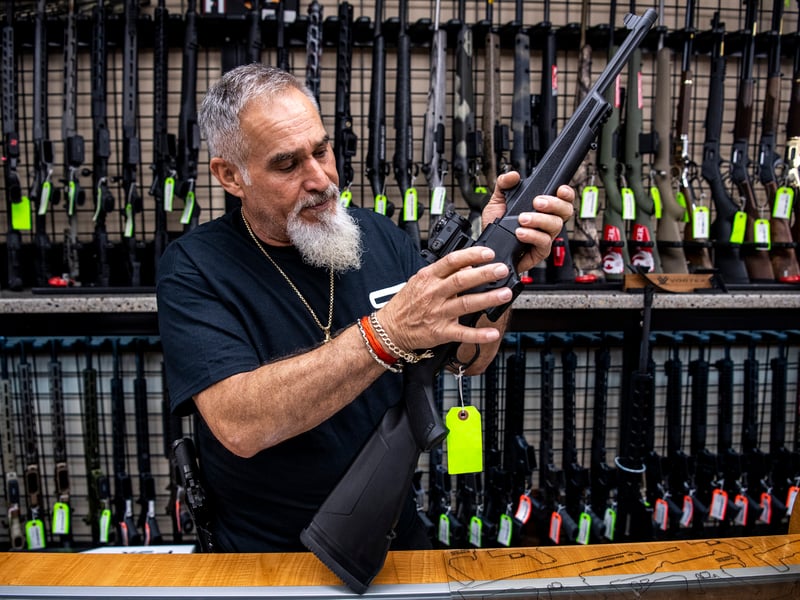
SACRAMENTO, Calif. (CN) — Three sportsmen advocacy organizations failed on Tuesday to have a federal judge permanently stop California from enforcing one of its gun laws.
The law targeted by the Safari Club International, the United States Sportsmen’s Alliance Foundation and the Congressional Sportsmen’s Foundation prohibits the firearms industry from advertising or marketing firearms-related products in a way that’s intended or appears to be attractive to minors. It also forbids using minors’ personal information to advertise or market to them.
They argued the law was unconstitutional and violated their First Amendment rights.
The sportsmen groups secured a partial win last year when a judge stopped the enforcement of part of the law. However, the portion about prohibiting the use of a minor’s personal information remained intact.
The groups sought to have the entire law set aside, which U.S. District Judge Dale Drozd on Tuesday declined to do.
“Plaintiffs present no authority suggesting that the court should reach the merits of their motion as a matter of law despite the presence of disputed allegations as to plaintiffs’ standing, and the court’s own research suggests otherwise,” Drozd said.
The state argued the groups failed to show issues exist at this legal stage that require a judge to grant their motion for judgment on the pleadings. Also, California said the groups aren’t entitled to judgment now because the complaint didn’t properly state a claim that the law violates the First Amendment or is unconstitutional.
Key issues in the ruling are what the judge called the state’s “boilerplate denials."
The groups made a series of accusations in their complaint, including that Governor Gavin Newsom said semiautomatic rifles were weapons of war and being marketed to children. The state countered, arguing that it knew nothing about the truth of the allegations and denied them.
“Plaintiffs have presented no argument that their [first amended complaint] incorporates any of the declarations they filed in support of their later motion for preliminary injunction,” Drozd said. “Accordingly, the court cannot and does not consider those declarations in resolving the pending motion for judgment on the pleadings and therefore rejects plaintiffs’ argument that defendant’s boilerplate denials in his answer cannot raise an issue of material fact because of the evidence presented in those declarations.”
Drozd next addressed the issue of whether the groups faced injury from the law. They’d argued that a plaintiff facing a violation of their constitutional rights can challenge a law linked to the First Amendment without meeting the legal definition of “injury.”
However, the judge noted California hasn’t argued the groups failed to properly say they were injured by the law’s enforcement, instead pointing to its own lack of knowledge.
“… plaintiffs allege that they regularly participate in the advertising and marketing activities prohibited by [the law] and describe what those activities are, allege that they fear that engaging in those activities will result in enforcement actions, and allege that they have thus declined to engage in those activities due to that fear,” Drozd said. “Defendant denies those allegations for lack of knowledge or insufficient information.”
Drozd added he’s not convinced the state’s denials are negligible and should be disregarded.
The judge’s final decision rested on the argument of merits.
The groups have argued that the state’s denials have no relevance and are immaterial to whether the law violates the First Amendment.
However, Drozd noted the groups are using a legal pathway that requires no material facts to be in dispute. They’ve given him no argument that he should decide the issue on the law alone.
“Accordingly, the court concludes that it cannot, under the legal framework of [this type of] motion, grant judgment in favor of plaintiffs at this time given the dispute that defendant has identified, even if defendant’s general denials can ultimately be disproven by plaintiffs,” Drozd said.
Attorneys for neither side could be reached for comment as of publication time.
Subscribe to our free newsletters
Our weekly newsletter Closing Arguments offers the latest about ongoing trials, major litigation and rulings in courthouses around the U.S. and the world, while the monthly Under the Lights dishes the legal dirt from Hollywood, sports, Big Tech and the arts.