
 Search Articles


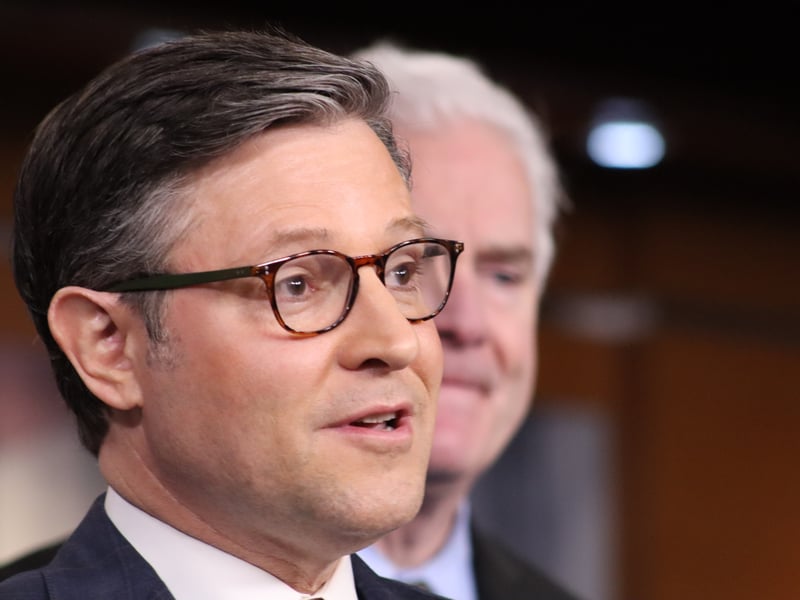
WASHINGTON (CN) — House Speaker Mike Johnson on Tuesday said that a federal law, which has long served as a check on the president’s authority to carry out military action without congressional approval, may violate the Constitution.
The observation from the House’s top lawmaker comes days after the Trump administration carried out airstrikes on targets in Iran. And it comes as Republicans in Congress signal a growing willingness to cede unilateral authority to the White House.
Speaking to reporters during a news conference Tuesday, Johnson said the weekend strikes on Iran’s nuclear facilities were “clearly” within Trump’s authority as president. “It shouldn’t even be in dispute,” he added.
The House speaker then criticized opponents of the airstrikes, some of whom cited the 1973 War Powers Resolution, which limits presidential military action without congressional approval and requires notifying lawmakers within 48 hours when facing an imminent threat.
“The framers of our Constitution never intended for the president to seek the approval of Congress every time he exercises his constitutional authority under Article II as commander in chief,” Johnson said.
The speaker argued that Congress is unwieldy when it comes to the use of military force because it is a “deliberative body” and decisions take more time than is practical during a developing situation. “In an emergent and imminent situation, time is not something we always have the luxury of,” he pointed out.
Johnson argued that the War Powers Resolution, which has long been regarded as a congressional check on the executive’s warmaking authority, may violate the Constitution.
“Many respected constitutional experts argue that the War Powers Act itself is unconstitutional,” the House speaker said. “I’m persuaded by that argument.”
Johnson argued that while he was a “jealous guardian” of Congress’s authority, past presidents had taken military action under the war powers law without prior approval. He also firmly emphasized the president’s role as military commander.
“The bottom line is that the commander in chief is the president,” said Johnson. “The military reports to the president and the person in power to act on the nation’s behalf is the president.”
The War Powers Resolution was passed in response to unchecked presidential military actions during the Vietnam War, including President Nixon’s secret bombing of Cambodia, which was carried out without Congress’s knowledge. Enacted over Nixon’s veto, the law bars the White House from deploying troops for more than 60 days without approval and allows Congress to demand withdrawal at any time.
Lawmakers could repeal the measure or challenge it in court, but it’s unclear whether Johnson would support such efforts.
Meanwhile, the U.S. appears to have dodged further involvement in what had for days threatened to become an expanding military conflict between Iran and Israel. This week, Trump has proclaimed that the two countries have agreed to a ceasefire agreement, a move that would bring to a close several days of Israeli airstrikes and Iranian missile attacks.
Following the U.S. strike on Iran’s nuclear facilities, Tehran responded with a limited missile attack on American military assets in Qatar. But the move appeared designed as an off-ramp from further hostilities — Iran’s government warned Qatar in advance and no U.S. personnel were injured in the attack.
Trump said following the missile strike that Iran had “gotten it all out of their ‘system.’”
The U.S. and Israel have long been concerned about Iran’s nuclear capabilities and what some have framed as their efforts to build a nuclear weapon. The White House has framed its strike on the Fordo nuclear facility and other strikes as a move to kneecap Tehran’s nuclear program, but the Pentagon has since acknowledged that it was unclear whether the country’s nuclear infrastructure was fully destroyed.
 Follow @BenjaminSWeiss
Subscribe to our free newsletters
Our weekly newsletter Closing Arguments offers the latest about ongoing trials, major litigation and rulings in courthouses around the U.S. and the world, while the monthly Under the Lights dishes the legal dirt from Hollywood, sports, Big Tech and the arts.