
 Search Articles


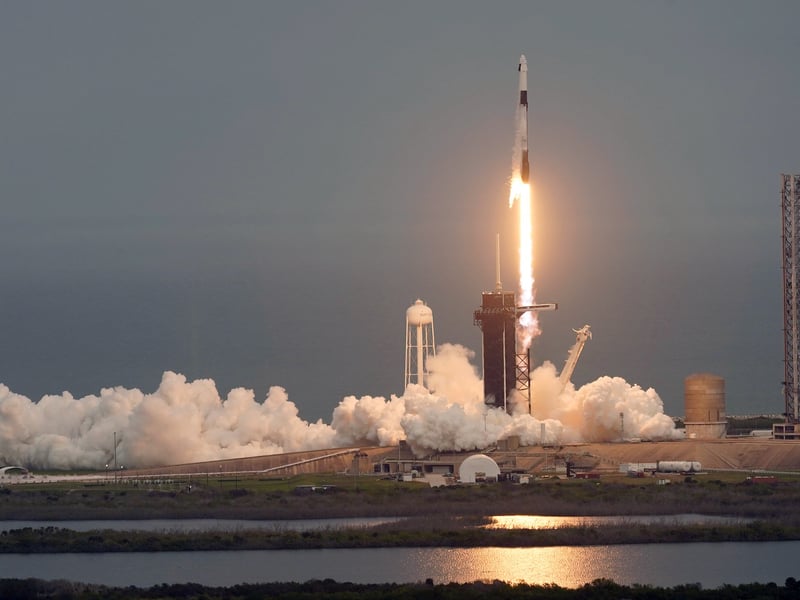
LOS ANGELES (CN) — SpaceX, Elon Musk’s rocket company, sued the California Coastal Commission over its refusal to allow more Falcon 9 launches at Vandenberg Space Force Base, a federal enclave and the world’s second busiest spaceport.
The commission, the company says in its complaint filed late Tuesday in Los Angeles federal court, has engaged in naked political discrimination against SpaceX by refusing to concur in the recommendation of the U.S. Air Force to increase the number of launches from 35 to 50 at the base on the Pacific Coast north of Santa Barbara.
Citing comments the commissioners made at the Oct. 10 public hearing where they voted 6-4 against the Air Force’s proposal, SpaceX claims the decision was based on their dislike of Musk’s outspoken political views and, as such, was in violation of the rights of free speech and due process enshrined in the First and 14th Amendments of the U.S. Constitution
“Rarely has a government agency made so clear that it was exceeding its authorized mandate to punish a company forthe political views and statements of its largest shareholder and CEO,” SpaceX says in its complaint.
The company also claims that for the first time the commission is demanding that SpaceX must obtain a coastal development permit from the commission to conduct launches from the California base.
A representative of the Coastal Commission didn’t immediately respond to a request for comment on the lawsuit.
At the Oct. 10 hearing, Commissioner Caryl Hart indicated that the basis for the decision was not that a commercial operator with a space launch program at the base was increasing its annual launch cadence, but rather that SpaceX was doing so, the company claims.
“The concern is with SpaceX increasing its launches, not with the other companies increasing their launches," SpaceX quoted Hart as saying. “We’re dealing with a company . . . the head of which has aggressively injected himself into the presidential race and made it clear what his point of view is.”
And Commissioner Gretchen Newsom, SpaceX claims, read a prepared statement to express her displeasure with “Elon Musk hopping about the country, spewing and tweeting political falsehoods and attacking FEMA while claiming his desire to help the hurricane victims with free Starlink access to the internet.”
Further evidence of the commission’s bias, according to SpaceX, is that it recently approved a proposal to allow another commercial space launch operator to launch up to 60 rockets a year from Vandenberg, accepting that this operator’s launch program, including commercial launches, are federal agency activities.
Musk has been feuding with California regulators ever since his Tesla factory in Fremont was temporarily closed during the Covid-19 pandemic in 2020. This year he moved SpaceX’s headquarters from Hawthorne, California, to Texas because of a new state law that bars school districts from notifying parents of students who want to change their gender identity.
The billionaire has also thrown his weight and millions of dollars behind Donald Trump’s bid to regain the U.S. presidency, which has further alienated the mostly liberal state from the SpaceX boss.
In its lawsuit, SpaceX claims the Coastal Commission, which regulates water and land use along California’s coast, has for decades agreed with the Air Force that the commercial space launch programs at Vandenberg are federal agency activities that are not subject to the commission’s permitting authority and control.
The vote against additional SpaceX launches interferes with the operations of the national space launch program conducted at the base, which per the federal Coastal Zone Management Act, falls exclusively under federal government control, according to the company.
In addition, SpaceX argues, the launch facilities sit on a federal enclave protected by the Constitution from intrusive state regulation, and the commission’s own governing statute, the California Coastal Act of 1976 expressly states that it does not apply to federal land.
“The commission’s punitive decision, violating core constitutional protections of free speech and due process, undermines U.S. national security and is blatantly illegal, trampling over (i) federal law; (ii) exclusive federal jurisdiction over military bases and other federal enclaves; and (iii) the commission’s own governing statutory boundaries,” the company claims.
SpaceX, which is 40% owned by Musk, builds space rockets and provides satellite launching services for the U.S. government as well as for commercial clients. It also operates the Starlink satellite internet service that has about 7,000 small satellites orbiting the planet.
The company asks a judge to find the California Coastal Commission lacks authority for its Oct. 10 decision under the Coastal Zone Management Act, that its demand for SpaceX to obtain a permit to conduct launches is preempted, that state law can’t be applied to the federal enclave, that the commission’s decision amounts to retaliation in violation of the First and 14th Amendment and violates the due process clause of the 14th Amendment.
SpaceX is represented by Tyler Welti, Colin Vandell and Mitchell Mirviss of Venable LLP.
 Follow @edpettersson
Subscribe to our free newsletters
Our weekly newsletter Closing Arguments offers the latest about ongoing trials, major litigation and rulings in courthouses around the U.S. and the world, while the monthly Under the Lights dishes the legal dirt from Hollywood, sports, Big Tech and the arts.