
 Search Articles


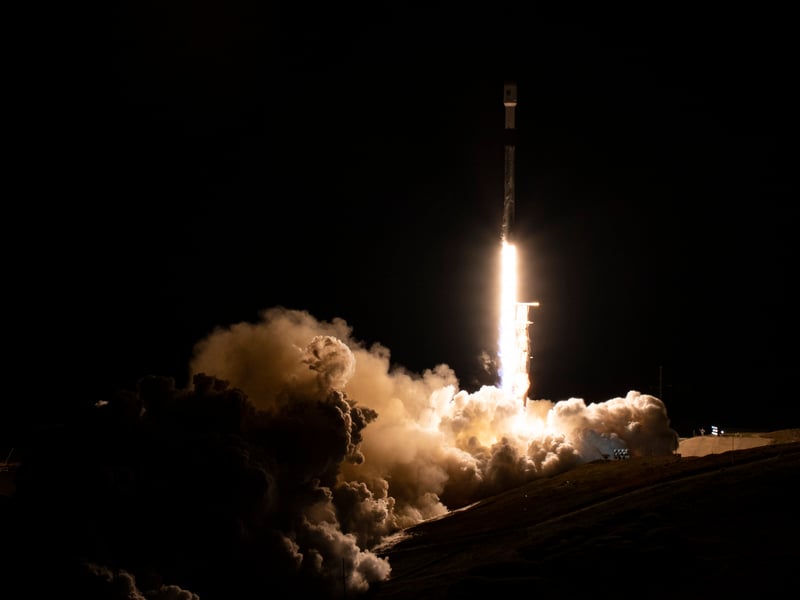
LOS ANGELES (CN) — SpaceX was allowed to proceed with its retaliation lawsuit against the California Coastal Commission, claiming that the commissioners’ dislike of CEO Elon Musk’s political views prompted them to oppose an increase in rocket launches from a federal air base in the state.
U.S. District Judge Stanley Blumenfeld Jr., a Donald Trump appointee, denied in part California’s request to dismiss the case at a hearing Friday in Los Angeles federal court.
In a tentative decision, which wasn’t made publicly available, the judge rejected the state’s argument that four of SpaceX’s claims for declaratory relief weren’t “ripe” because the commission hadn’t enforced a threatened requirement for SpaceX to obtain a coastal development permit for the expanded launch schedule.
“The tentative doesn’t find that the evidence is compelling, but that it is sufficient at this stage,” the judge said at the hearing.
California Deputy Attorney General David Alderson tried to persuade the judge that the commission has in the past required coastal development permits from other commercial space operators, but that it has never sought to enforce such a requirement at the Vandenberg Space Launch Base in Central California.
The attorney also argued that the individual commissioners, who last year expressed their displeasure with Musk at a hearing on the Air Force’s plans to allow more launches at the base, can’t enforce any requirements for SpaceX to get a coastal development permit. Only the commission’s executive director can do this, Alderson said.
Blumenfeld, however, suggested that Alderson was engaging in a divide-and-conquer strategy by trying to knock out individual instances of bias or threats while ignoring the bigger picture of the commission’s actions and comments.
In particular, the judge noted the commission’s failure to disavow the requirement that SpaceX would need a coastal development permit.
“It’s not dispositive,” Blumenfeld said, “but it’s a factor in the totality of the circumstances.”
The commission’s approval or disapproval of an expanded launch schedule for SpaceX’s Falcon 9 rockets at Vandenberg, from 36 to 50 a year, is somewhat moot.
The coastal commission last October voted against the Air Force’s finding that the increased launch schedule was consistent with California’s coastal management program. The Air Force, as allowed by federal law, disregarded the commission’s objection and proceeded with the expanded schedule anyway.
According to SpaceX, the Air Force is now planning to increase the number of launches even further to 100 a year.
SpaceX said in its original complaint that the coastal commission had engaged in naked political discrimination against the company by refusing to concur with the Air Force’s plans to increase the number of launches at the base on the Pacific Coast north of Santa Barbara.
Citing comments the commissioners made at the Oct. 10 public hearing where they voted 6-4 against the Air Force’s proposal, SpaceX claims the decision was based on their dislike of Musk’s outspoken political views and, as such, was in violation of the rights to free speech and due process enshrined in the First and 14th Amendments of the U.S. Constitution.
“Rarely has a government agency made so clear that it was exceeding its authorized mandate to punish a company forthe political views and statements of its largest shareholder and CEO,” SpaceX says in its complaint.
Blumenfeld in March granted California’s bid to dismiss the lawsuit, agreeing that SpaceX had failed to show how it was actually harmed by the commission’s demand because the U.S. Air Force, which owns the base, has allowed launches to proceed without state approval.
The judge gave the company leave to amend its claims, however, to overcome this defect.
“The concern is legitimate when a local body injects politics in its decisionmaking,” Blumenfeld told SpaceX attorney Tyler Welti at the March hearing. “I get the concern. But where is the harm?”
 Follow @edpettersson
Subscribe to our free newsletters
Our weekly newsletter Closing Arguments offers the latest about ongoing trials, major litigation and rulings in courthouses around the U.S. and the world, while the monthly Under the Lights dishes the legal dirt from Hollywood, sports, Big Tech and the arts.