
 Search Articles


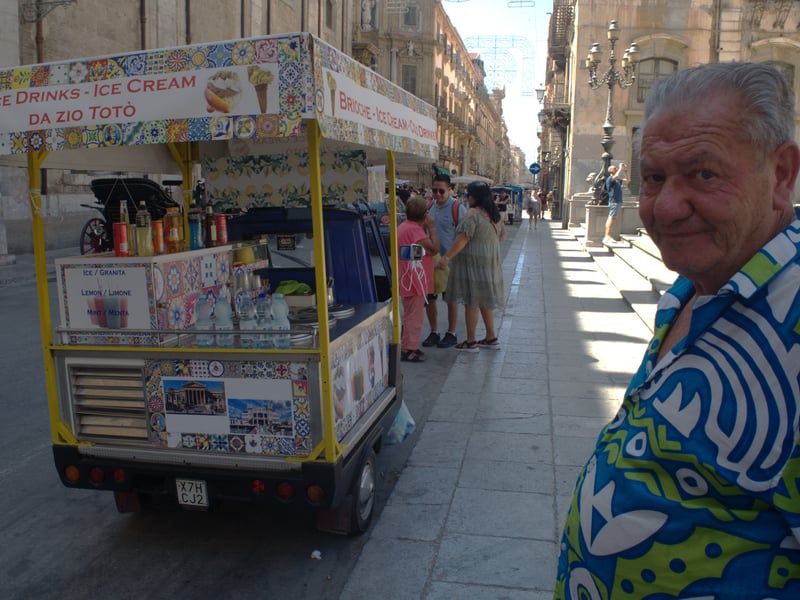
PALERMO, Sicily (CN) — Salvatore Riccobono’s been at it since morning — selling flavored frozen ice drinks called granite and ice cream on Via Maqueda, one of the oldest streets in Palermo, a pearl of history, architecture and sun in the Mediterranean.
It’s afternoon now and Riccobono’s gotten to the better part of yet another scorching summer day: The sun’s moved off to the west and his truck is shaded by the towering baroque church across the street.
“The heat has come early this year,” he muses, scanning the street for customers. “For hours in the morning I’m in the sun.”
“Gelato ! Granite !” He cries out to passersby, his voice carrying over the bustle of Palermo.
The Sicilian capital is in the middle of a heat trough that extends from North Africa through the Mediterranean all the way to Central Asia. Temperatures have soared past 90 degrees Fahreinheit this week in Palermo and neared 100 F. Heat advisories are in effect for numerous Italian cities, including Palermo.
This is Southern Europe’s first big wave of intense heat this summer, and there are fears it will only get worse. The Mediterranean basin is one of the planet’s climate change hot spots.
Northern Europe, at least so far, has been spared this heat punch: Up there, cool and wet weather prevails.
Climate monitors say the planet this year may become the hottest year on record — largely thanks to El Niño, a naturally occurring weather phenomenon that oscillates with its opposite, La Niña. El Niños are associated with heat and unpredictable weather. June was the hottest on record globally, according to Copernicus, the European Union’s climate change service.
In Palermo, lifelong residents like Riccobono are used to such all-consuming heat; and they’re not particularly alarmed by this new bout of warmth. For them, it’s still just another hot, dry and sun-torched summer in Sicily.
Heat’s been a reality of life on this island off the coast of Africa for centuries. And people today do what its inhabitants have always done: Try to stay cool.
Across the city, Palermitans enact summer rituals. They sit for hours in front of whirring electric fans; they lounge by the sea; they gather on chairs in courtyards and walkways to talk among themselves; they rest in the shade and move slowly.
And everyone waits for the approach of the coolness brought by the evenings — the moment this old Arab-Norman city comes alive with laughter and song and the clatter of plates and silverware.
During the brunt of the day, tourists are the ones suffering the most: They’re red-faced, dehydrated and heat-dizzy as they march off on sightseeing afternoons.
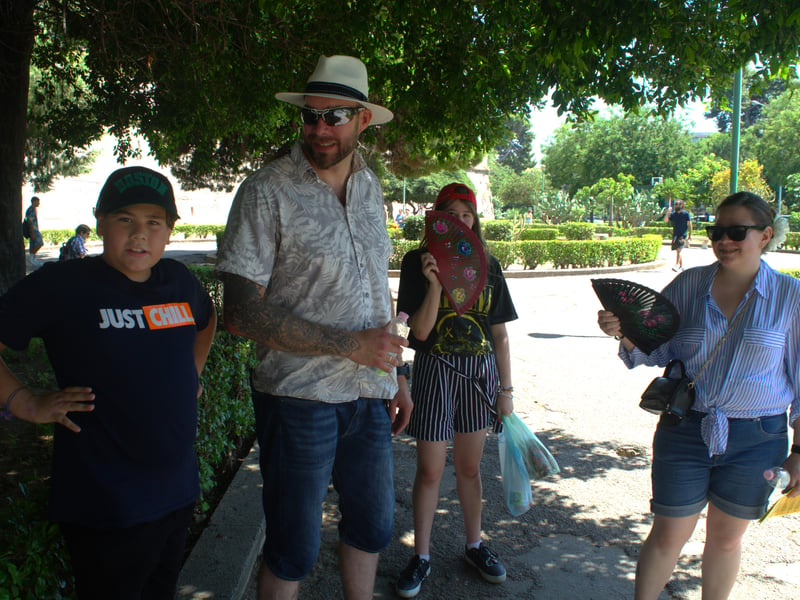
“It’s manageable,” said John Kjennbakken, a 37-year-old carpenter from Norway on a tour with his wife, Sonija, and their two children, Rachel and Jon Michael, 13 and 10.
They were the picture of heat: The children were slightly red in the face and appeared bewildered by Palermo’s cacophony, garbage, colors and chaos.
The kids had taken a seat along a ledge in gardens outside the walls of the Palazzo dei Normanni, the magnificent Arab-Norman castle at the heart of Palermo.
Sonija cooled herself with a flower-patterned fan she’d purchased. In fact, each member of the Kjennbakken family bought a fan: Rachel sat using hers; John had his stuck in his back pocket; Jon said he’d lost his somewhere.
“We thought it would be more intense,” John said as he thought about the heat. “We’re taking it slowly.”
“Finding shade, hydrating,” Sonija added.
Sonija, who is part Norwegian and part Singaporean, saw this summer family trip in Sicily as a good test run for their next big adventure: a voyage to Singapore for the first time to meet Sonija’s side of the family.
“Training wheels!” Sonija said. “This is training for Singapore’s heat — though, really, it’s not so bad there. Everywhere you go in Singapore there’s air conditioning — not like here.”
A little refreshed and rested, the troupe picked themselves up and headed off from Independence Square toward the Cappuccini catacombs, a bit less than a mile away.
Throughout its history, Sicily’s sun has been a dominant factor and Palermo, like the rest of the island, adapts well.
The city benefits from having been founded by Phoenicians and then developed by Arab kingdoms. The Arabs turned the city into the great port that it is today — the Conca d’Oro , or Golden Basin.
The Moors, as the Arabs were known in Europe during the Middle Ages, brought with them their knowledge of building in the deserts of North Africa and Arabia.
To this day, much of Palermo’s old city, including its water and sewage systems, is based on public works and urban concepts handed down from the Arabs. The Arab reign lasted between 827 AD and the 11th century and with it arrived the cultivation of citrus, papyrus, sugar cane, culture and natural sciences.
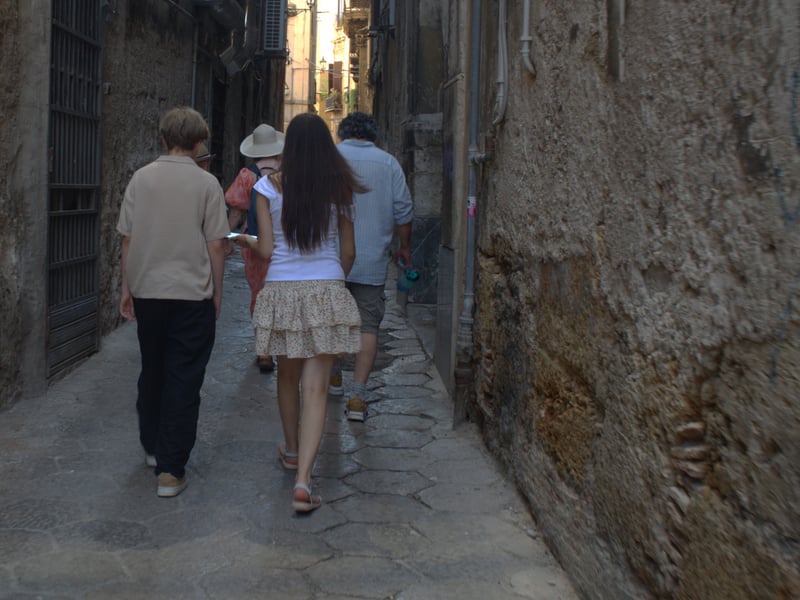
“If you think about it, Palermo’s streets are narrow because this creates ombra quickly because the sun passes overhead fast in these vicoli ,” said Giuseppe Tripi, a 51-year-old clay and ceramics master. “And because these alleyways are narrow, air runs quickly down them and that brings coolness.”
Tripi gets through his summers in the comfort of the Palazzo Castrone-Santa Ninfa, one of Palermo’s oldest Arab edifices, only a stone’s throw from the majestic Palermo cathedral.
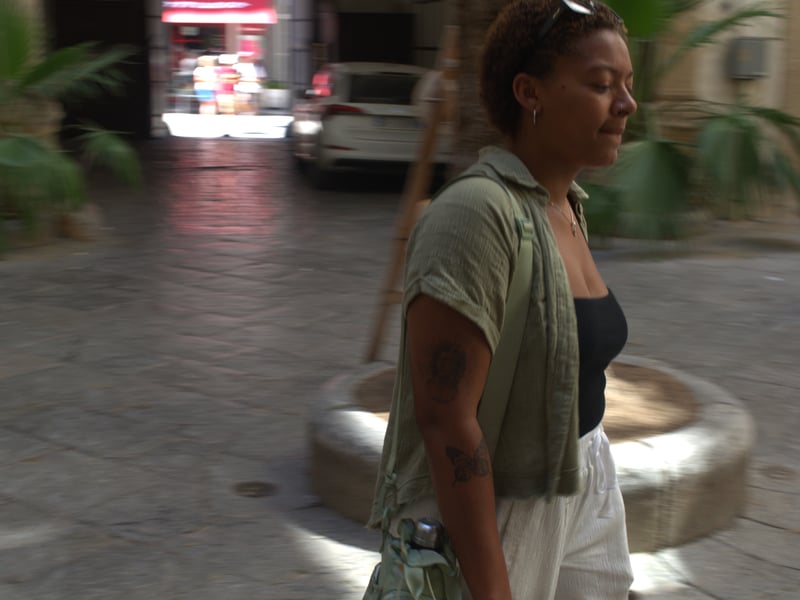
The Palazzo Castrone-Santa Ninfa is exemplary of Arabic genius. Standing at three stories, the palace is built around a central courtyard that is luxurious with plants, fountains, porticos and refreshing humidity.
“You can see the Arab tradition of having water inside the courtyard,” he said, pointing to fountains and water canals in the courtyard’s walls. “All Arab constructions brought water into the inhabited buildings, into homes.”
In the middle of the courtyard, a palm tree reached skyward*.*
“The water that arrives in the city today from the mountains gets here on an aqueduct built by the Arabs,” Trisi said.
The drop in temperature inside the palazzo compared to the street outside was remarkable.
“It’s hot, but every summer it’s like that,” Tripi said. “But from what I’m hearing, August is supposed to see a really big bout of heat.”
He added with obvious relief:
“I’m staying inside here to work all summer!”
Courthouse News reporter Cain Burdeau is based in the European Union.
 Follow @cainburdeau
Subscribe to our free newsletters
Our weekly newsletter Closing Arguments offers the latest about ongoing trials, major litigation and rulings in courthouses around the U.S. and the world, while the monthly Under the Lights dishes the legal dirt from Hollywood, sports, Big Tech and the arts.