
 Search Articles


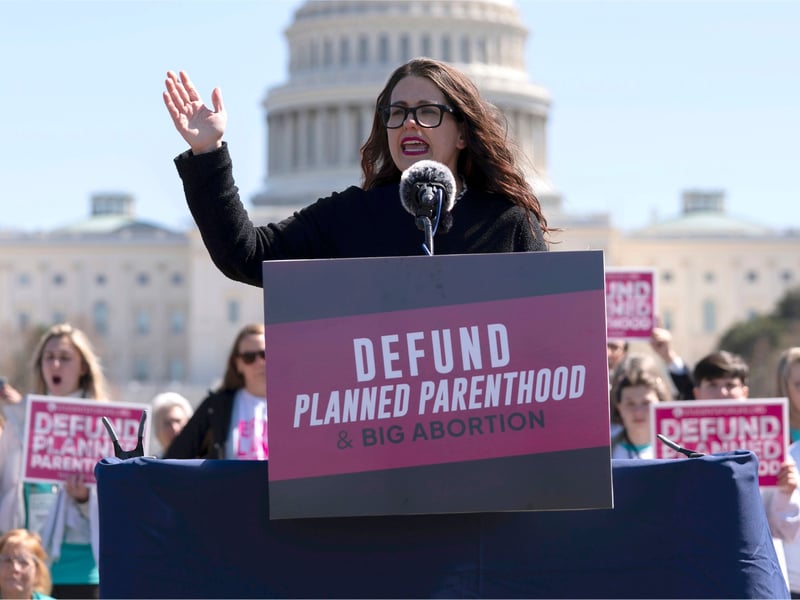
WASHINGTON (CN) — Public health officials raised alarms before the Supreme Court ahead of a hearing next week that could cut essential health care services for South Carolina’s most vulnerable residents.
Doctors are scarce in South Carolina, with almost all of the state’s residents living in counties classified as Primary Care Health Professional Shortage Areas under federal regulations. Women’s health care providers are especially hard to come by, with 14 state counties lacking even a single practicing OB-GYN.
One-fifth of South Carolinians insured by Medicaid could see further cuts to access, however, when the state argues at the Supreme Court on April 5 to keep Planned Parenthood clinics from participating in its Medicaid program.
“Diminishing an already scarce resource necessarily leads to greater difficulty in obtaining it,” South Carolina health care policy experts, advocates and providers wrote in a brief at the court. “Here, removing a medically qualified and willing Medicaid primary care provider in a state with shortages of exactly such providers raises significant new barriers to patients accessing care.”
Julie Edwards is one such resident. After being turned away by other providers, Edwards, who is a diabetic, went to Planned Parenthood for birth control. She was happy with her service, but her health condition required follow-up visits.
During one of these appointments, Edwards learned that South Carolina terminated Planned Parenthood’s participation in Medicaid because it performed abortions.
Health care policy experts said the state’s political interference would hurt South Carolinians — some of the sickest Americans in the country.
Planned Parenthood challenged the termination decision, arguing that Edwards’ right to choose her own medical provider was violated. The provision under the Medicaid Act says that state plans must provide any individual eligible for medical assistance with coverage.
A lower court blocked Planned Parenthood’s termination, and the court of appeals affirmed.
At the Supreme Court, South Carolina will argue that Edwards’ suit was prohibited under the provision. The state says the Medicare Act’s qualified-provider provision isn’t individually enforceable.
“The Medicaid Act is not a civil-rights statute,” South Carolina wrote, claiming that the provision could only be enforced by the Secretary of the Department of Health & Human Services, not federal courts.
South Carolina, which has banned almost all abortions, based its termination decision on the theory that Medicaid funds were going to abortion services.
“Because money is fungible, giving Medicaid dollars to abortion facilities frees up their other funds to provide more abortions,” South Carolina wrote.
The program uses a fee-for-service basis for reimbursements. Planned Parenthood said South Carolina’s theory was laughable since the state provides one of the lowest Medicaid reimbursement rates.
“South Carolina’s Medicaid reimbursement rates are so low that they do not even fully cover the cost of the Medicaid services [Planned Parenthood South Atlantic] provides,” Planned Parenthood wrote.
While clinics are most well-known for abortion services, Planned Parenthoods provide a wide variety of services including cancer screenings, STD treatment, prenatal and postpartum services and more.
The American College of Obstetricians and Gynecologists said Planned Parenthood centers provided 4.6 million tests or treatments for STIs, including 738,000 HIV tests, 464,000 cervical, breast, and other cancer screenings and almost 926,000 pregnancy tests between 2022 and 2023 alone. The organization said individuals who lose access to health care through Planned Parenthood will be forced to forego services altogether.
“Decreased access to [Planned Parenthood South Atlantic]’s services, including contraception methods, counseling, and cancer and disease screening, will result in more unintended pregnancies, undetected cancers and diseases, and poor health outcomes for an already vulnerable population,” the medical association wrote.
Planned Parenthood said the free-choice-of-provider provision has been a right of Medicaid patients for decades, pushing the justices to reject South Carolina’s appeal.
“This provision, which has been a part of Medicaid for over 50 years, protects an important individual right — the freedom to choose one’s own health care provider,” Planned Parenthood wrote. “That right ‘could not be more personal, nor more precious.’”
Allowing South Carolina to defund Planned Parenthood, health care experts said, would give the state a license to remove medically qualified providers from its network because they provide politically disfavored — but legal — medical services.
“While today it is [Planned Parenthood South Atlantic] that South Carolina views unfavorably, there is no way to predict what provider or what legal care might be in the crosshairs next, in South Carolina or any other state,” the health experts said.
 Follow @KelseyReichmann
 Follow @kelseyreichmann.bsky.social
Subscribe to our free newsletters
Our weekly newsletter Closing Arguments offers the latest about ongoing trials, major litigation and rulings in courthouses around the U.S. and the world, while the monthly Under the Lights dishes the legal dirt from Hollywood, sports, Big Tech and the arts.