
 Search Articles


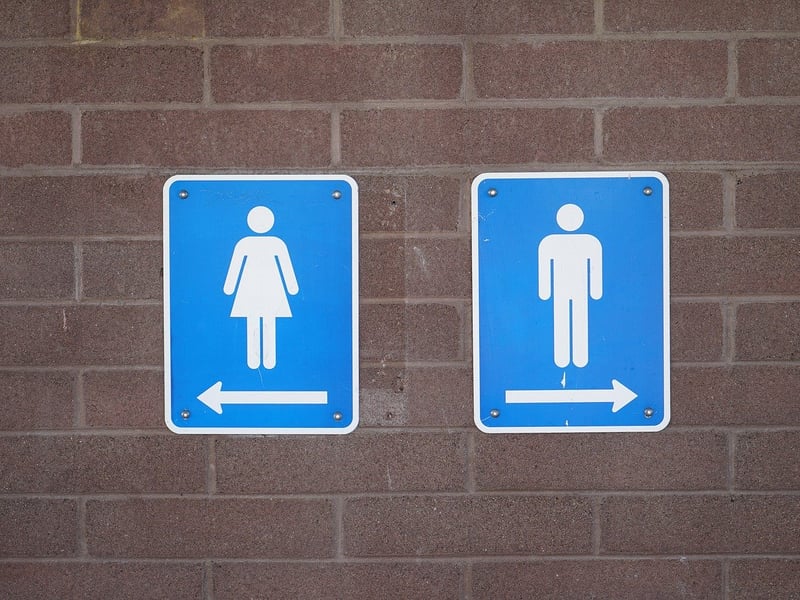
WASHINGTON (CN) — South Carolina called on the Supreme Court on Thursday to enforce the state’s transgender bathroom ban against a 13-year-old transgender boy.
The Fourth Circuit issued an injunction earlier this month preventing South Carolina from banning a student identified as John Doe from using restrooms matching his gender identity.
The Palmetto State argued that the limited injunction left the state “stuck between an impossible rock and hard place.”
“On the one hand, the Executive Branch demands, on pain of loss of federal funding, that schools apply Title IX as originally understood,” the state wrote. “On the other hand, the Fourth Circuit has required Applicant Berkeley County School District to do exactly the opposite.”
Attorneys for the student at the center of the appeal rebutted the need for extraordinary action from the justices, however.
“South Carolina wants the Supreme Court to take the extraordinary remedy of intervening in an ongoing lower court appeal – all because the state wants to stop one ninth grader from using boys’ restrooms while that appeal proceeds,” Alexandra Brodsky, Litigation Director for Public Justice’s Students’ Civil Rights Project, said in a statement. “This case does not present the sort of emergency that would justify such intervention.”
In 2023, South Carolina lawmakers advanced several bathroom bills aimed at barring transgender students from using facilities matching their gender identity. Representative April Cromer called her proposal “common sense legislation — boys are boys, girls are girls, and you have to use the bathroom and locker room that lines up with your gender.”
After three unsuccessful attempts, lawmakers changed course by adding the restrictions to South Carolina’s annual budget appropriation bills. In 2024, they passed a short term budget proviso prohibiting transgender students from using public school bathrooms aligned with their gender identity. A similar budget measure was included in the Palmetto State’s 2025 budget.
John Doe, a transgender boy, began using the boys’ restrooms at Cane Bay Middle School in August 2024 after living openly for over a year. Before he came out, Doe’s female classmates were confused when he used the girls’ bathroom because of his appearance.
Though no students objected to his use of the boys’ bathrooms, teachers reported him to administrators. The school directed Doe to either use the girls’ restrooms or the single-occupancy nurse’s bathroom.
Doe continued using the boys’ restrooms, however, and was suspended. Afterward, his parents withdrew him from the school, citing ongoing harassment from teachers and students.
Doe sued South Carolina, claiming that the bathroom ban was unconstitutional.
On Aug. 13, the day Doe began high school, the Fourth Circuit issued a narrow injunction blocking South Carolina from enforcing its bathroom law against him. The court relied on its 2020 Grimm v. Gloucester County School Board ruling, which held Virginia’s transgender bathroom ban violated Title IX and the Equal Protection Clause.
South Carolina countered that the appeals court should have followed the Supreme Court’s June ruling in United States v. Skrmetti , which upheld Tennessee’s ban on gender affirming care for minors.
“Consistent with Skrmetti , the Proviso validly prohibits a form of gender transition as a treatment for gender dysphoria,” the state wrote. “Respondents’ expert witness stated in her expert witness declaration that social gender transition is a form of treatment for gender dysphoria and often includes using restrooms that align with gender identity.”
The state claimed that South Carolina voters suffered every day that the proviso was blocked.
“The bottom line: the Proviso is a validly enacted law representing the people of South Carolina’s considered judgment about the harms of allowing male students to use female restrooms and vice versa,” the state wrote. “After much debate, lawmakers chose to protect privacy and safety for students. The Fourth Circuit ignored the people’s judgment and failed to defer to the public interest in favor of the preferences of one student.”
The appeals court said there was zero evidence that Doe’s use of the boys’ restroom had harmed anyone.
“Indeed, no classmate has ever complained about our client using boys’ restrooms,” Brodsky said. “Yet South Carolina is rushing to the Supreme Court to get a permission slip to subject him to state-mandated discrimination at school, including the school discipline that drove him out of middle school last year.”
While the Fourth Circuit’s ruling is limited to Doe, the state claimed that the underlying rule has no limiting principle.
“Given the injunction, other schools may be driven to allow students to use opposite-sex restrooms,” the state wrote. “Choices like these could, in turn, deter gender congruent students from using the restroom anywhere in public schools. This court should consider all ‘the public consequences’ that leaving the injunction in place would bring.”
Following its blockbuster ruling in Skrmetti , the Supreme Court is expected to review additional questions around transgender rights in its upcoming term, including cases involving conversion therapy and sports bans.
 Follow @KelseyReichmann
 Follow @kelseyreichmann.bsky.social
Subscribe to our free newsletters
Our weekly newsletter Closing Arguments offers the latest about ongoing trials, major litigation and rulings in courthouses around the U.S. and the world, while the monthly Under the Lights dishes the legal dirt from Hollywood, sports, Big Tech and the arts.