
 Search Articles


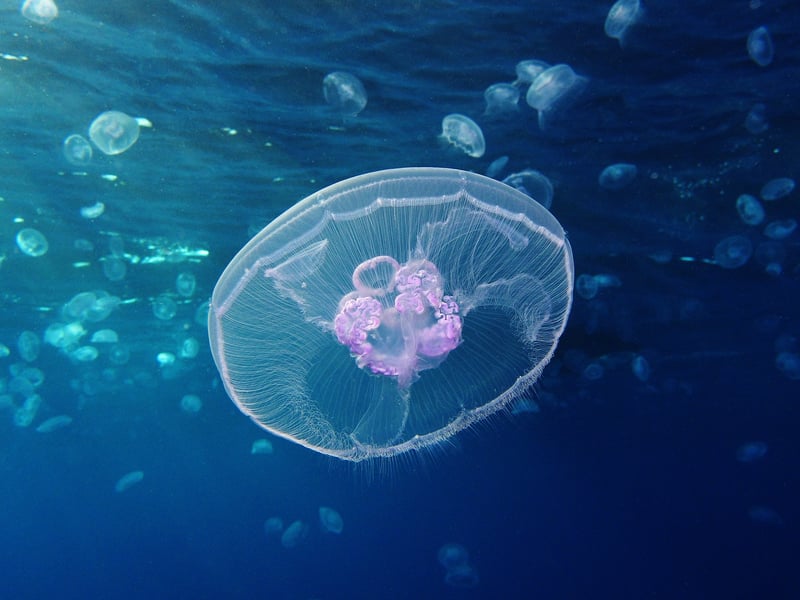
(CN) — Sleep is a biological function most animals on the planet need to survive. How, when and where it occurs can look different depending on the creature taking the snooze.
But sometimes, it’s not all that different from the sleeping habits of humans, even if the creature leads an incredibly different kind of life. And that’s what scientists from Paris and Israel found when they started studying the sleep patterns of jellyfish and sea anemones.
In research published on Tuesday in the journal Nature Communications, the scientists suggest more similarities with human sleeping behavior than previously studied, supporting a hypothesis for a broad range of species that concludes sleep evolved to protect against DNA damage caused while awake.
But how did the scientists tell the difference between an awake sea anemone and an asleep one?
“We defined sleep using behavioral criteria such as rhythmic activity, an increased arousal threshold during sleep, and homeostatic control (increased sleep pressure following sleep deprivation),” Lior Appelbaum, a lead professor of the study at his own lab within the Multidisciplinary Brain Research Center at Bar-Ilan University in Ramat Gan, Israel, said in an email.
“Specifically, we demonstrate that following specific external stimuli, sleeping animals respond more slowly than awake animals,” he said.
Snoozing jellyfish, in a “sleep-like” state, have previously been studied, but Appelbaum and study authors Oren Levy, Raphael Aguillon and Amir Harduf, found further evidence of parallels between human and jellyfish sleep patterns by studying the species Cassiopea andromeda — sometimes called the upside-down jellyfish — in the sea and in the lab. The team also observed Nematostella vectensis, or the starlet sea anemone, in the laboratory.
While collecting data on the two species — they are both under the taxonomic phylum Cnidaria, which includes over 11,000 species of aquatic invertebrates — the researchers noticed jellyfish that are active during the day and sea anemones that are more lively at night both prefer to sleep around eight hours per day, the same suggested amount of sleep needed for humans.
Appelbaum also noted one of the more surprising findings was jellyfish like to sleep at night but will also doze during a siesta from its daytime activities of pulsing and drifting in the pursuit of prey sometime around midday.
And the benefits of a jellyfish rest give insight into how sleep evolved for us, the researchers said.
“We suggest that sleep evolved to enable single neurons to recover from cellular stress and the accumulation of DNA damage that occurs during wakefulness,” said Appelbaum.
In other words, sleep reduces the damage a brain’s neurons incur due to use while awake. According to the researchers, neurons first evolved in basal metazoans — some of the earliest animals on Earth and similar to present-day sea anemones and jellyfish.
With increased DNA damage from UV radiation or other reasons, the researchers also observed the jellyfish and sea anemones needed recovery sleep, and conversely, augmenting behavior with the hormone melatonin promoted sleep, which decreased DNA damage.
“Sleep is important not just for learning and memory, but also for keeping our neurons healthy. The evolutionary drive to maintain neurons that we see in jellyfish and sea anemones is perhaps one of the reasons why sleep is essential for humans today,” said Appelbaum.
Therefore, watching a jellyfish sleep is to witness millions of years of evolutionary history at work restoring the molecule responsible for all life. And it may make you sleepy too.
Subscribe to our free newsletters
Our weekly newsletter Closing Arguments offers the latest about ongoing trials, major litigation and rulings in courthouses around the U.S. and the world, while the monthly Under the Lights dishes the legal dirt from Hollywood, sports, Big Tech and the arts.