
 Search Articles


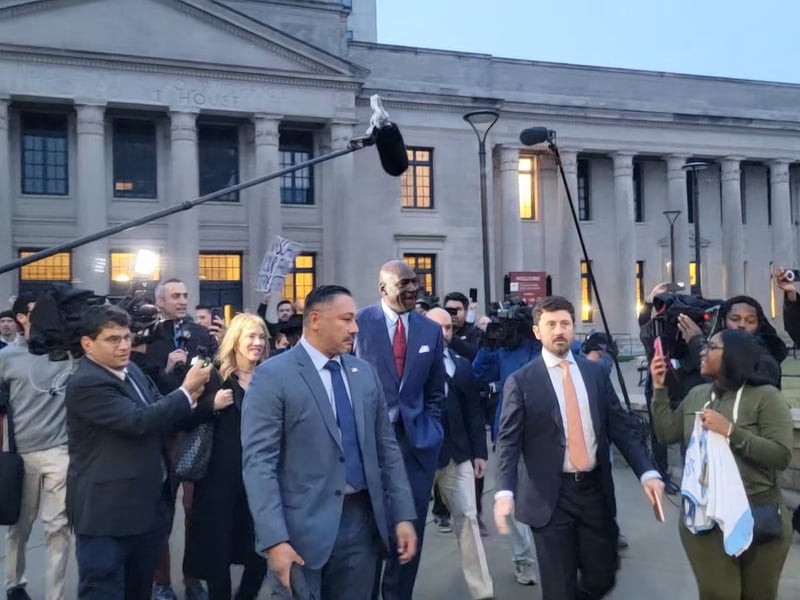
CHARLOTTE, N.C. (CN) — Michael Jordan testified in the NASCAR antitrust trial Friday, advocating for NASCAR to enter into more of a partnership with racing teams and give them a higher cut of the profits.
Front Row Motorsports and 23XI Racing argue NASCAR’s 2025 racing charters are anticompetitive, claiming teams could secure far more profitable deals if the sport weren’t insulated from competition. They say NASCAR blocks potential rivals by locking racetracks into exclusivity agreements, barring teams from racing elsewhere, and restricting the use of Next Gen cars in any competing series.
On Friday, Jordan, who is the majority owner in 23XI Racing, said he didn’t sue for personal gain, but to improve the sport.
“Someone had to step forward and challenge the entity,” he said. “I felt like, as a fan of the sport, it needed to be looked at from a whole different perspective.
Teams and racers assume all the risks in racing, he said, both financial and otherwise.
“I’m not discrediting what NASCAR has done to improve the sport,” he said. But, “I never saw Jim France drive a car. I never saw Jim France risk his life.”
NASCAR attorney Lawrence Buterman pressed Jordan on the risks of team ownership, asking, “You invested in this NASCAR team knowing it could be a risky investment, correct?” He noted NASCAR has increased the pool money paid to winning teams every year since charters began in 2016.
Jordan countered that racing should be a partnership with a fairer split for teams. He said he would have preferred a 50/50 revenue share, similar to the National Basketball Association.
He added that permanent charters would give teams far more leverage in negotiations, allowing them to push NASCAR for better terms.
NASCAR’s charter system — its version of a franchise — allows teams to race under multi-year contracts with guaranteed terms or else qualify for each Cup Series race. Friction over those terms led the plaintiffs to refuse the 2025 agreements, prompting the lawsuit. The remaining 13 teams signed the agreement.
Over more than two years of negotiations, the teams sought a larger fixed payment to cover car costs and permanent charters, greater control over expenses, and a share of profits from their IP and new revenue streams. They won a larger fixed payment but nothing else, after NASCAR delivered a final offer and gave them less than 24 hours to sign or lose their charters.
Jonathan Marshall, executive director of the Race Team Alliance — formed in 2014 to negotiate collectively with NASCAR — also testified.
“NASCAR team revenue(s) are substantially trailing what’s happening in all the major league sports industries,” he said, pointing to a 2019 presentation he created on team revenue by sports series, with NASCAR teams trailing teams in the NFL, NBA and MLB.
From 2009 to 2019, team revenue went up, but so did costs, he said. He created a chart documenting changes between the 2016 and 2025 agreements. The teams “went backwards somehow,” in their negotiating, he said.
“The harder the teams wanted to get the deal they were looking for, the worse it got for the teams,” he said.
Heather Gibbs, co-owner of Joe Gibbs Racing, testified that permanent charters are vital for the sport and for teams to grow, as teams’ financial models depend heavily on sponsor funding.
When presented with the 2025 charters, Joe Gibbs Racing signed. The company has over 450 employees depending on them, Gibbs said.
“It’s as though you have a gun to your head, and if you don’t sign it, everything is gone,” Gibbs said.
The plaintiffs are expected to rest their case next week before NASCAR begins calling its own witnesses. Several executives have already testified, including President Steve O’Donnell and Scott Prime, the company’s executive vice president and chief strategy officer.
O’Donnell, who wrapped his testimony Friday, told jurors that other motorsports don’t cover baseline car costs the way teams want NASCAR to. He said NASCAR also opposes permanent charters because rules and race locations change yearly and the series needs flexibility.
Just before trial, U.S. District Judge Kenneth Bell, a Donald Trump appointee, shut down NASCAR’s counterclaims, finding the company failed to show it suffered an antitrust injury or that the teams restrained the racing market.
He also affirmed that NASCAR has a 100% market share in premier stock car racing. NASCAR has and exercises monopsony power over the market, Bell added
The 9-person jury will have to determine whether NASCAR maintained its monopsony over the premium stock car racing market through anticompetitive conduct, and, if so, whether the teams were harmed.
The teams first sued NASCAR in October 2024, claiming NASCAR has a monopsony on the premium stock car racing industry and is forcing teams to sign anticompetitive contracts. They claimed they were pressured to sign the contract in a night after years of unsuccessful negotiations, and that doing so would have required them to release claims against NASCAR.
Counsel for NASCAR declined to comment after the court recessed, as did Jordan. Bell warned the court that the trial, expected to last two weeks, might run long.
 Follow @SKHaulenbeek
 Follow @shaulenbeek.bsky.social
Subscribe to our free newsletters
Our weekly newsletter Closing Arguments offers the latest about ongoing trials, major litigation and rulings in courthouses around the U.S. and the world, while the monthly Under the Lights dishes the legal dirt from Hollywood, sports, Big Tech and the arts.