
 Search Articles


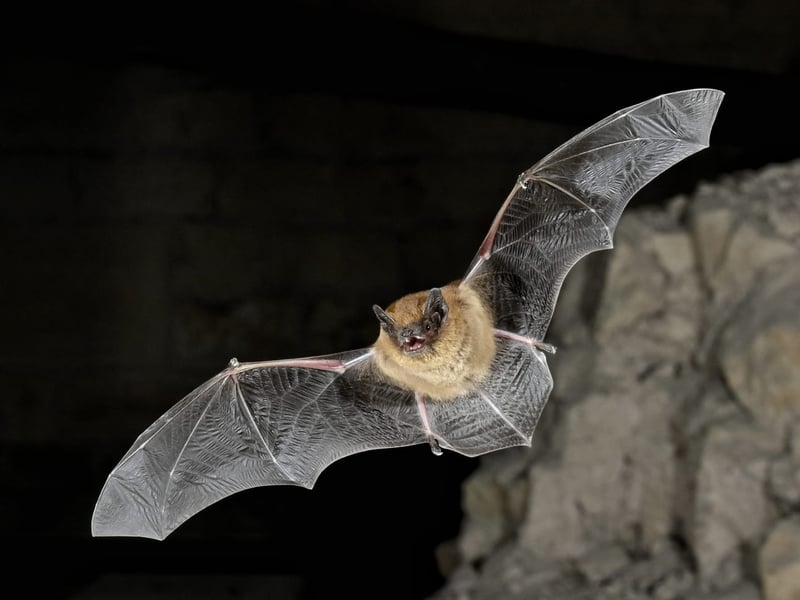
(CN) — As the effects of climate change intensify, increased investment into renewable energy worldwide has become necessary. But there may be some environmental drawbacks, according to a study published Monday by researchers from the University of Bristol in the United Kingdom.
Solar energy has become one of the most popular and widely used forms of renewable energy since it is often more efficient and versatile than wind, hydro or biomass power, and is relatively simple to employ on both large and small scales. Solar farms collect energy from the sun through an array of panels usually over many acres of land.
Now though, the study, published in the Journal of Applied Ecology, reports that these farms may be disrupting ecological processes and may even be dangerous for animals in the area. By monitoring several bat species in the U.K., researchers found that their activity was greatly reduced near these solar farms.
“The situation is potentially of concern as solar farms are occupying increasing areas of suitable foraging area for bats, and we already know that bats can collide with vertical flat surfaces, and can mistake flat surfaces for water, and attempt to drink from them. Very little is known on the impacts of solar farms on bats, particularly in the U.K.,” Gareth Jones, professor of Biological Sciences at the University of Bristol and co-author of the paper, said in a statement accompanying the study.
The researchers observed the common pipistrelle, noctule, myotis, serotine, soprano pipistrelle and long-eared bat species in different fields using equipment that recorded the bats’ echolocation calls throughout 19 matched sets of fields, one with solar panels and a similar one without solar panels.
Throughout the fields, researchers documented the bats’ calls and catalogued the species and number of individual passes by the bats. They found significantly less bat activity in the fields with the solar panels than in the empty control fields.
Researchers also note that more research is needed for these bats to better protect them, now that solar farms have been identified as potentially dangerous. They call for investigation into specific bat behaviors like hunting or collision with the panels, as well as possible habitat loss.
Lead study author Lizy Tinsley, also of the University of Bristol’s Department of Biological Sciences, said that it is necessary to acknowledge these negative effects of renewable energy in order to develop “win-win solutions” for sustainable energy production and preservation of wildlife.
“It will be important to identify mitigation strategies that can benefit bats at solar farms, such as planting insect-friendly plants, providing corridors to insect-rich habitats, or providing suitable alternative foraging habitats such as trees,” Tinsley said in a statement. “Mitigation strategies can potentially mean that renewable energy can be provided while simultaneously having no detriment to wildlife. Such mitigation will be critical in reaping the undoubted benefits for climate change that can be provided by renewable energy.”
The researchers hope that their findings can shape policy and legislation going forward for balance between renewable power sources and local biodiversity. Tinsley called for environmental impact assessments to be done for these solar farms going forward.
“This has already been done with wind farms — where mortality of bats has been reduced by changing the wind speeds at which turbines become operational and by using acoustic deterrents, at minimal cost,” she said.
Subscribe to our free newsletters
Our weekly newsletter Closing Arguments offers the latest about ongoing trials, major litigation and rulings in courthouses around the U.S. and the world, while the monthly Under the Lights dishes the legal dirt from Hollywood, sports, Big Tech and the arts.