
 Search Articles


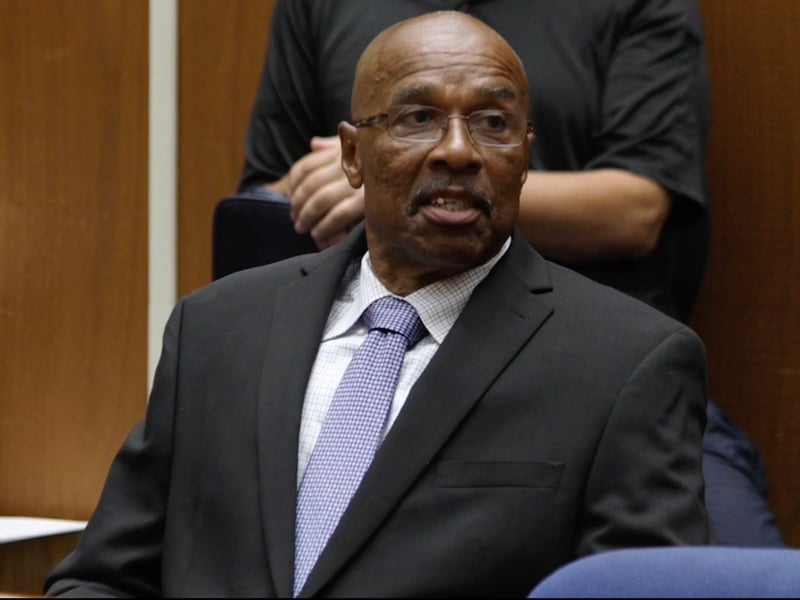
LOS ANGELES (CN) — Maurice Hastings, a Southern California man who spent 38 years in prison based on a wrongful conviction, reached a $25 million settlement in the civil lawsuit he brought against the city of Inglewood two years ago.
The settlement is the largest ever in California for a wrongful conviction, Neufeld Scheck Brustin Hoffmann & Freudenberger, the civil rights law firm that represents Hastings, announced Tuesday.
“This historic settlement is a powerful vindication for Mr. Hastings, who has shown remarkable fortitude first in fighting to prove his innocence, and then in showing that he was framed,” Nick Brustin, one of the lawyers, said in the statement. “Police departments throughout California and across the country should take notice that there is a steep price to pay for allowing such egregious misconduct on their watch.”
Hastings had his conviction vacated in 2022. He spent 38 years behind bars after police had framed him for the rape and murder of a woman during a 1983 carjacking.
One of the Inglewood police officers fixated on Hastings and pinned the crimes on him — despite no physical or forensic evidence tying him to the crimes and rapidly mounting evidence of his innocence, Hastings’ attorneys said. This police officer coerced eyewitnesses to identify Hastings, suppressed exonerating alibi evidence, and falsified witness statements. He also admitted he buried critical evidence that would have supported Hastings’ innocence.
Hastings, 72, said in a federal complaint filed in Los Angeles that Inglewood police arrested the true perpetrator, who matched the description witnesses had provided and who had what was likely the murder weapon, as well as some of the victim’s jewelry in his possession, for a series of car thefts. Yet, they didn’t investigate this suspect in connection with the carjacking.
Instead, Hastings said, the detectives somehow made the witnesses change their mind after they hadn’t recognized his photo initially — he’s 6 feet, 5 inches tall and has a prominent gold front tooth, while the murderer was described as 6-foot-1-inch tall with notable white teeth — and hid exculpatory physical evidence from the victim’s autopsy.
Hastings today lives a quiet life in Southern California, where he is active in his church and volunteers distributing meals to people experiencing homelessness, his attorneys said.
“No amount of money could ever restore the 38 years of my life that were stolen from me,” Hastings said in the statement. “But this settlement is a welcome end to a very long road, and I look forward to moving on with my life. I thank God that I’ve made it to the other side of this decades-long ordeal, and I thank my family and legal team for their steadfast support over the years.”
Representatives of Inglewood didn’t immediately respond to a request for comment on the settlement.
Hastings requested DNA testing from the Los Angeles County District Attorney’s Office to prove his innocence in 2000, which was initially denied. However, after a new district attorney took over the office the following year, a DNA test found the semen found on the victim wasn’t from him.
Subsequently, the DA’s office determined the semen belonged to Kenneth Packnett, the same man Inglewood police had in their custody shortly after the murder and who since has died in prison.
Hastings’ wrongful conviction stems from the carjacking, rape, and murder of Roberta Wydermyer and the attempted murder of her husband, Billy Wydermyer, and his friend George Pinson.
Packnett reportedly carjacked Wydermyer in the early morning hours as she was driving her white Cadillac El Dorado after an errand to the market, forced her to perform oral sex on him, and then forced her into the trunk of her car before shooting her in the head.
Her husband and a friend went looking for her after somebody called him to say they found her wallet. They say they saw Packnett in her car nearby, where her wallet was found, and followed him before Packnett shot at them, hitting Billy Wydermyer in the head. He survived the injury.
Packnett is also accused of torching the car with Roberta Wydermyer’s body still in the trunk and making several threatening calls to Billy Wydermyer.
Hastings’ only link to the crime was that he used the number from Roberta Wydermyer’s calling card after her murder. He explained that he got the number from an acquaintance over the phone, which he says wasn’t an unusual thing at the time, and he never had the actual card in his possession.
After a jury couldn’t reach a verdict at Hastings’ first trial, when the prosecution was seeking the death penalty, a second trial in 1988 yielded a conviction, and he was sentenced to life without parole.
 Follow @edpettersson
Subscribe to our free newsletters
Our weekly newsletter Closing Arguments offers the latest about ongoing trials, major litigation and rulings in courthouses around the U.S. and the world, while the monthly Under the Lights dishes the legal dirt from Hollywood, sports, Big Tech and the arts.