
 Search Articles


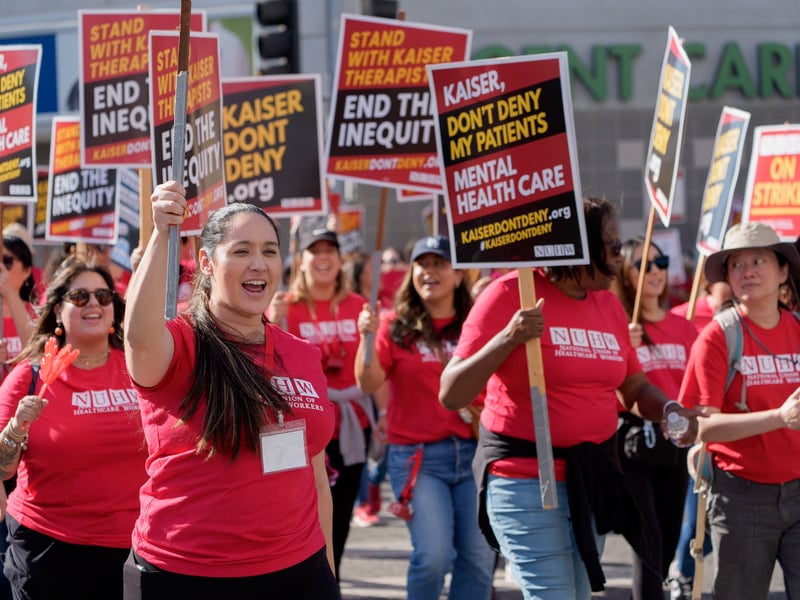
SAN DIEGO (CN) — A majority of mental health care workers at Kaiser Permanente facilities in Southern California voted to sign a new contract and end their more than six months of striking, the National Union of Healthcare Workers said on Thursday.
“These negotiations were like fighting a battle,” said Adriana Webb, a medical social worker at Kaiser and a member of the NUHW’s bargaining committee, in a press release sent by the union. “I’m proud of how we stuck together over more than six very difficult months. We didn’t win everything, but we’re coming back to work more connected than ever and with a greater understanding of the power we have as workers to protect our patients and make sure they get the care they’re entitled to.”
In October 2024, 2,400 unionized mental health therapists, psychologists, social workers and psychiatric nurses at Southern California Kaiser facilities went on strike.
They demanded that the company reinstate pensions and pay increases, match their pay with other health care workers in similar positions and attract and retain workers by easing staffing issues that also affect patients.
Out of the 2,400 workers, NUHW said 1,799 agreed to ratify a new contract that includes five hours guaranteed per week for full-time therapists to perform important bureaucratic work — like responding to patient calls and emails, making appointment notes, devising treatment plans and communicating with social service agencies — as well as 20% raises over four years, a $2,500 ratification bonus and a cash balance pension plan that guarantees retirement income.
Members will continue to vote until the end of Thursday. The union reported that 24 members voted against ratification of the contract by Wednesday.
“The four-year contract is retroactive to Sept. 2024 and will expire in 2028. It includes gains that should improve the experience of receiving and delivering behavioral health care at Kaiser but does not establish equity for behavioral health within a Kaiser system that has been cited numerous times for mental health violations over the past two decades,” the union states in its press release.
In 2023, Kaiser Permanente agreed to a $200 million settlement with California to resolve investigations into its behavioral health system that found patient mental and behavioral health care was, on average, nine days longer than state law allows.
Workers who speak a second language will also get an additional $1.50 per hour, the union’s press release notes.
“I’m proud that we took a stand for mental health care and made gains for ourselves and patients,” said Lourdes Cortez, a social worker for Kaiser in Bakersfield, in the union’s press release. “We stood up to a behemoth, and we kept fighting for as long as it took to get a contract we can build upon and make more progress toward full mental health parity moving forward.”
That fight moving forward includes advocating for the California legislature to pass a bill that would make it much easier for Kaiser patients to get reimbursed for out-of-pocket expenses for therapy and medication, and another bill that aims to improve transparency about wages earned by behavioral health care workers and medical and surgical care workers, said Sal Rosselli, NUHW’s president emeritus.
While the contract is a step forward from what Kaiser originally offered and the strike itself united workers, “our folks remained absolutely able and willing to work with Kaiser to work together to fix the behavioral health system, and Kaiser has just rejected that,” Rosselli said.
NUHW members returning to work on Thursday found communications from their patients to therapists sent while the strike was on had been erased by the company, Rosselli said.
“That’s apparently what it looks like. They’re being told not to reach out to their patients unless their patient reaches out to them, while they’re communications are gone,” Rosselli said. “They’re trying to cover their tracks and cover things up,” he added about Kaiser.
Therapists were also given new patients to work with, rather than their prior ones, he added.
In Northern California — in which the Southern California workers viewed a successful 2022 10-week NUHW strike for similar grievances as a lodestar — workers are still dealing with access to care issues, like patients’ intake calls being handled by unlicensed clerical staff and offering patients back-to-back therapy sessions to skirt state law on return appointments, Rosselli said.
Workers never want to go on strike, but their experience is that Kaiser won’t grant any concessions without them threatening to, he added.
“Although the criticism and misrepresentations by the union are disappointing, we are pleased to have reached this agreement and to have our mental health clinicians return to caring for our members and patients across Southern California,” Kaiser wrote in a press statement, adding that the union’s announcement of the contract ratification “continues to disparage” the company and “misrepresent the facts.”
The key issue of the strike, the company argues, was the union’s demand for higher wages, a different pension program and less time treating patients.
Kaiser provided two hours of “patient care time” before the strike, the union said in its announcement, while mental health therapists in Northern California are allotted seven hours of patient care time. The union added that the newly bargained-for pension plan is “not as lucrative as Kaiser’s standard pension plan that nearly all other Kaiser employees receive.”
In its statement, Kaiser wrote: “Importantly, the agreement includes provisions for a new model of care, which will build on the strengths of our existing model in Southern California. We’ve been able to provide timely access to exceptional care, which our members deserve and expect, in part through our extensive network of more than 13,000 mental health providers. This network helped us ensure that during the NUHW strike, our patients in crisis received care 24/7, urgent needs were addressed within 48 hours, and patients with non-urgent needs were seen on average within 6 days — a standard that exceeds state requirements. We successfully delivered a 10 percent increase in visits during the strike, thanks in large part to our high-quality external provider network. This success is part of the future way we will deliver care.”
Subscribe to our free newsletters
Our weekly newsletter Closing Arguments offers the latest about ongoing trials, major litigation and rulings in courthouses around the U.S. and the world, while the monthly Under the Lights dishes the legal dirt from Hollywood, sports, Big Tech and the arts.