
 Search Articles


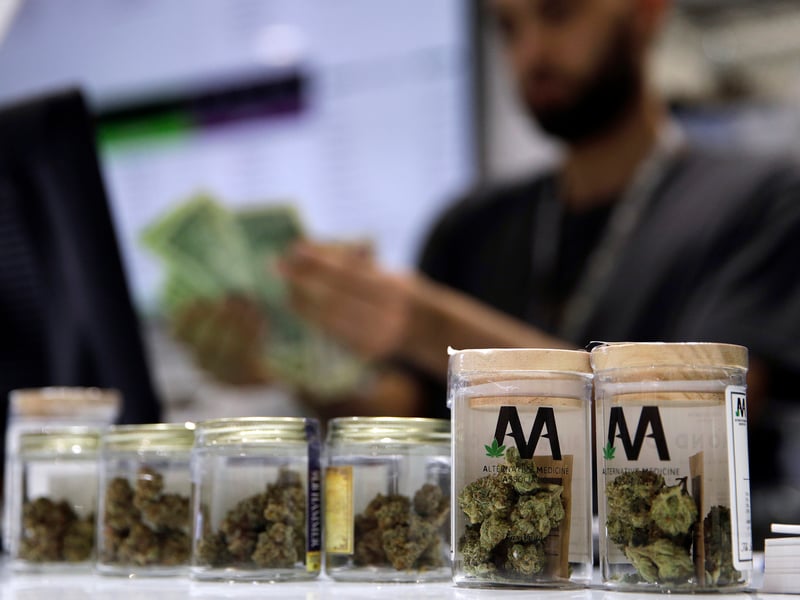
PHILADELPHIA (CN) — A Pennsylvania man fought the Justice Department at the Third Circuit on Monday over whether habitual cannabis use warrants disarmament under federal law.
In 2021, Erik Harris pleaded guilty in federal court to possession of a firearm by an unlawful user of a controlled substance, after admitting to using marijuana regularly while owning a gun — cause for revocation of his Second Amendment right.
However, following the Supreme Court’s 2022 landmark Bruen decision determining that all firearm regulations must fall under U.S. “historical tradition,” Harris appealed, calling his disarmament unconstitutional.
His attorney Renee Pietropaolo told the court Monday that when applied to a marijuana user like Harris, who was not intoxicated at the time of possession, as charged, the existing disarmament law is “so broad, it waters down the Second Amendment right” and “results in unreviewable deference to legislature.”
Challenging that assertion, U.S. Circuit Judge Stephanos Bibas suggested that regardless of when he was high, Harris’ habitual marijuana use could be considered enough of a public threat to allow for his disarmament.
“The fact is, this is someone who’s using five days out of seven, right?” said Bibas, a Donald Trump appointee.
“He’s not putting the guns away each time he goes and smokes and then getting them back … If he’s habitual, why isn’t that enough to say, ‘No, he may not be in possession of guns during this repeated intoxication?’”
“Because that would be leveling up too much in generality,” Pietropaolo replied. “A person who’s intoxicated, we can tie that to the history and tradition. A user of an intoxicant who’s not actively intoxicated, we can’t tie that to the history and tradition.”
Nothing in the record has indicated Harris was intoxicated while in possession of the firearms, Pietropaolo added. “That’s the missing piece here.”
Also questioning Pietropaolo, U.S. Circuit Judge Cheryl Ann Krause suggested that later clarifications of Bruen ’s reach appear to permit certain Second Amendment restrictions that rely on predictive judgments by a legislature.
Pietropaolo disagreed and said that under those same clarifications, Harris cannot constitutionally be disarmed simply because he is at higher risk of possessing a firearm while high on marijuana.
Still, Krause appeared unswayed. Noting that federal courts have reaffirmed felon-in-possession laws and firearms restrictions for the mentally incapacitated, the Barack Obama appointee suggested Pietropaolo’s interpretation of existing precedent may constitute a legal double standard.
“Why doesn’t that tell us that the court is countenancing some categorical predictive judgments subject to an individualized showing on the other end?” Krause asked.
In response, Pietropaolo said the two closest legal analogues to marijuana use — firearm restrictions based on alcohol use and mental illness — both rely on stricter historical traditions.
For the mentally ill, judicial officials must first determine that the individual is so disordered that they pose a present danger to themselves and/or the public before disarming them, Pietropaolo said, and as for alcohol users, founding-era laws restricted firearm possession only for individuals actively intoxicated — not those who regularly drink.
“There were plenty of alcohol users and abusers at the time of the founding, and the founders did not see fit to disarm people who used intoxicants unless they were in a state of intoxication,” Pietropaolo argued.
“What I’m objecting to is this prophylactic disarming of users of intoxicants based on a prediction that they will become intoxicated and will, at that moment, go get their firearm and act in a way that is a danger to others,” she added.
The Justice Department’s argument, delivered by attorney Andrew Noll’s, was interrupted almost immediately by U.S. Circuit Judge Thomas Ambro. The Bill Clinton appointee questioned whether any founding-era tradition exists for disarmament on the grounds of intoxication.
Noll conceded that such rules were largely limited to militias at the time of the nation’s founding, but said no suggestions of a “use it or lose it” constitutional limit on expanding those regulations were ever indicated, either.
He also pointed to gradual expansions of Second Amendment restrictions for alcohol abusers and the mentally ill. If the court should treat those restrictions as analogues, he contended, laws regarding gun ownership for marijuana users should be similarly restrictive.
Going one step further, Noll attempted to portray marijuana use as more deserving of Second Amendment restrictions than alcohol use due to its status as a controlled substance, even as the federal government has practiced a lax enforcement of regulations regarding the drug in recent years.
“This unique combination of drugs and guns is something the government consistently regulates,” Noll said.
Additionally, Noll stressed that the law used to disarm Harris does not call for his permanent disarmament. Rather, Harris can regain his Second Amendment right after ending his unlawful cannabis use.
 Follow @JacksonHeals
Subscribe to our free newsletters
Our weekly newsletter Closing Arguments offers the latest about ongoing trials, major litigation and rulings in courthouses around the U.S. and the world, while the monthly Under the Lights dishes the legal dirt from Hollywood, sports, Big Tech and the arts.