
 Search Articles


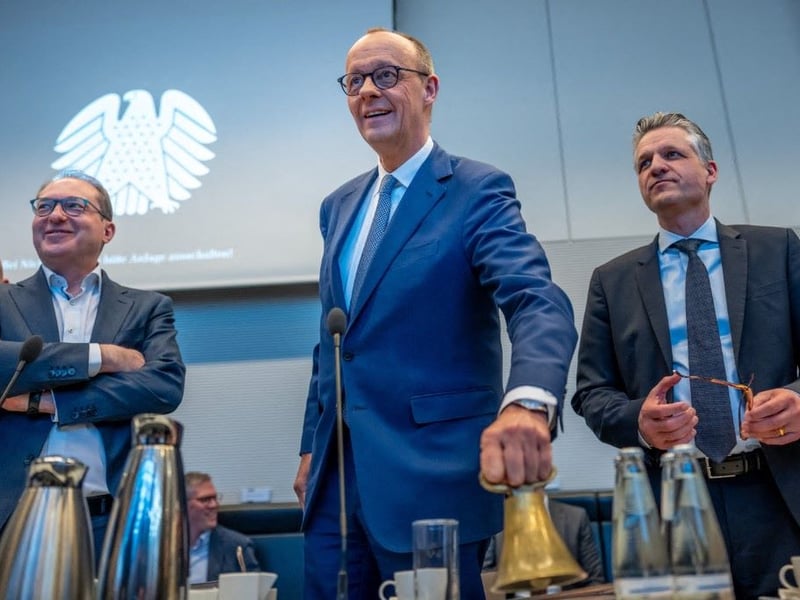
BERLIN (CN) — Friedrich Merz hasn’t even been sworn in as chancellor and he’s already waging potentially legacy-defining policy battles.
The recently elected Christian Democrat and his likely future coalition partner the Social Democrats have been racing to pass up to €1 trillion ($1.09 trillion) in new investment, but the plan requires amending Germany’s constitutional spending limit. The Bundestag votes on the package Tuesday, while the upper house Bundesrat votes Friday.
The reform would exempt any military spending above 1% of GDP from the so-called debt brake, while freeing up a separate €500 billion ($546 billion) special fund for infrastructure.
Merz is hopeful he’s cobbled together the two-thirds majority needed to amend the constitution in the outgoing Bundestag. The new parliament, which convenes on March 25, will be less open to the reform because it will feature more representatives from the far left and far right.
Despite a theoretically simpler path, it’s still been a slog. After days of acrimonious bartering, Merz appears to have won over the Greens by committing €100 billion ($109 billion) of the investment to fighting climate change.
“Germany is back,” said Merz, announcing the parties’ agreement on debt reform. “It is a clear message to our partners and friends, but also to our opponents, to the enemies of our freedom: we are capable of defending ourselves and we are now fully prepared to defend ourselves," he said.
The debt brake was passed in 2009, when a global financial crisis led to sharp increase in government borrowing in Germany and around the world. It also reflected cultural and political skepticism about debt in general. The limit kept new borrowing to 0.35% of gross domestic product — a tight restriction when compared to European Union budget rules requiring less than 3%, and the 2024 U.S. federal deficit of 6.4%.
If passed, the spending will announce Germany’s commitment to European security autonomy in an unpredictable, multipolar world while acknowledging the challenges stemming from years of underinvestment — though experts are unsure the latest package will be enough to reverse the damage.
While polling from German public broadcaster ARD indicates 59% of Germans support increased spending, Merz has faced widespread criticism for how he’s introduced the amendment. He rejected reforming the debt brake just days before February’s election, and the Christian Democrat’s staunch opposition to spending helped set off a series of budgetary battles that eventually sank Chancellor Olaf Scholz’s coalition government.
“It’s not a surprise that Merz is now more pragmatic than when he’s in the opposition. Of course it’s highly opportunistic,” Mounir Zahran, who researches democratic theory at Berlin’s Free University, told Courthouse News.
“He’s actually now supporting what the previous coalition attempted, despite playing a major role in blocking major infrastructure investments with constitutional challenges and refusing to amend the debt brake while in the opposition,” he said.
Silke Ruth Laskowski, a legal scholar at the University of Kassel, told Courthouse News: “This highly theatrical element of German politics is simply dumb. That this lands on the agenda just three days after the election and is sold as a new plan is nonsense. People aren’t stupid either, but I think they also want to see effective, no-nonsense politics.”
Passing a constitutional reform in an outgoing parliament — which includes two parties that were voted out of the coming Bundestag — has invited further criticism and seen a flurry of constitutional challenges from opposition parties. Though unusual, Laskowski says the move is valid.
“While the Bundestag is still in office it’s constitutionally capable of working normally until the new one comes into session. While this is a rather pragmatic approach, it’s completely in line with the constitution. It’s just unusual because there’s never been anything like it before,” she said.
Picking up years’ worth of slack
A cascade of crises and flagging economy makes spending a necessity for many German leaders, transforming the debt brake from a vital guard rail to a constricting cage.
“It’s become clear that when so many exceptional situations come together, including the coronavirus crisis, the war in Ukraine, and the climate crisis and ensuing transformation towards climate neutrality, the debt brake means Germany lacks necessary financial flexibility,” said Laskowski.
While Germany has considered continuing the increased military investment that started under Scholz, an at times openly hostile U.S. administration under President Donald Trump has lent a new urgency to calls to boost defense spending.
During parliamentary debates Merz claimed, “In view of the threats to our freedom and peace on our continent, the rule for our defense now has to be ‘whatever it takes.’”
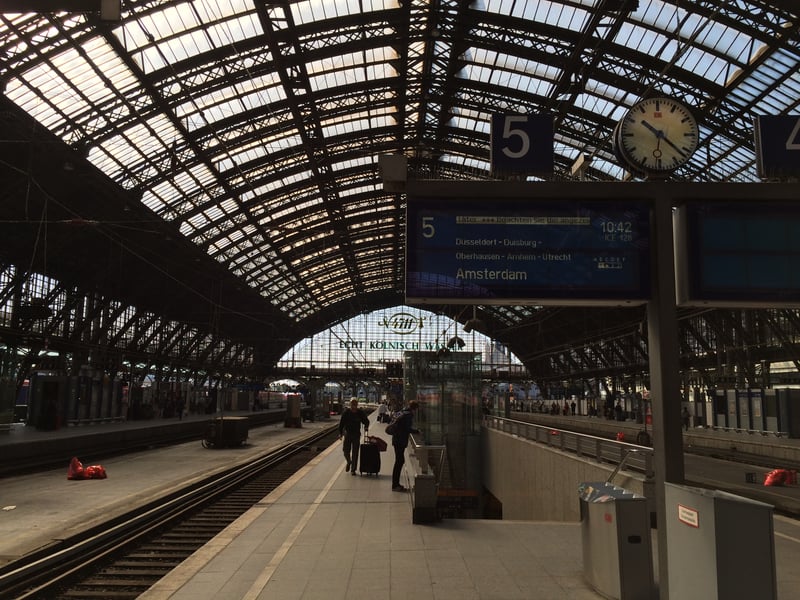
Germany’s infrastructure has also faced significant underinvestment. According to a recent study, the nation needs roughly €400 billion for modernization. Once famous for its punctuality, Germany’s national rail carrier had to give out nearly€200 million in compensation for delays last year alone.
In addition to the proposed €1 trillion investment, Christian and Social Democrats have committed to further reforming the debt brake by year’s end in ongoing coalition talks. Reforms will include easing the state-level debt brake.
“There’s also been serious frustration among Christian Democrat-led state governments over the state-level debt brake, which limits their own policy ambitions. Several Christian Democrat minister-presidents have long been pushing for a reform to the debt brake,” said Zahran.
The impact of federal spending — and austerity — is often felt hardest at the local level.
“German schools are not even at the level of American schools in the 1990s when it comes to technology,” Ryan Plocher, an American from Georgia teaching social studies and English at a Berlin public high school, told Courthouse News.Plocher noted his frustration that after years of limited spending, Germany was suddenly prepared to shell out hundreds of billions of euros, particularly for militarization. He described the perspective of many of his colleagues as a “trench warfare mindset.”
“The toilets at my school are disgusting, and they have been for decades because there isn’t money to keep the buildings in good condition. And that’s everywhere in Germany, not just in poor neighborhoods like where I teach. The trade union has been talking about it for 15 years and it’s unchanged, and that’s a direct result of the debt brake. The states don’t have money,” he said.
Debt-obsessed Deutschland
Germany is currently confronted with more costly crises than when its Christian Democrat-led government instituted the debt brake.
“Angela Merkel argued that debt unfairly burdens future generations. This occurred in the wake of the 2008 financial crisis, when Germany perceived many nations, particularly Greece, as living above their means via public borrowing. Germany wanted to be seen as a positive counterexample through austerity,” said Zahran.
Though Germany is beginning to rethink its relationship to public borrowing, debt looms large in the national imagination.
“The German experience of the 20th century was very unique. Following defeat in World War I, problems caused in part by the Treaty of Versailles and partly due to internal issues, led to mounting public debt and hyperinflation,” Giacomo Corneo, an economist at Berlin’s Free University, told Courthouse News.
“This led to great social upheaval and the rise of extremist parties, and finally the rise of the Nazi movement, so financial issues have markedly affected the collective consciousness of German citizens,” he said.
Corneo points out the debt brake alone doesn’t dictate underinvestment in infrastructure and necessary projects. “Public investment has been far too low since the 1990s. Even in years when Social Democrats were in coalitions with the Greens and there was no debt brake restraining them, Germany failed to invest enough,” he said.
Removing the constitutional hurdle to borrowing will at least prevent drawn-out battles over every major investment. There is some concern that authorizing such significant spending to start Merz’s chancellorship will diminish interest in a long-term reform of the debt brake, which is meant to be studied by an expert commission set up by the incoming government.
“When a commission like this is set up, it can be a sign that an issue is being put off for years,” said Laskowski. “Then, at some point the legislative period is over and the commission produces a result that no one is interested in anymore. But on the other hand, you can argue there aren’t any quick solutions to constitutional debt brake reform,” she continued.
Whether Germany opens the purse strings permanently or this is single moonshot could have widespread social and political implications, particularly in a country struggling to combat an ascendent far right.
“Surveys and empirical studies show that better social services and infrastructure mean less effective populist parties. Likewise, in areas with particularly heavy cuts, where infrastructure like state agencies, school amenities and sports facilities are closed, right-wing populists succeed in elections. So further austerity and crumbing infrastructure would benefit the Alternative for Germany,” said Zahran, who noted numerous important factors, like the wider development of the global economy, are out of politicians’ hands.
Merz has already noted that despite the spending splurge, he’s proposed widespread cuts in coalition talks.
Though Plocher knows more federal more money for Berlin could mean more money for Berlin schools, he’s unsure how much of the proposed investment will be spent on education and is skeptical the debt brake will be reformed in the long term.
“It makes me incredibly angry. It would make a big difference if the schools weren’t in disrepair. I see this in my students. Some rooms are in better shape than others, and when they go into the ones in worse shape, they ask me, ‘Why do I have to go to this shit school?’” he said.
 Follow @braneck
Subscribe to our free newsletters
Our weekly newsletter Closing Arguments offers the latest about ongoing trials, major litigation and rulings in courthouses around the U.S. and the world, while the monthly Under the Lights dishes the legal dirt from Hollywood, sports, Big Tech and the arts.