
 Search Articles


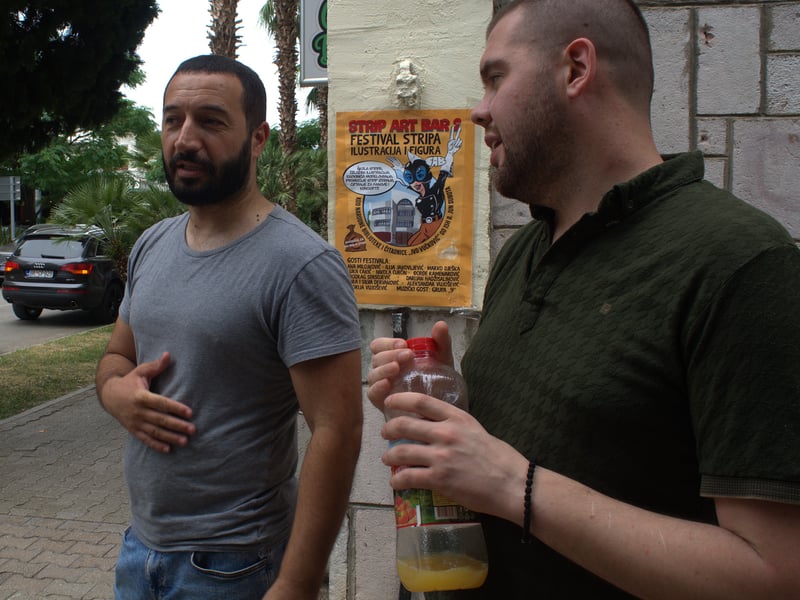
BAR, Montenegro (CN) — Damian Miskovic, a 30-year-old merchant mariner from this gritty Balkan port city on the Adriatic Sea, doesn’t buy into the hype about how great membership in the European Union might be.
“The European Union isn’t bringing anything good,” he said, standing outside a friend’s barbershop in central Bar on a recent summer morning.
Montenegro isn’t about to join the EU tomorrow, but this small Balkan nation is considered the most likely next candidate to be added to the 27-state union, perhaps even by 2030. It started on the EU path 16 years ago, two years after Montenegrins narrowly voted to break away from Serbia.
Since the war in Ukraine, the EU’s desire to absorb Montenegro and other Balkan states teetering between the East and West has intensified, stoked by fears that Russia, China and Turkey are drawing the region into their orbit and making the EU less safe.
Today’s power struggles are all too familiar for people in the Balkans, a region with centuries of history marked by foreign invasions and imperial ambitions.
Miskovic shook his head, unconvinced EU membership will solve the corruption, poverty and economic and societal problems in his country, one of Europe’s poorest.
“No,” he said, “joining the EU would only increase the cost of living; we’d be working just to survive.”
Nonetheless, he said with disdain, Montenegro will likely end up in the EU.
“Nobody likes it, only the politicians,” he scoffed. “But you know, they are not asking us any questions. No referendum. Why not? Because they are afraid. They know people will say no.”
Reservations about the drive by Brussels and Montenegro’s political establishment to bring this country into the bloc was a surprisingly common sentiment among Montenegrins, often speaking in basic English, interviewed by Courthouse News in Bar and elsewhere in the country.
Sour assessments of the EU run counter to a rosy picture painted by Brussels about massive public support here for membership.
Brussels points to yearly EU-sponsored public opinion surveys of more than 1,000 Montenegrins that show strong support for the EU and deep appreciation for the bloc’s investment in the country.
Since 1999, the EU has provided Montenegro with 1 billion euros ($1.10 billion) in loans and last year approved an investment package worth 383 million euros ($422 million) in loans and 128 million euros ($141 million) in grants to build new schools and major highway and railway projects.
“Overall, the population of Montenegro is supportive of EU accession,” said Jelena Dzankic, an expert on the Balkans at the European University Institute in Florence, Italy, in a telephone interview.
The latest such opinion survey, conducted in November 2023, confirmed this. At the time, Brussels trumpeted that nearly four-fifths of Montenegrins, or 78.5%, backed EU membership.
But drilling deeper into the poll results, the picture becomes a bit less clear-cut — explaining at least in part the reservations of people like Miskovic.
Since at least 2015, the surveys consistently have shown the biggest chunk of respondents — roughly half — say they only have a “mostly positive” view of the EU while those with a “very positive” view have made up roughly a quarter of respondents.
That’s a vote of confidence, but it comes with asterisks. Moreover, support for the EU softened in that November 2023 poll. It showed a big jump in respondents saying they had “mostly positive” views about the EU. That group swelled to 56.6%, the highest number ever recorded in the polling.
‘What is good in Europe? '
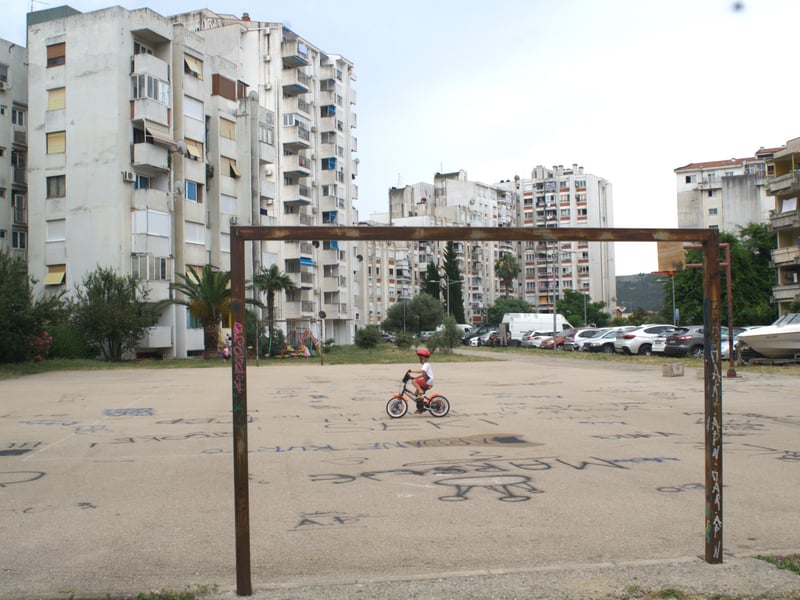
On the streets of Bar, suspicion and skepticism of the EU was easy to find.
Anna Milović, a 53-year-old owner of a computer and office supplies store, voiced firm objection.
“I would say no” to joining the EU, she said. “I don’t like this idea. I’m skeptical. Maybe I’m wrong, but that’s what I think.”
A big concern was how small businesses might come under a slew of new EU rules. She seemed apprehensive about radical change after having already experienced the transition to capitalism in the 1990s.
The end of socialism, she said, brought factory closings, a rise in joblessness and drug use, the flourishing of a ruthless mafia and a political system ruled for more than 30 years by a single man, Milo Djukanović, and his corruption-riddled party.
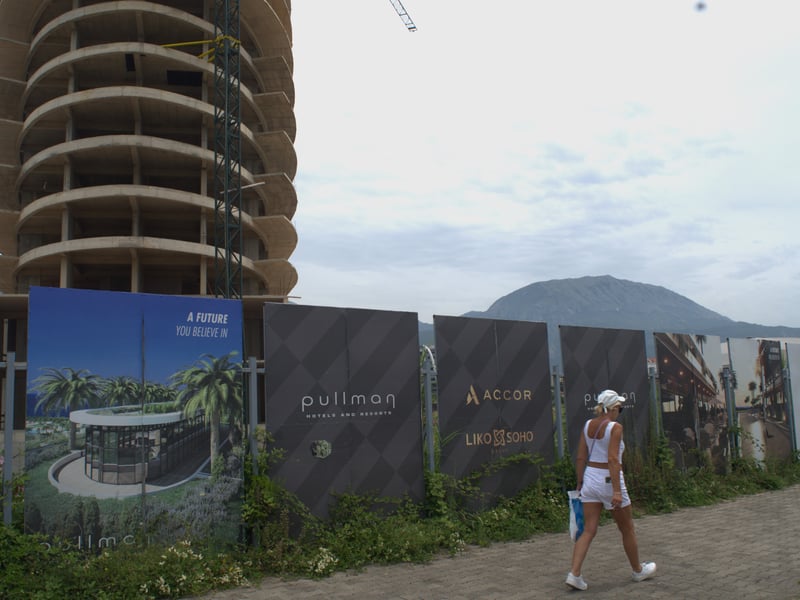
She also complained about an influx of wealthy foreigners who’ve turned coastlines into seaside playgrounds and driven up housing prices to levels beyond the reach of locals, who survive on wages averaging about $6 an hour and pensions averaging about $300 a month.
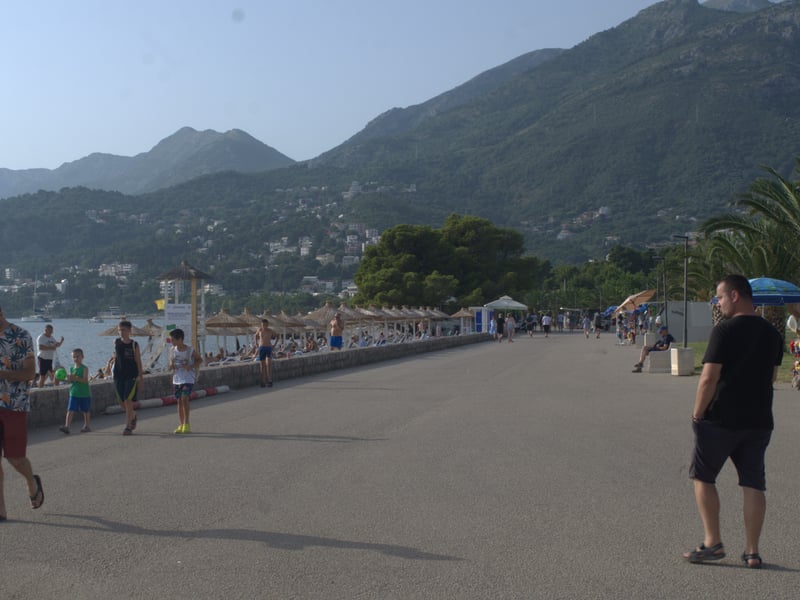
“We don’t have a middle class,” Milović said. “Only very, very rich people or people without much. It was better in the past; it was a better life, a much better life. Everyone had a house. Everyone went on holiday. Now, that’s not how it is.”
Nena Tomić, a clothing store owner whose children emigrated for work, held similarly negative views about the EU, even though she spent several years living in southern Italy.
“It’s bad, bad,” she grumbled. “What is good in Europe?”
She dismissed the quality of life in the EU as not so great and questioned why so many young people in Western Europe aren’t having children and building families.
“Here you have a mother, a father, children,” she said. “There, it is a disaster.”
Miskovic and his barber friend, 41-year-old Armin Bubić, echoed that sentiment and attacked the EU as too progressive with its strong support for LGBTQ+ rights.
“This European Union presents something which is actually opposite to our traditions,” Bubić said.
“We represent something that is family. When I say family, I mean man, woman and children,” Miskovic said. “This is our tradition; not family as a woman and woman, a man and man.”
A few streets away, Tara Pavlović, an 18-year-old bartender at an outdoor cafe, was anything but optimistic about Montenegro’s future as she expressed indifference about possible EU membership.
“I don’t really care right now,” the aspiring graphic designer said. “I want to go. It’s boring. It’s definitely not for a teenager. I would want to live in America. But that is going to be difficult.”
Like others, she complained about low wages, rising rents and a housing shortage exacerbated by foreigners.
There is a sizable population of about 96,000 foreigners living in Montenegro, a sizable proportion of the country’s population of 650,000. Most are Turks, Russians, Ukrainians and Belarusians, many exiles from war and repression.
“They’re buying so many apartments, buildings,” Pavlović said. “It’s going to be really hard for us to buy an apartment one day.”
For her, Montenegro’s future isn’t bright. “Maybe Russians will overtake our country, I don’t know. I don’t see anything changing right now. Prices will go up and poverty will grow.”
A better future?
Not everyone Courthouse News spoke to, of course, was negative about the EU.
At a World War II museum dedicated to Yugoslavian communist partisan fighters, an older woman overseeing the exhibition was hopeful Montenegro will join the EU.
“We want to be part of Europe; but when, how, depends on many things,” the museum assistant said. She would only give her first name, Željka.
She worried large hard-core pro-Russia factions in both Montenegro and Serbia may derail her country’s route into the EU. Montenegro has historic ties with Serbia and Russia.
“Nobody knows what will happen,” she said. “The Balkans are always like sitting on a bomb.”
She too thought life was better under communism. A small bust of Josip Broz Tito, Yugoslavia’s longtime leader, sat on her desk.
“It was a beautiful country,” she said. “We all had apartments. We could pay for food; we had enough money for a good life. We went to Italy to buy clothes. Now, how can we live with 500 euros a month? It’s bad. Our food is more expensive than in Germany.”
The corruption and economy are awful, she said. Under such conditions, her children moved away for work.
“We are trying, after communism, to do capitalism, but it’s not working,” she said. The EU, she felt, represents a better future.
The kind of anti-EU sentiment found in Bar, experts said, represents a minority of people, many of them influenced by anti-Western rhetoric coming from the Serbian Orthodox Church and Serbian nationalists.
“The population is divided between those who identify as Montenegrins and thus see themselves as independent and continuing an autonomous state existence, and those who identify as Serbs and see their future as part of the Serbian state,” said Marc L. Greenberg, a specialist in Slavic languages and the Balkans at the University of Kansas, in an email.
In Montenegro, as in Serbia and Russia, there are nationalistic elements advocating an anti-Western worldview, he said.
“The Serbian world project has dominated the media — but not entirely — and propagated if not outright hostility to the EU, at least suspicion of its aims,” he said.
In that perspective, the EU is identified with the United States and “its recent history of unilateralism, which breeds distrust and can help explain the negative view” found among people in Bar, he said.
Also, frustration has grown after 16 years in which Montenegro has made reforms required for EU membership.
“There is impatience that for all of Montenegro’s hard work, they still remain in the ‘waiting room,’” said Kenneth Morrison, a historian and specialist on Montenegro at De Montfort University in England. “There is quite a bit of skepticism regarding whether membership will ever come.”
Courthouse News reporter Cain Burdeau is based in the European Union.
 Follow @cainburdeau
Subscribe to our free newsletters
Our weekly newsletter Closing Arguments offers the latest about ongoing trials, major litigation and rulings in courthouses around the U.S. and the world, while the monthly Under the Lights dishes the legal dirt from Hollywood, sports, Big Tech and the arts.