Search Articles


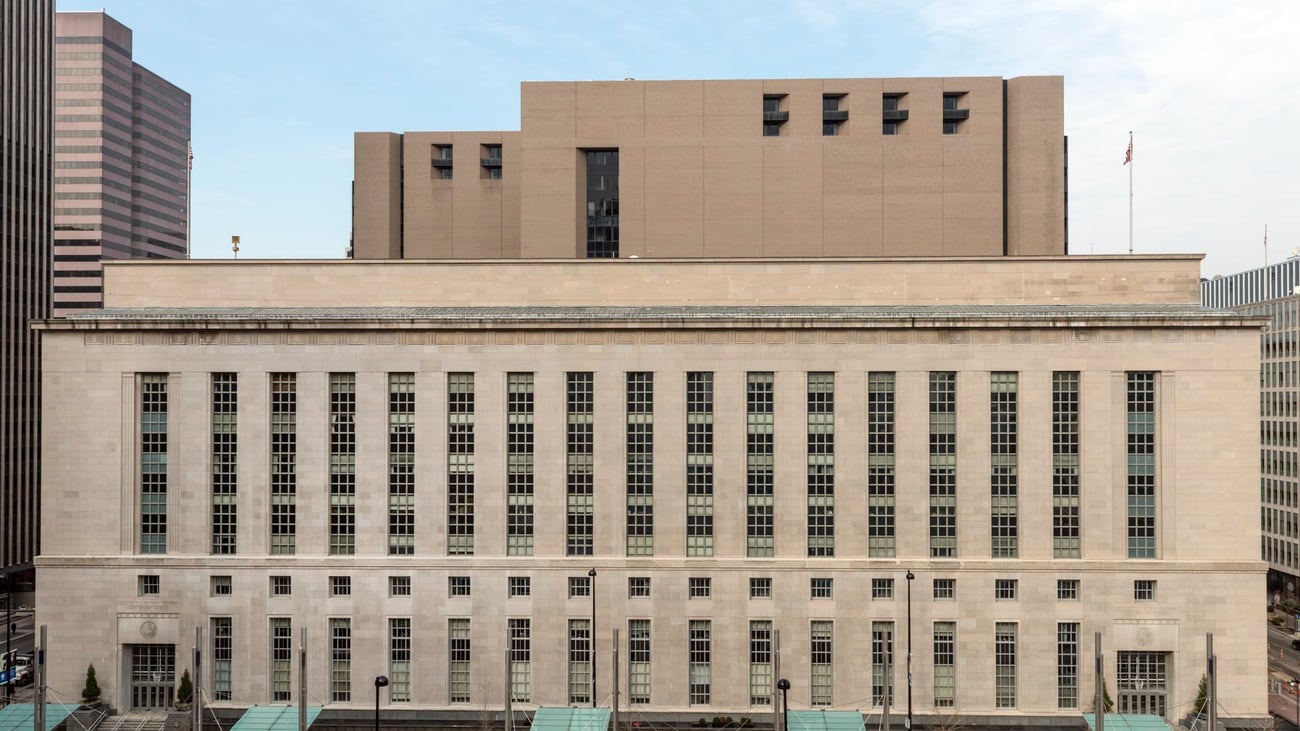
(CN) — A Sixth Circuit panel declined to force the federal government to enforce the nondiscrimination provision of the Affordable Care Act against private insurers providing disparate compensation to doctors and nurses.
“Nurses provide the majority of anesthesia services in this country. They are both the face and backbone of our health system. But if they disagree with how the secretary has exercised his enforcement discretion, they should go to him for a remedy — not the courts,” U.S. Circuit Judge Amul Thapar said in his 10-page opinion.
The American Association of Nurse Anesthesiology brought a lawsuit in U.S. District Court for the Northern District of Ohio in 2024 against the U.S. Department of Health and Human Services, asserting the department has allowed private insurance companies to compensate nurse anesthetists less than doctors for the same care work.
The disparate compensation flies in the face of the Affordable Care Act’s ban on license-based provider discrimination, according to the association. It sought a writ of mandamus compelling Secretary Robert F. Kennedy Jr. to enforce the provision, a responsibility the association claims he has abdicated.
The District Court dismissed the complaint for lack of standing, and the Sixth Circuit came to the same conclusion on appeal.
The association argued for associational standing, which allows an organization to sue on behalf of an injured member. However, the members’ claim of monetary harm cannot be traced to the secretary’s conduct.
“The association alleges its members experienced the injury of lower reimbursement rates for independent anesthesia services,” Thapar said. “But HHS didn’t impose those rates — private insurers did. The association theorizes that HHS nonetheless caused its injury because those insurers are ‘emboldened by the government’s’ failure to enforce [the provision]. That causal relationship is too speculative to support standing.”
Even if government inaction caused the injuries, the association failed to explain why RFK Jr.’s inaction specifically did so, according to Thapar.
Thapar took his reasoning a step further, arguing the association’s injury is not necessarily redressable by a favorable outcome in this lawsuit. There is no telling how the secretary would act in the face of a court order to enforce the provision or how the insurers would respond to enforcement.
Nurse anesthetists are reimbursed in two different ways, depending on how they practice.
If they work under the supervision of an anesthesiologist or operating physician, the nurse splits any reimbursement with the supervisor. If they practice without supervision, they receive 100% of the reimbursement rate physician anesthesiologists receive.
That is, until 2023, when Cigna and Anthem Blue Cross Blue Shield announced reductions.
Anthem’s policy reduced compensation by 15% for some anesthesia services provided by certified registered nurse anesthetists while leaving reimbursement for physician anesthesia providers untouched.
The association represents nearly 74,000 nurse anesthetists across the country, who administer the majority of anesthesia procedures in the United States — over 50 million per year.
In his majority opinion, Thapar questioned why the association left the states out of its lawsuit, as they have primary enforcement authority over the nondiscrimination provision.
The secretary must first determine the states have “substantially” failed to enforce the provision themselves before he can take any action.
Even if he determined federal intervention was necessary, RFK Jr. retains absolute discretion over what penalty, if any, to impose. With so much speculation, a favorable decision on appeal likely wouldn’t solve the association’s problem soon, if at all.
The association said in a statement it would be working with state partners to “create local momentum that would protect CRNAs from discriminatory reimbursement practices while we explore future federal pathways.”
U.S. Circuit Judge Helene White wrote a concurring opinion agreeing with the majority on lack of standing but departing on its analysis of causation and redressability.
She asserts the causal chain connecting the government’s inaction to the association’s purported financial injury is predictable rather than merely speculative. Similarly, uncertainty of how the secretary and insurers might act is to be expected rather than a deterrent to relief.
“Here, I would find it substantially likely that, if the district court ordered the secretary to enforce the nondiscrimination provision, at least some of the association’s members would see their financial injury mitigated,” White said.
The association views the largely procedural decision as a threat to associational standing in general.
“Associational standing is a core tenet of professional and trade associations seeking to protect the interests of their members. AANA is evaluating the decision’s implications for how associations vindicate their members’ interests in federal court, and we encourage all associations to do the same,” said association President Jeff Molter, MSN, MBA, CRNA.
 Follow @desdev5
Subscribe to our free newsletters
Our weekly newsletter Closing Arguments offers the latest about ongoing trials, major litigation and rulings in courthouses around the U.S. and the world, while the monthly Under the Lights dishes the legal dirt from Hollywood, sports, Big Tech and the arts.
Additional Reads
 Teen drops social media addiction lawsuit against Meta July 22, 2026