Search Articles


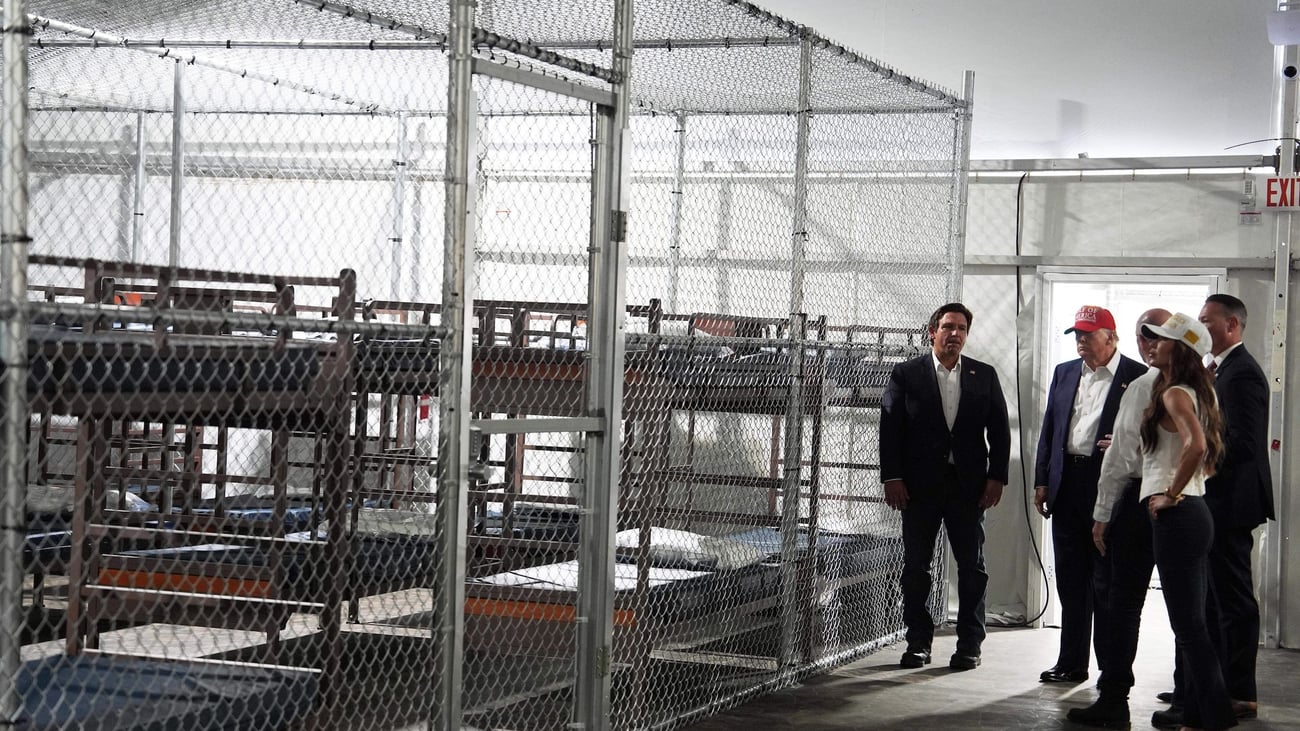
(CN) — The Trump administration cannot detain long-term immigrant residents without a bond hearing, a federal appellate court panel ruled Monday.
In a 2-1 ruling, a Sixth Circuit panel said the administration cannot treat immigrants who have lived in the U.S. for years the same as it treats individuals who are picked up while attempting to enter the country.
U.S. Circuit Judges R. Guy Cole and Eric Clay, both Bill Clinton appointees, upheld a lower court’s ruling that noncitizens who entered the U.S. without inspection but have resided in the country for years are not subject to mandatory detention. Instead, they must be processed under permissive detention, which grants them the right to a bond hearing
“To hold otherwise would subject long-term law-abiding residents in the United States, such as petitioners, to the hardship of mandatory detention without due process,” Clay, writing for the majority, said in the order.
The case was brought by group of individuals who are citizens of Mexico, El Salvador, Venezuela, Nicaragua and Guatemala — all of whom have resided in the U.S. without lawful status for years.
Despite posing no flight risk or dangerousness and having lived in the U.S. without many incidents outside of minor traffic offenses, the individuals were all arrested by Immigration and Customs Enforcement and held without bond under the Trump administration’s mandatory detention policy.
The Illegal Immigration Reform and Immigrant Responsibility Act defines an “applicant for admission” into the U.S. as “an alien present in the United States who has not been admitted or who arrives in the United States." The statute also sets up two different schemes dealing with the detention of noncitizens. One, the mandatory detention scheme, deals with noncitizens “seeking admission” into the country. Another, the permissive detention scheme, authorizes the detention of certain noncitizens who are already in the country while they await the outcome of removal proceedings.
In July 2025, ICE announced in a memo that all “applicants for admission” — would be subject to mandatory detention, with only immigrants who lost their legal status allowed bond hearings.
The government argues that every applicant for admission is always “seeking admission” into the U.S. But Clay rejected that logic, saying by most definitions, including Congress’, in order to be “seeking admission,” a noncitizen must be actively seeking lawful entry into the U.S. “via inspection and authorization by an immigration officer.” The petitioners in this case, he said, are not “seeking admission” because they never attempted to enter the country lawfully.
Additionally, drawing on Supreme Court precedent, Clay wrote noncitizens who have “passed through our gates,” even illegally, and integrated into communities have stronger constitutional protections than those at the physical border.
“Noncitizens within the interior of the United States are entitled to the protections of the Due Process Clause,” he wrote.
Clay also said that if Congress had intended the Illegal Immigration Reform and Immigrant Responsibility Act to sweep the plaintiffs and all similar noncitizens in the U.S. into mandatory detention. it would have taken steps to address the logistical burden of such detentions, as it did in the same act for specific groups of immigrants like those who had committed certain crimes.
“The text, canons, and past practice all support petitioner’s reading,” Clay wrote, adding that the government’s “29-year streak” of applying permissive detention to individuals like the plaintiffs, as opposed to mandatory detention is “consequential.”
Clay also highlighted the plaintiffs’ community ties.
“Petitioners are more than just names on a pleading,” Clay said. “Some, such as Juan Lopez-Campos or Fredy De Los Angeles-Flores, own property or work for locally owned businesses. Others, such as Jairo Manuel Godoy-Perez, have worked with law enforcement to facilitate criminal prosecutions. All appear to contribute to their neighborhoods and local communities. Many are the primary breadwinners or essential caregivers for their families.”
Statute ensures that noncitizens like the plaintiffs should be given a forum to explain those backgrounds and connections that could justify their release on bond while they await removal proceedings, Clay said.
“To hold otherwise would subject long-term law-abiding residents in the United States, such as petitioners, to the hardship of mandatory detention without due process.”
U.S. Circuit Judge Eric Murphy, a Donald Trump appointee, dissented, arguing the majority’s narrow reading of “seeking admission” ignores Congress’ 1996 goal to eliminate an “anomaly” where those who sneak in have more rights than those who present themselves lawfully at the border.
“Our country’s immigration laws once encouraged illegal behavior. If immigrants lawfully stopped for an inspection at our border, the Immigration and Nationality Act required the government to detain them pending a hearing on their right to be here, but if immigrants unlawfully snuck across the border, they could get released on bond pending such a hearing,” Murphy said in his dissent. “In 1996, Congress eliminated this discrepancy.”
Monday’s ruling follows similar decisions in the 11th and Second Circuits but is contrary to opinions issued in other federal appeals courts — further increasing judicial division on how to interpret the policy.
“DHS strongly disagrees with the Sixth Circuit panel and is confident in its legal position regarding mandatory detention. Opinions from the Board of Immigration Appeals and two other federal courts of appeals reflect that," a Homeland Security spokesperson told Courthouse News Tuesday, adding President Trump and Secretary Mullin are now enforcing the law “as it was actually written.”
The ACLU of Michigan, who represents most plaintiffs in the case, did not respond to an initial request for comment.
Subscribe to our free newsletters
Our weekly newsletter Closing Arguments offers the latest about ongoing trials, major litigation and rulings in courthouses around the U.S. and the world, while the monthly Under the Lights dishes the legal dirt from Hollywood, sports, Big Tech and the arts.
Additional Reads
 EU moves toward social media ban for children May 12, 2026