
 Search Articles


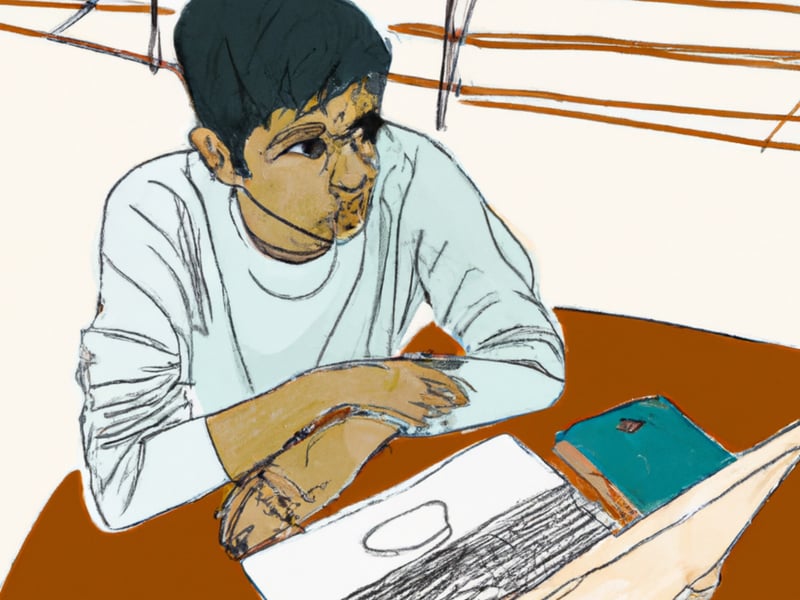
COPENHAGEN, Denmark — For former university student Rushnan Binte Amin, finding housing in Denmark’s pricey capital proved to be a culture shock.
In Denmark, renters typically find housing online, often through a big rental company. That was different from Amin’s home country of Bangladesh, where prospective renters “can visit different buildings, knock on the door, check out an apartment and see if there’s a mutual interest in making a deal,” Amin said in a video call from her apartment in Albertslund, a suburban area to the Danish capital.
The biggest shock, though, was the cost of rent. Amin, who first arrived in Denmark in 2021, discovered that student dorms were too expensive. Private room rentals were more affordable but not exactly cheap, either.
Like many non-EU foreign students in Denmark, Amin did not have a scholarship. As she juggled the costs of food, rent and tuition, she and her husband soon found themselves running out of money.
“My husband and I used both our six years of savings for the first three months in Denmark,” Amin said. Nor was she the only foreign student struggling. “When Bangladeshis come here, in most cases, they have spent their whole life savings to get here,” she said. “Sometimes even their parents’ entire life saving[s].”
South Asians like Amin are a growing minority in Denmark, often first arriving in the country to pursue educational opportunities. Expat Indians and Pakistanis are now among the biggest immigrant communities in the country, according to Statistics Denmark, a government agency.
Look at just universities, and that figure becomes even higher. In 2022, more Indians graduated from Danish universities than any other non-EU foreign nationality besides Chinese. That’s not even counting students from other countries in the Indian subcontinent, including Amin’s native Bangladesh.
But as South Asians like Amin arrive in Denmark, many are soon faced with a series of financial hurdles. Besides tuition — already a major cost for many immigrants — these students are not guaranteed student housing and must navigate Copenhagen’s increasingly pricey housing market instead.
Some students search for jobs in an effort to make ends meet. But without a CPR number — the Danish equivalent of a social security number, needed for everything from getting jobs to accessing health care — these migrants cannot legally work.
While a CPR number is required for everyone residing in Denmark for more than three months, the application processes can take weeks. Making matters worse, migrants must show proof of a local address in order to apply for a CPR number. That is, if they can even find a place to stay.
At the University of Copenhagen, tuition for a single semester can cost up to 8500 euros, or $9200 in U.S. dollars. That’s around one-and-a-half years of full-time salary for a middle-class income household in Asia, where middle earners take home between $2 and $20 per day, according to theAsian Development Bank.
The struggle to find stable housing only adds to the economic burden already faced by many foreign students. And while Copenhagen’s service industry is always looking for staff, the rules around CPRs mean that foreign students must find housing before they can obtain a job.
“CPR is associated with everything here,” said Mohan Chowdry, an Indian exchange student at the University of Copenhagen. “You can’t get hold of a student commuter card or work legally here without CPR.” While Chowdry was ultimately able to get a CPR, it took him a lot of his research and opened his eyes to the struggles faced by those without one.
“You can’t start a Danish bank account,” Chowdry said. As a result, many foreign students end up handling expenses in their native currency — but that can present its own problems. “Conversion rates are huge,” Chowdry added.
A Danish student visa comes with perks that can protect foreigners from financial loss. Student visa holders are allowed to work up to 20 hours weekly. They can also work full-time from June through August, when schools are out-of-session and tourism boosts demand for workers.
Graduates are also granted athree-year permit to work full-time in Denmark — a rule intended to give foreigners an opportunity to pay back loans taken on during their early study years. But even if students do navigate these bureaucratic hurdles and find work, Copenhagen’s expensive housing market quickly swallows up savings, preventing students from climbing out of debt early on.
Copenhagen’s failed housing market
Danish students have clamored for years for more housing in Denmark’s biggest cities. The capital of Copenhagen in particular is in dire need of more affordable accommodation, as there is only one non-profit youth living space for every 13 students, according to areport this year from Danmarks Almene Boliger , or the Danish Federation of Non-Profit Housing Providers.
Non-profit housing — Denmark’s version of public housing — is funded by local governments with the goal of providing low-income accommodations to people with limited incomes, including students, refugees and the elderly. There are currently 583,000 such living spaces in the country, according to the Danish Federation of Non-Profit Housing Providers.
Still, critics say such housing options haven’t kept pace with growth in Copenhagen — including at its universities. The result is increased strain on existing housing stock, said Curt Lilliegren Director of The Knowledge Centre for Housing Economics, an independent research initiative observing and analyzing Denmark’s housing economy.
Faced with these challenges, officials have not “responded with the necessary amount of youth housing,” Lilliegren said. “That is why there is competition for available housing.” Unless officials in Copenhagen fast-track more affordable student accommodation, competition for limited housing is likely unavoidable.
The situation has left many migrants competing for housing in the free market — all as housing costs in Denmark continue to rise. The average monthly rent for students in Copenhagen and Frederiksberg, a separate municipality within the capital, shot up from 3150 Danish kroner in 2016 to 4300 kroner in 2021 — a 37% increase, according to Danish Federation of Non-Profit Housing Providers.
That 2021 figure translates to around $633 U.S. dollars, which may still seem like cheap rent by American standards. But things work a bit differently in Denmark, where residents are used to paying high tax rates in exchange for a robust social-safety net.
Against this backdrop, the number of non-EU students paying for higher education continues to rise. In 2012, only 723 foreign students paid tuition fees at a university in Denmark, according to figures from Universities Denmark, a consortium of Danish universities that monitors and studies institutions of higher learning in the country.
Ten years on, in 2022, that figure had more than doubled to 2352 students. Self-paying students are often non-EU citizens and therefore aren’t entitled to the same economic educational support as Danes and other EU nationals.
Expert: For foreign students, Denmark is “gateway” to Europe — and a better life
As a relatively small and low-profile country in Northern Europe, Denmark may seem an unlikely destination for South Asian students. But a variety of factors, from classes in English to lax student-visa rules, have made the Scandinavian country an appealing option for many.
For some, a Danish degree is both a family investment and a marker of social status, said Karen Valentin, an anthropologist and lecturer at Denmark’s Aarhus University who has studied these trends. Being able to send a child to Europe for education is a sign of affluences. Besides, many parents expect that with a Danish degree, their children will be better able to take care of them in the future.
Denmark is not necessarily the end destination for many South Asians, said Valentin, who has also studied Nepalese students in Denmark and has seen similarities with other South Asian populations in the country. Rather, Denmark is a “gateway” to Europe, giving students a foothold (and more importantly, a visa) in the European Union.
In an interview, Valentin reflected on what kind of welcome these migrants are getting. It’s common for migrants to struggle to adjust to life in a new country, especially one with a much higher cost of living. But with strict CPR rules that effectively require migrants to find housing before they find a job to pay for it, she thinks Denmark could do a better job of helping these newcomers help themselves.
“There are always discussions on what is legal and illegal for immigrants,” Valentin said — but she’s not sure those are the right questions to be asking. Instead, she thinks Danish society should ask itself: “Do we set fair terms for foreign nationals in Denmark?”
Despite her early struggle, Amin looks back proudly at her rough start in Copenhagen. With a Danish master’s degree in her hand — and with a better understanding of the Danish housing and CPR systems — she now feels equipped to find a job in the country.
Looking back on those early days, Amin wonders if there was money to save when she first set foot on Danish soil. Or maybe it was always going to be a struggle to make the finances work. “I’ve been told by French, Italian and Spanish people that Denmark is expensive,” Amin said. “Imagine how expensive it is for us.”
Additional reporting by Benjamin Nordtømme, Alexander Maxia (Nordljud), Maya Lagerholm (spionen.se), Jazz Munteanu (spionen.se). This article was developed thanks to a collaboration between Nordljud and Spionen.se with the support of Journalismfund Europe.
 Follow @LasseSrensen13
Subscribe to our free newsletters
Our weekly newsletter Closing Arguments offers the latest about ongoing trials, major litigation and rulings in courthouses around the U.S. and the world, while the monthly Under the Lights dishes the legal dirt from Hollywood, sports, Big Tech and the arts.