
 Search Articles


ATLANTA (CN) — A conservative group on Monday won its federal appeal over a grant program for Black women in business that it calls discriminatory.
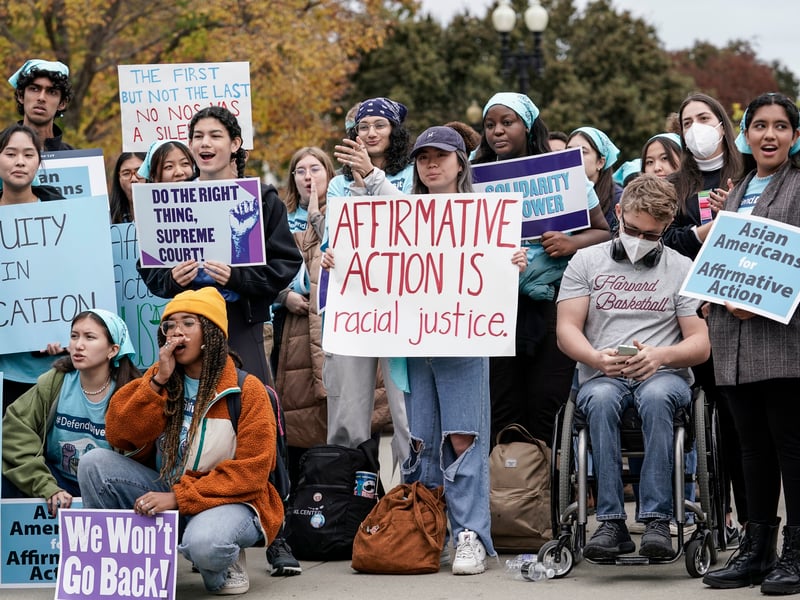
In a split ruling, the 11th Circuit ordered a lower court to reverse its denial of a preliminary injunction of the grant program, as sought by the American Alliance for Equal Rights, an anti-affirmative action group led conservative activist Edward Blum, who was instrumental in the successful Supreme Court challenge to Harvard’s race-conscious college admission policies in June, and who’s also fighting the same policies at West Point.
The group argues that the Fearless Fund Foundation, an Atlanta-based and Black women-founded venture capital firm, violates the Reconstruction-era Civil Rights Act of 1866, which prohibits discrimination based on race when making and enforcing contracts. It claims the Fearless Fund is entering into a contract with applicants, and since the grants are only for Black women, the practice is racially discriminatory.
Judges from the 11th Circuit concluded that the American Alliance for Equal Rights was likely to succeed, disagreeing with the lower court’s ruling that the program is protected by the First Amendment. The Fearless Fund Foundation says its grant program simply sends a message of support to Black women who own small businesses, and who receive less than 1% of all venture capital funding each year.
“The fact remains, though, that Fearless simply — and flatly — refuses to entertain applications from business owners who aren’t ‘black females.’ If that refusal were deemed sufficiently ’expressive’ to warrant protection under the Free Speech Clause, then so would be every act of race discrimination, no matter at whom it was directed,” U.S. Circuit Judge Kevin Newsom wrote in the majority’s 26-page opinion.
Newsom and fellow Trump-appointed U.S. Circuit Judge Robert Luck concluded that the American Alliance and its members have standing to challenge the contest’s exclusion of non-Black applicants. U.S. Circuit Judge Robin Rosenbaum, an Obama appointee, fervently dissented.
“The majority opinion contends that the declarations show that each owner ‘would compete’ in the contest if they could. But in fact, not a single declaration actually says that. The declarations don’t say that any of the owners would enter the contest, or plans to enter the contest, or intends to enter the contest, or is even thinking about entering the contest,” Rosenbaum wrote in a 22-page dissenting opinion.
“Rather, each says simply that the owner is ‘ready and able to apply for a grant for business A[, B, or C] through the Fearless Strivers Grant Contest in the fourth promotion period, but [she is] ineligible because [she is] not a black woman.’”
To have standing, a plaintiff must show that they have personally suffered some actual or threatened injury, Rosenbaum explained. None of the American Alliance’s members have been rejected from, or even applied for, the grant contest, nor shown interest in any similar contest.
The judge compared the group’s suit to a soccer player “flopping” on the field to manufacture a foul so in order to get a penalty kick in the box, where it’s likely to result in a goal. Judges as “referees,” she said, must be vigilant to avoid awarding unwarranted penalty kicks.
“Here, no one doubts the sincerity of American Alliance for Equal Rights’ desire to challenge what it views as ‘distinctions and preferences made on the basis of race and ethnicity,’” Rosenbaum wrote. “American Alliance seeks to do so by challenging the Fearless Foundation’s Striver’s Grant Contest designed to help Black women in the business world, where they are grossly underrepresented as business owners.”
Newsom rebutted Rosenbaum’s argument in the majority opinion, arguing that the members would have been rejected if they had applied to the program.
“Let us not forget: We’re talking about real-live, flesh-and-blood individuals who were excluded from the opportunity to compete in Fearless’s contest solely on account of the color of their skin. Respectfully, victims of race discrimination — whether white, Black, or brown — are not floppers,” Newsom wrote.
Central to the dispute is whether the grant program constitutes a contract. On that point, the 11th Circuit agreed with the lower court judge that it does.
A winning entrant gets $20,000 and mentorship resources for its business, while the Fearless Fund receives permission to use its name, image, and likeness for promotional purposes and an agreement to not be indemnified to arbitrate any disputes that may arise.
Fearless’s original contest rules warned applicants, in no uncertain terms, that “BY ENTERING THIS CONTEST, YOU AGREE TO THESE OFFICIAL RULES, WHICH ARE A CONTRACT.” However, shortly after the Alliance sued, the foundation amended its rules to drop the “contract” designation and to adjust the precise benefits and obligations.
“But the rose remained a rose,” Newsom wrote.
Similar conservative groups and activists have also taken legal action to disrupt corporate diversity, equity and inclusion efforts following the Supreme Court’s takedown of affirmative action in colleges last year. Big-name companies including Comcast, Amazon, Target and McDonald’s have faced lawsuits over what the plaintiffs say are race-based diversity programs.
In December, the attorneys general of 18 states and the District of Columbia filed a brief in favor of Fearless’ grant program, saying “it would undermine the central purpose of 1981 to interpret that statute to prohibit charitable giving that is part of the nation’s long tradition of philanthropy aimed at helping historically excluded populations.”
Civil rights groups and associations representing venture capital, banking and charitable foundations have also filed briefs in support of Fearless.
The 11th Circuit decision remands the case back to the lower court to grant the preliminary injunction that will prevent Fearless from closing the application process as the suit proceeds through the courts.
 Follow @Megwiththenews
Subscribe to our free newsletters
Our weekly newsletter Closing Arguments offers the latest about ongoing trials, major litigation and rulings in courthouses around the U.S. and the world, while the monthly Under the Lights dishes the legal dirt from Hollywood, sports, Big Tech and the arts.