Search Articles


PALERMO, Sicily (CN) — Sicily, the Mediterranean’s largest island, was an early “melting pot” where people from distant ancestries and religions lived and worked side by side, scientists who’ve studied the DNA of its medieval inhabitants say.
By analyzing DNA extracted from 111 people buried in Muslim and Christian cemeteries at various locations across Sicily between the fifth and 15th centuries, the scientists pieced together a picture of Sicily as a human mosaic.
The research was published Wednesday by the science journal PLOS One.
The analysis showed the island’s population had roots that extended across Europe, the Near East, North Africa and as far away as sub-Saharan Africa.
The researchers said their sampling showed “above all that Sicily was an important melting pot during the Middle Ages, continuing a tradition of movement seen in Greek, Punic and Roman periods.”
It’s hardly a surprising picture because Sicily, a coveted fertile jewel at the center of the Mediterranean, has long been known as a land of cultural fusion, most famously during the reign of Norman kings between 1061 and 1194, when Christian and Muslim traditions melded.
Before the Norman invasion, Arabs reigned over Sicily for roughly a century, bringing with them new crops, including sugarcane, oranges and lemons, and many novelties such as advanced irrigation systems.
Before the arrival of Arabs, the island was ruled over by Byzantines, Vandals, Goths, Romans and Greeks. The Norman era was followed by other Christian dynasties — Swabian monarchs and the Crown of Aragon.
Still, the DNA analysis provided the first lab-tested confirmation of Sicily’s genetic diversity during the Middle Ages and also helped understand population changes that came along with the series of changes in ruling regimes.
Sicily’s medieval history was one of turbulence as warring powers fought over the island’s bounties. But this did not result in sweeping population changes, the researchers said.
“Sometimes we can imagine that with big political shifts, you may have a big change in populations, and it’s not what we are seeing,” said Aurore Monnereau, the study’s lead author with the University of York.
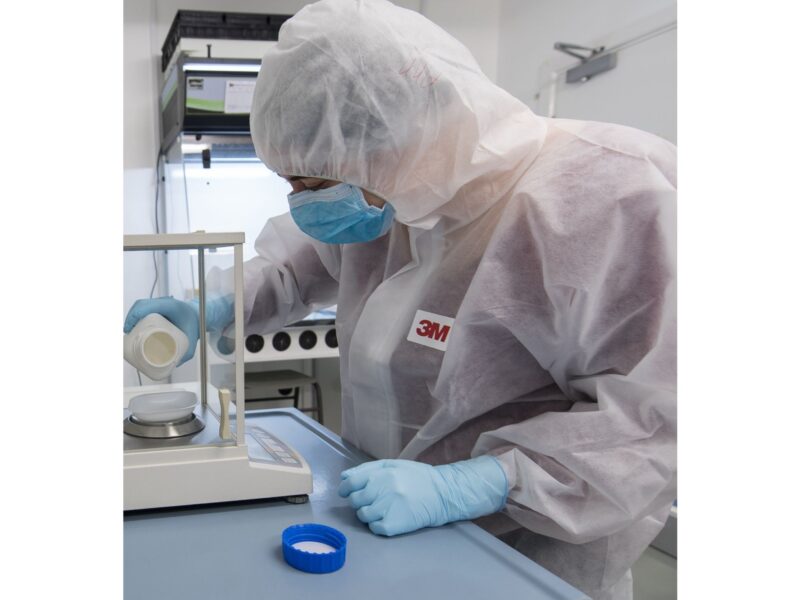
Monnereau said analyzing DNA from very old sources, known as ancient DNA or aDNA, is so valuable because it sheds light on the lives of everyday people, mostly left out of historical texts.
“This is a story that is often in the darkness in a way,” she said, speaking by video with Courthouse News. “Ancient DNA is a tool like the other tools — like documents, sites, and other scientific tools — to try to understand what happened in the past.”
Nathan Wales, an expert in ancient genetics at the University of York who worked on the study, said “you can kind of get a direct picture” of past lives by studying aDNA and “challenge some of the assumptions of what is in the written record.”
Similar aDNA studies have been carried out across the Mediterranean basin, including one at the ancient Greek colony of Himera in northern Sicily. But this was the first major aDNA study of Sicilians living in the medieval period.
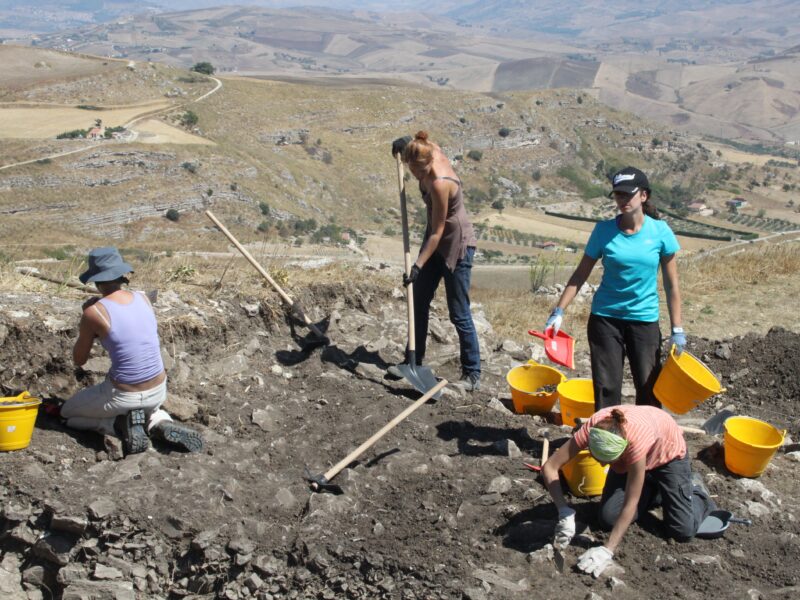
For this project, the researchers obtained DNA from human remains found in Christian and Muslim burial sites across Sicily. Often, they extracted DNA from skeletons preserved in museums, Wales said.
“It’s always important to have many sites because one site can tell us a story and another site can tell us another story, and together we can have a better picture,” Wales said.
“We sadly don’t know much about these people,” he added. “We suspect that these are kind of common people; they’re buried in a standard cemetery, so they probably are quite representative of the people living there. It’s not as though we’re looking just at the elite.”
Of particular interest was the discovery of several individuals of North African and sub-Saharan ancestry who were buried on the island before the Islamic conquest of Sicily.
This finding showed migration between Africa and Sicily took place before the Arab invasion. Naturally, following the Islamic conquest from North Africa, people of African ancestry became common in Sicily.
Wales said the DNA analysis could not be used to determine whether sub-Saharan Africans arrived in Sicily as free people or as slaves.
That question, he said, might be answered by using so-called mobility isotopic data, a powerful scientific tool that tracks the movement of ancient people and animals by analyzing the chemical signatures locked in teeth and bones.
The DNA study was part of a larger decade-long project called Sicily in Transition that involved excavations, the study of diets, animals and plants, and other work examining the lives and times of Sicilian farmers, merchants and their families spanning five regimes on the island between 550 and 1250.
The Sicily in Transition project was funded by the European Research Council and led by researchers from University of York in Great Britain, University of Rome Tor Vergata and University of Salento at Lecce.
Courthouse News reporter Cain Burdeau is based in the European Union.
 Follow @cainburdeau
Subscribe to our free newsletters
Our weekly newsletter Closing Arguments offers the latest about ongoing trials, major litigation and rulings in courthouses around the U.S. and the world, while the monthly Under the Lights dishes the legal dirt from Hollywood, sports, Big Tech and the arts.
Additional Reads
 Sanctioned ICC judges sue Trump in New York June 24, 2026